Blog /
Special Education
IEP and SPED parent communication
Special education parent communication has requirements that general classroom newsletters do not. IDEA mandates prior written notice for certain decisions. IEP meetings have specific notification timelines. Consent rules govern what you can share and with whom. The articles here are written for special education teachers, case managers, and sped coordinators who need to communicate clearly with families while staying within those legal boundaries. You will find guides for IEP meeting prep letters, progress report communication, transition planning, and how to explain evaluation results to families who are not familiar with educational testing language.

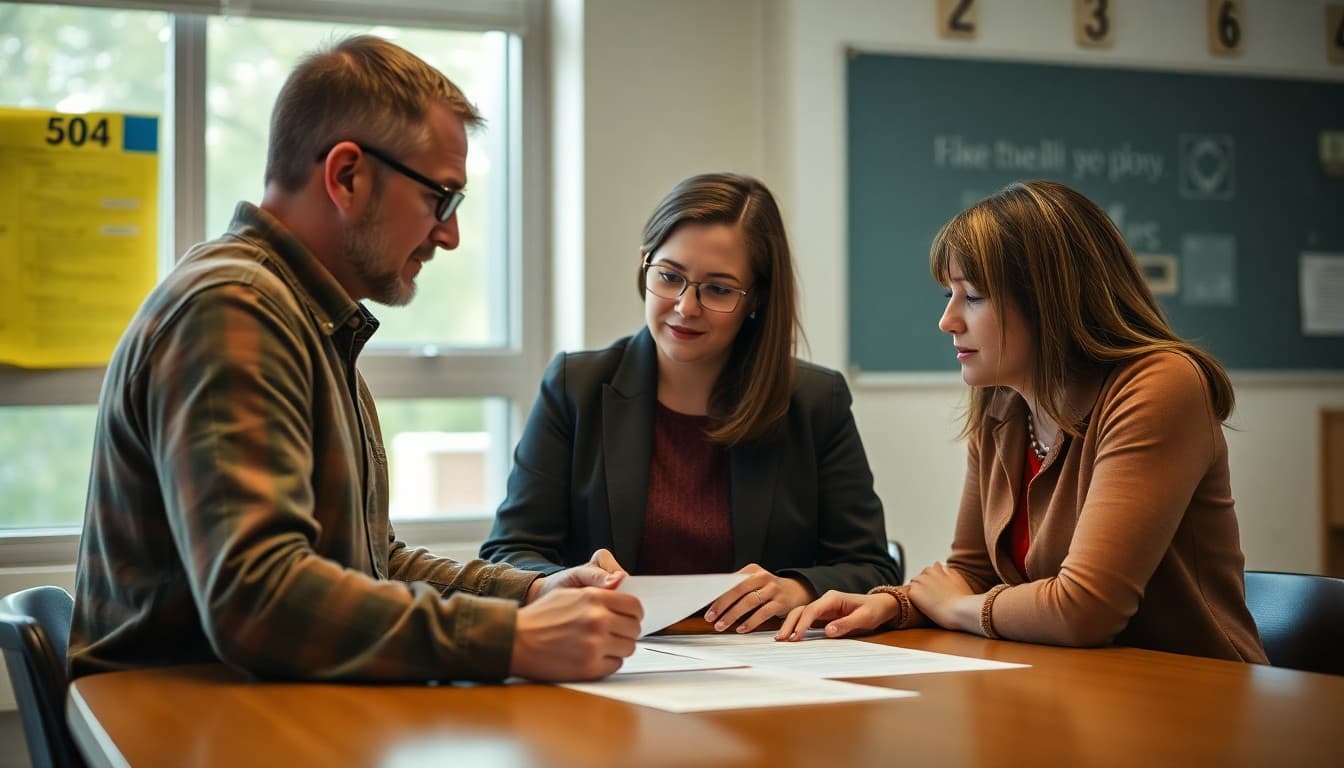
504 Plan Communication to Parents: What to Include in Your Newsletter Updates
Families of students with 504 plans need clear, regular communication about how accommodations are being implemented. Here is what to include and how to structure it.
504 Plan Parent Newsletter: Accommodations and Support
Communicate 504 plan accommodations to families clearly. What families need to know about their child's 504 plan, their rights, and how school support works.
ADA-Compliant School Newsletters: What SPED Coordinators Need to Know
What ADA and IDEA accessibility requirements mean for school newsletters, and practical steps to make your communication accessible to all families.
ADHD Communication Newsletter: What Schools Should Tell Families
How school staff can write a newsletter that helps families of students with ADHD understand school supports, reduce conflict between home and school expectations, and build aligned strategies.
ADHD School Support Newsletter: Strategies for Success
Communicate ADHD support strategies to school families. What works in the classroom, how families can help at home, and how to explain ADHD supports to all parents.
Alaska Special Education Newsletter: IDEA and Family Rights
Help Alaska special education teachers write newsletters that explain IEP rights, state assessment accommodations, transition planning, and IDEA protections to families across Alaska.
Alabama Special Education Newsletter: IDEA and Family Rights
Help Alabama special education teachers write newsletters that inform families about IEP processes, IDEA rights, state assessment accommodations, and transition planning.
April Special Education Newsletter: Year-End Transitions and IEP Reviews
April special education teacher newsletter covering year-end transition planning for students with IEPs, annual review wrap-ups, summer service information, and how to prepare families for the school year close.
Arkansas Special Education Newsletter: IDEA and Family Rights
Help Arkansas special education teachers write newsletters that explain IEP rights, IDEA protections, state assessment accommodations, and transition planning to families.
Assistive Technology Newsletter: Helping Families Understand and Use AT at Home
How special education programs can write a newsletter that explains assistive technology to families, addresses common concerns, and supports consistent AT use across home and school.
August Special Education Teacher Newsletter: What to Communicate
What special education teachers should include in an August newsletter: IEP service schedules, transition support, communication preferences, and how to start the year with strong family partnerships.
Autism Acceptance Month Newsletter: A Guide for Schools
Help schools write a meaningful Autism Acceptance Month newsletter that educates the community, celebrates neurodiversity, and builds genuine inclusion rather than just awareness.
Autism Classroom Newsletter to Parents: Building Consistent Communication for ASD Families
Families of children with autism need consistent, specific, and structured communication from school. Here is how to write a classroom newsletter that actually serves them.
Autism Spectrum High School Newsletter: Preparing Families for Transition and Independence
How special education teachers can use newsletters to keep families of high school students on the autism spectrum informed about transition planning, academic supports, and the path toward adult independence.
Autism Spectrum Middle School Newsletter: Communication Strategies for Families
How special education teachers can write newsletters that support families of middle school students on the autism spectrum, addressing the unique social, academic, and transition challenges of grades 6 through 8.
Autism Spectrum Newsletter for Families: Communication That Actually Helps
How special education teachers can write a classroom newsletter for families of students on the autism spectrum that is honest, specific, and supports the whole child across home and school.
Autism Support School Newsletter: Resources for Families
Share autism support resources and strategies with school families. What to include in an autism-focused newsletter and how to communicate with families respectfully.
Arizona Special Education Newsletter: IDEA and Family Rights
Help Arizona special education teachers write newsletters that explain IEP rights, IDEA protections, state assessment accommodations, and transition resources to families.
Behavior Intervention Plan Newsletter: What Families Need to Know About BIPs
How special education teachers can communicate about behavior intervention plans to families in a newsletter that is honest, non-stigmatizing, and builds home-school alignment.
California Special Education Newsletter: IDEA and Family Rights
Help California special education teachers write newsletters that explain IEP rights, IDEA protections, CAASPP accommodations, and transition planning to families across California.
Cerebral Palsy School Communication Newsletter: What Families Need to Know
A guide for special education teachers and related service providers on writing newsletters that keep families of students with cerebral palsy informed about therapy services, assistive technology, and inclusive participation.
Colorado Special Education Newsletter: IDEA and Family Rights
Help Colorado special education teachers write newsletters that explain IEP rights, IDEA protections, CMAS accommodations, and transition planning resources to Colorado families.
Co-Teaching Newsletter: Explaining the Model to Families
How co-teaching teams can write a newsletter that explains the co-teaching model to families, sets expectations, and builds confidence in an approach many parents have not encountered before.
How to Communicate Progress on IEP Goals Through Regular Parent Newsletters
How to translate IEP goal progress into clear, human-scale newsletter updates that keep families informed without violating confidentiality or triggering anxiety.
Connecticut Special Education Newsletter: IDEA and Family Rights
Help Connecticut special education teachers write newsletters that explain PPT rights, IDEA protections, SBAC accommodations, and transition planning resources to Connecticut families.
Delaware Special Education Newsletter: IDEA and Family Rights
Help Delaware special education teachers write newsletters that explain IEP rights, IDEA protections, DCAS accommodations, and transition planning resources to Delaware families.
Deaf and Hard of Hearing Newsletter: School Communication for DHH Families
How teachers of students who are deaf or hard of hearing can write a newsletter that builds family connection, explains accommodations and technology, and reflects the diversity of the DHH community.
December Special Education Newsletter for Winter Break Transitions
December special education teacher newsletter covering winter break transition planning, holiday routine disruption, IEP semester progress, and family strategies for keeping students regulated.
Disability Awareness Classroom Newsletter: Teaching All Students
Use a newsletter to support disability awareness education in your classroom. What to share with families about inclusive curriculum, disability representation, and respectful language.
Disability Awareness Month Newsletter: Communicating Inclusion to the Whole School
How special education teachers and administrators can write a disability awareness month newsletter that builds genuine understanding, avoids patronizing language, and reflects the disability community's own values.
Down Syndrome Inclusion Newsletter: Communicating with Families About Inclusive Supports
How special education teachers and inclusion specialists can write newsletters that help families of students with Down syndrome understand inclusive classroom supports, IEP goals, and strategies for reinforcing learning at home.
Due Process Rights Newsletter: What Families Need to Know About Dispute Resolution
How special education programs can communicate due process rights and dispute resolution options to families in a newsletter that is honest, non-adversarial, and empowers families to advocate effectively.
Dyscalculia Support Newsletter: Helping Families Understand Math Learning Differences
A guide for special education teachers on writing newsletters that help families understand dyscalculia, support math practice at home, and reduce the frustration that builds when a child struggles with numbers.
Dyslexia Support Newsletter: Communicating Reading Strategies to Families
Dyslexia is the most common learning disability, affecting roughly one in five students to some degree.
Emotional Behavioral Disorder Newsletter: Communication That Builds Partnership
How special education teachers working with students with emotional and behavioral disorders can write a newsletter that builds family trust, shares progress honestly, and reduces the adversarial dynamics that EBD programs often face.
Emotional Disturbance School Newsletter: Support and Resources
Communicate about emotional and behavioral support programs to families. What families of students with emotional disturbance classifications need to hear from their school.
Extended School Year Newsletter: Communicating ESY Eligibility and Services
How special education teachers can communicate about extended school year services in a newsletter that helps families understand eligibility, what ESY involves, and how to enroll.
February Special Education Newsletter for IEP Families This Winter
February special education teacher newsletter covering Valentine's Day social challenges, IEP progress updates, mid-year goal check-ins, and relationship skill-building for students with disabilities.
Florida Special Education Newsletter: IDEA and Family Rights
A guide to writing a Florida special education newsletter that communicates IDEA rights, IEP updates, and ESE program news to families clearly and consistently.
Georgia Special Education Newsletter: IDEA and Family Rights
A guide to writing a Georgia special education newsletter that communicates IEP updates, IDEA rights, and ESE program news clearly to families across Georgia districts.
Twice-Exceptional (2e) Student Newsletter: Gifted and Special Needs
Communicate about twice-exceptional students with families. What 2e means, how to support both gifted and special education needs, and what families need to know.
Hawaii Special Education Newsletter: IDEA and Family Rights
A guide to writing a Hawaii special education newsletter that communicates IEP updates, IDEA rights, and DOE special education program news clearly to island community families.
Iowa Special Education Newsletter: IDEA and Family Rights
A guide to writing an Iowa special education newsletter that communicates IEP updates, IDEA rights, and state program news clearly to families across Iowa's urban and rural districts.
Idaho Special Education Newsletter: IDEA and Family Rights
A guide to writing an Idaho special education newsletter that communicates IEP updates, IDEA rights, and state program news clearly to families across Idaho's urban and rural districts.
IDEA Rights Newsletter for Parents: Know Your Protections
Help families understand their rights under IDEA in plain language. Cover evaluation rights, IEP participation, placement decisions, and dispute resolution options.
IEP Goal Progress Newsletter: Communicating Data to Families in Plain Language
How special education teachers can write a newsletter that shares IEP goal progress with families in a way that is honest, readable, and useful for supporting their child at home.
IEP Meeting Communication Newsletter: Preparing Families Before the Meeting
How special education teachers can write a newsletter that prepares families for IEP meetings, reduces anxiety, and helps parents participate meaningfully in planning their child's education.
IEP Parent Communication Newsletter: What Families Need to Know
Write IEP communication newsletters that keep families informed and engaged. Cover goals, progress, meeting preparation, and rights in plain, accessible language.
IEP Update Communication: How to Keep Parents Informed Between Meetings
How to close the communication gap between formal IEP meetings so families stay engaged, informed, and less anxious throughout the school year.
IEP Update Newsletter for Teachers: Communicating Progress Clearly
How special education teachers can use newsletters to communicate IEP season updates, prepare families for meetings, explain progress reports, and reduce the anxiety many families feel about IEP processes.
Illinois Special Education Newsletter: IDEA and Family Rights
A guide to writing an Illinois special education newsletter that communicates IEP updates, IDEA rights, and state program news clearly to families across Chicago and Illinois districts.
Indiana Special Education Newsletter: IDEA and Family Rights
A guide to writing an Indiana special education newsletter that communicates IEP updates, IDEA rights, and state program news clearly to families across Indiana's urban and rural districts.
Inclusion Classroom Newsletter Guide: Communicating Across All Families
How teachers in inclusive classrooms can write a newsletter that serves families of students with and without disabilities, builds understanding of inclusion, and maintains appropriate privacy boundaries.
Inclusion Classroom Newsletter: What It Means for Your Child
Explain inclusive education to families clearly. What inclusion means, how it works in your classroom, and what families of both disabled and non-disabled students need to know.
Inclusive Classroom Newsletter Guide: Communicating a Welcoming Environment to All Families
An inclusive classroom newsletter communicates your approach, your values, and your commitment to every learner. Here is how to write one that reaches all families well.
Intellectual Disability Newsletter: Communicating the Full Picture to Families
Communication with families of students with intellectual disabilities requires care about framing, honesty about realistic goals, and consistent.
January Special Education Newsletter for a Strong Second Semester
January special education teacher newsletter covering winter break reentry, second-semester IEP goals, routine rebuilding strategies, and family communication for the new year.
July Special Education Teacher Newsletter: What to Communicate
A guide for special education teachers on writing a July newsletter: mid-summer ESY updates, back-to-school preparation tips, IEP preview, and family resources for August transition.
June Special Education Teacher Newsletter: What to Communicate
What to include in a June special education newsletter: final IEP notes, summer service schedules, ESY reminders, skill maintenance plans, and family resources for the summer break.
Kansas Special Education Newsletter: IDEA and Family Rights
A guide to writing a Kansas special education newsletter that communicates IEP updates, IDEA rights, and state program news clearly to families across Kansas's urban and rural districts.
Kentucky Special Education Newsletter: IDEA and Family Rights
A guide to writing a Kentucky special education newsletter that communicates IEP updates, IDEA rights, and KDE program news clearly to families across Kentucky's urban and Appalachian districts.
Louisiana Special Education Newsletter: IDEA and Family Rights
A guide to writing a Louisiana special education newsletter that communicates IEP updates, IDEA rights, and LDE program news clearly to families across Louisiana's diverse urban and rural districts.
Learning Disabilities and School Newsletters: How to Communicate Progress and Support
Parents of students with learning disabilities need clear, specific communication about progress and strategies. Here is how to use your newsletter to build that relationship.
Learning Disability Newsletter: Communicating With Families About Dyslexia, Dysgraphia, and More
Families of students with learning disabilities often spend years wondering what is wrong with their child before a diagnosis arrives.
Life Skills Classroom Newsletter: Connecting School to Daily Life
How life skills classroom teachers can use newsletters to explain program goals, share home practice opportunities, and help families understand how daily living instruction connects to their student's independence.
Massachusetts Special Education Newsletter: IDEA and Family Rights
A guide for Massachusetts special education teachers on newsletters that communicate IDEA rights, IEP processes, and student progress to families clearly and consistently.
March Special Education Newsletter: Testing Season and IEP Annual Reviews
March special education teacher newsletter covering standardized testing accommodations, IEP annual review season, spring break transition planning, and family support strategies for the third quarter.
May Special Education Teacher Newsletter: What to Communicate
A guide for special education teachers on what to include in a May newsletter, covering end-of-year transitions, ESY planning, summer services, and IEP annual review updates for families.
Maryland Special Education Newsletter: IDEA and Family Rights
A guide for Maryland special education teachers on newsletters that communicate IDEA rights, IEP timelines, and services to families clearly while building strong partnerships.
Maine Special Education Newsletter: IDEA and Family Rights
A guide for Maine special education teachers on writing newsletters that communicate IDEA rights, IEP updates, and services to families clearly and consistently.
Michigan Special Education Newsletter: IDEA and Family Rights
A guide for Michigan special education teachers on newsletters that communicate IDEA rights, IEP timelines, and transition services to families clearly and consistently.
Minnesota Special Education Newsletter: IDEA and Family Rights
A guide for Minnesota special education teachers on newsletters that communicate IDEA rights, IEP timelines, and transition services to families in clear, practical language.
Missouri Special Education Newsletter: IDEA and Family Rights
A guide for Missouri special education teachers on newsletters that communicate IDEA rights, IEP timelines, and transition services to families consistently and clearly.
Mississippi Special Education Newsletter: IDEA and Family Rights
A guide for Mississippi special education teachers on newsletters that communicate IDEA rights, IEP processes, and transition services to families clearly and consistently.
Montana Special Education Newsletter: IDEA and Family Rights
A guide for Montana special education teachers on newsletters that communicate IDEA rights, IEP processes, and transition services to rural and tribal families clearly.
North Carolina Special Education Newsletter: IDEA and Family Rights
Write a North Carolina special education newsletter that covers IDEA rights, NC Exceptional Children rules, and family resources without creating legal risk.
North Dakota Special Education Newsletter: IDEA and Family Rights
Write a North Dakota special education newsletter that covers IDEA rights, ND sped regulations, and family resources without creating compliance risk.
Nebraska Special Education Newsletter: IDEA and Family Rights
A guide for Nebraska special education teachers on newsletters that communicate IDEA rights, IEP timelines, and transition services to families clearly and consistently.
New Hampshire Special Education Newsletter: IDEA and Family Rights
Write a New Hampshire special education newsletter that covers IDEA rights, IEP communication, and family engagement without creating compliance risk.
New Jersey Special Education Newsletter: IDEA and Family Rights
Write a New Jersey special education newsletter that covers IDEA rights, IEP communication standards, and NJ-specific resources while protecting student privacy.
New Mexico Special Education Newsletter: IDEA and Family Rights
Write a New Mexico special education newsletter that covers IDEA rights, NM-specific sped regulations, and family resources without creating compliance risk.
November Special Education Newsletter for IEP Families This Fall
November special education teacher newsletter ideas covering holiday routine disruption, IEP progress updates, Thanksgiving transition tips, and family communication strategies.
Nevada Special Education Newsletter: IDEA and Family Rights
A guide for Nevada special education teachers on newsletters that communicate IDEA rights, IEP timelines, and transition services to diverse Clark County and Nevada families.
New York Special Education Newsletter: IDEA and Family Rights
Write a New York special education newsletter that meets NY state IDEA obligations, covers family rights, and builds trust with NYC and upstate families.
Occupational Therapy Newsletter Update: What Families Need to Know
How school occupational therapists can write a newsletter that explains OT goals, helps families support skill development at home, and keeps parents informed about their child's progress.
Occupational Therapy School Newsletter for Families
Communicate occupational therapy goals and strategies to school families. What OTs should share in newsletters about sensory processing, fine motor skills, and daily living.
October Special Education Teacher Newsletter for IEP Families
October special education teacher newsletter ideas covering first-quarter IEP progress, sensory sensitivity around Halloween, and family communication tips that build trust.
Ohio Special Education Newsletter: IDEA and Family Rights
Write an Ohio special education newsletter that covers IDEA rights, Ohio ETR and IEP rules, and family resources without creating compliance or privacy risk.
Oklahoma Special Education Newsletter: IDEA and Family Rights
Write an Oklahoma special education newsletter that covers IDEA rights, OK sped regulations, tribal education context, and family resources without creating legal risk.
Oregon Special Education Newsletter: IDEA and Family Rights
Write an Oregon special education newsletter that covers IDEA rights, OR sped regulations, Extended Diploma options, and family resources without creating legal risk.
OT Therapist Back to School Newsletter: Getting Families Ready
Help school OTs write a strong back-to-school newsletter introducing OT services, explaining what to expect this year, and giving families practical sensory and fine motor strategies from day one.
OT Therapist End of Year Newsletter: Closing Strong with Families
Guide for school OTs on writing a meaningful end-of-year newsletter: celebrating progress, preparing families for summer, sharing maintenance strategies, and closing the year well.
OT Therapist Monthly Newsletter Template: Ready-to-Use Guide
A reusable monthly newsletter template for school occupational therapists. Covers therapy focus updates, home activity recommendations, sensory strategies, and parent engagement prompts.
OT Therapist Newsletter Guide: School Occupational Therapy Communication
A guide for school occupational therapists on writing newsletters that explain OT goals, share sensory and fine motor strategies for home, and build family partnerships throughout the year.
OT Therapist Parent Resources Newsletter: Tools for Families
Share essential OT resources with families through a newsletter. Apps, books, sensory tools, and home activities that school OTs can recommend to support student progress outside of therapy.
Pennsylvania Special Education Newsletter: IDEA and Family Rights
Write a Pennsylvania special education newsletter that covers IDEA rights, PA Chapter 14 regulations, Keystone Exam accommodations, and family resources.
Paraprofessional Role Newsletter for Special Education Parents
Explain the paraprofessional role in special education to families. What paras do, how they support IEP students, and when to contact them versus the lead teacher.
Physical Therapy School Newsletter for Families
Communicate physical therapy services and goals to school families. What school PTs include in newsletters about gross motor skills, mobility, and movement support.
Physical Therapy School Newsletter: Keeping Families Informed About PT Goals
How school physical therapists can communicate PT goals, home exercise recommendations, and progress updates to families in a newsletter that supports skill development across settings.
Special Education Resource Room Newsletter: Communicating Targeted Instruction
How resource room teachers can write a newsletter that explains targeted instruction, shares progress, and gives families specific ways to support their child between sessions.
Rhode Island Special Education Newsletter: IDEA and Family Rights
Rhode Island special education teachers can use this newsletter guide to communicate IEP updates, IDEA rights, and family resources clearly and consistently.
South Carolina Special Education Newsletter: IDEA and Family Rights
South Carolina special education teachers can use this guide to write IEP newsletters that inform families of IDEA rights, service updates, and SC-specific sped resources.
School Newsletter: Special Education Program Audit Results
How to communicate special education audit results to families. Templates and guidance for sharing findings, improvements, and what they mean for students.
South Dakota Special Education Newsletter: IDEA and Family Rights
South Dakota special education teachers can use this guide to write IEP newsletters that keep families informed about IDEA rights, service updates, and SD sped resources.
Self-Contained Classroom Newsletter for Special Education Families
Write newsletters for self-contained special education classrooms. What to share with families, how to explain the program structure, and communication best practices.
Self-Contained Classroom Newsletter: Building Family Connection in Intensive Settings
How teachers in self-contained special education classrooms can write a newsletter that keeps families connected to their child's day, explains the intensive support model, and builds genuine partnership.
How to Write a Sensory-Friendly School Newsletter
Design and content choices that make school newsletters easier for families of children with sensory processing differences, autism, and other sensory-related needs.
September Special Education Teacher Newsletter: What to Communicate
What special education teachers should communicate in September: IEP meeting scheduling updates, how the first weeks went, current goals focus, and family partnership check-in.
504 Plan Newsletter Update: Keeping Families Informed on Accommodations
How school counselors and 504 coordinators can write a newsletter that keeps families updated on 504 accommodations, explains the process clearly, and builds home-school alignment.
Special Ed Newsletter Examples: Ready-to-Use Templates
Real examples of special education newsletters that work. Three complete templates special education teachers can adapt immediately for parent communication, IEP updates, and program introductions.
Special Ed Newsletter Ideas: 12 Months of Content for Sped Teachers
Fresh newsletter content ideas for special education teachers across a full school year. Monthly themes, home activity suggestions, family engagement prompts, and topic ideas by program type.
Special Ed Newsletter for Parents: What Families Actually Need
A practical guide for special education teachers on writing newsletters that give parents what they actually need: plain-language explanations of services, home strategies, and clear communication.
Special Education Parent Rights Newsletter: What Every Family Should Know
How special education programs can communicate parent rights under IDEA and Section 504 in a newsletter that empowers families to participate meaningfully in their child's education.
Special Education Transition Planning Newsletter: Preparing Students and Families
How special education teachers can communicate transition planning for students with disabilities approaching post-secondary goals, with content that is honest, actionable, and respects family priorities.
Special Education Aide Communication Newsletter: Helping Families Understand the Paraeducator Role
Paraeducators are often the staff members families most want to communicate with because they spend the most time with their child.
Special Education Annual Review Newsletter: Communicating Progress to Families
How special education teachers can write an annual review newsletter that gives families a genuine picture of their child's progress, sets expectations for the review meeting, and honors the year's work.
Special Education Back to School Night Newsletter: What to Send Before and After
Back to school night is one of the first real impressions families form of their child's special education program for the year.
Special Education Behavior Support Newsletter: What Families Need to Know About Positive Behavior Supports
Challenging behavior is one of the most charged topics in school-family communication.
Community Based Instruction Newsletter: Helping Families Understand Learning Outside the Classroom
Community based instruction is one of the most powerful and least understood components of a transition-focused special education program.
Special Education Complaint Process Newsletter: Helping Families Understand Their Options
How special education programs can use newsletters to explain the complaint and dispute resolution process to families, build trust through transparency, and help families access the right channel when concerns arise.
Special Education Curriculum Night Newsletter: Helping Families Understand What and How Their Child Learns
Curriculum night for special education families is not the same as curriculum night for general education families.
Special Education Eligibility Newsletter: Helping Families Understand the Determination Process
How special education coordinators can explain eligibility categories, the determination criteria, and what comes next after a student is found eligible for or denied special education services.
Special Education Evaluation Process Newsletter: Preparing Families Before the Assessment Begins
How special education coordinators can use newsletters to explain the evaluation process to families, describe what assessments involve, and help families participate meaningfully in the eligibility determination.
Special Education Family Support Resources Newsletter: Connecting Families to Help Outside School
How special education programs can use newsletters to connect families of students with disabilities to community resources, parent support networks, financial assistance programs, and advocacy organizations that extend the support system beyond school.
Special Education Graduation Newsletter: Celebrating Students and Preparing Families for What Comes Next
How special education teachers can write newsletters that celebrate graduating students, help families understand the transition from school to adult services, and ensure no family exits the system without the information they need.
Independent Living Skills Newsletter: Connecting School Instruction to Home and Community Life
Independent living skills are often the least visible part of a special education program and, in terms of post-secondary outcomes, among the most.
Special Education Parent Advisory Committee Newsletter: Engaging Families in Program Leadership
How special education programs can use newsletters to recruit and engage families in the parent advisory committee, communicate what the committee does, and ensure its work reaches the broader school community.
Special Education Parent Communication: A Newsletter Guide for SPED Teachers
How special education teachers can use regular newsletters to build trust with families, reduce IEP meeting anxiety, and keep parents informed and engaged throughout the year.
Special Education Parent Workshop Newsletter: How to Promote Events and Share What Families Missed
How special education departments can use newsletters to build attendance for parent workshops, explain what workshops cover, and ensure all families receive key information even when they cannot attend in person.
Special Education Reevaluation Newsletter: Preparing Families for the Three Year Review
How special education teams can use newsletters to explain the triennial reevaluation process, help families understand what will be assessed, and ensure families participate meaningfully in continued eligibility decisions.
Sensory Room Newsletter: Explaining Sensory Supports to Families of Students with Disabilities
Sensory rooms and sensory supports are among the most frequently misunderstood components of a special education program.
Social Skills Group Newsletter: Helping Families Reinforce Social Learning at Home
Social skills instruction is one of the areas where family involvement has the biggest impact on outcomes.
Special Education Summer Services Newsletter: What Families Need to Know About Extended Year
Summer represents a significant communication challenge for special education programs.
Special Education Transition Age Newsletter: Preparing Families for the Years Before Adulthood
The transition from school to adult life is one of the most significant and anxiety-producing milestones families of students with disabilities navigate.
Vocational Training Newsletter for Special Education: Keeping Families Informed About Work Readiness
Competitive, integrated employment is the most reliable predictor of quality of life for adults with disabilities.
Special Education Annual Review Newsletter for Families
Prepare families for annual IEP review meetings with a proactive newsletter. What to expect, how to prepare, and what decisions will be made at the annual review.
Special Education Back to School Newsletter: Starting the Year Right
How special education teachers can write a back-to-school newsletter that sets expectations, builds family confidence, and establishes the communication patterns that will carry the year.
Special Education End of Year Newsletter: Closing Out With Clarity
How special education teachers can write an end-of-year newsletter that summarizes the year honestly, prepares families for the transition ahead, and closes the communication loop with integrity.
Special Education Placement Newsletter: Your Options Explained
Help families understand special education placement options. Explain the continuum of services, least restrictive environment, and how placement decisions are made.
Special Education RTI Newsletter: Tiered Support Updates
Explain Response to Intervention tiers to families through clear newsletters. What RTI means, how tier placement works, and what families can do to support each level.
Special Education Teacher Newsletter Guide: Building a Communication Routine
A practical guide for special education teachers on building a newsletter routine that keeps families informed, manages IEP communication proactively, and reduces the reactive communication that drains teacher time.
Speech-Language Therapy Newsletter for School Families
Communicate speech-language therapy progress to families clearly. What SLPs should include in newsletters, how to explain therapy goals, and home practice tips.
Speech Therapist Back to School Newsletter: SLP Communication Guide
Help SLPs write an effective back-to-school newsletter that introduces therapy services, explains what speech therapy looks like in your school, and sets expectations for families at the start of the year.
Speech Therapist End of Year Newsletter: Closing Out Well
Guide for SLPs on writing a meaningful end-of-year newsletter: summarizing therapy progress, preparing families for summer, sharing maintenance strategies, and closing the year with family partnership.
Speech Therapist Monthly Newsletter Template: Ready-to-Use Guide
A fill-in-the-blank monthly newsletter template for school SLPs. Covers therapy focus updates, home practice activities, upcoming evaluations, and family communication best practices.
Speech Therapist Newsletter Guide: Communication Tips for SLPs
A complete guide for school speech-language pathologists on writing newsletters that explain therapy goals, share home practice strategies, and build family partnerships throughout the year.
Speech Therapist Parent Resources Newsletter: Tools and Guides
Share useful speech and language resources with families through a newsletter. Apps, websites, books, and home strategies that SLPs can recommend to support student progress outside of therapy.
Speech Therapy Update Newsletter: Keeping Families in the Loop
How school speech-language pathologists can write a newsletter update that helps families understand therapy goals, support generalization at home, and feel connected to their child's progress.
Teacher Newsletter 504 Meeting: Preparing Families for 504 Reviews
How teachers can use newsletters to prepare families for 504 plan meetings, explain the review process, describe what families can bring to the table, and make 504 meetings more productive for everyone.
Teacher Newsletter 504 Plan: Explaining 504 Accommodations to Families
How teachers can use newsletters to explain what a 504 plan is, how it differs from an IEP, what accommodations families can request, and how to make the 504 process work for their student.
Teacher Newsletter Assistive Technology: Explaining AT to Families
How teachers can explain assistive technology to families through newsletters. What AT tools students use in school, how families can support AT use at home, and why assistive technology builds independence rather than dependency.
Teacher Newsletter Augmentative Communication: Explaining AAC to Families
How teachers and SLPs can explain augmentative and alternative communication (AAC) to families through newsletters. What AAC devices are, how they work, and how families can support communication at home.
Teacher Newsletter Braille Awareness: Celebrating Literacy for Blind Students
How teachers can use newsletters during World Braille Day and Blind Awareness Month to educate families about braille literacy, explain school accommodations for blind and visually impaired students, and build community inclusion.
Teacher Newsletter Co-Teaching: Explaining the Co-Teaching Model to Families
How co-teachers can use newsletters to explain the co-teaching model to families, describe how two teachers support all learners, address common questions, and build confidence in the inclusive approach.
Teacher Newsletter Disability Awareness: Building an Inclusive School Community
How teachers can use newsletters during Disability Awareness Month and throughout the year to educate families about disability inclusion, correct common misconceptions, and build a more welcoming school community.
Teacher Newsletter IEP Meeting Reminder: Preparing Families to Participate
How special education teachers can use newsletters to remind families about upcoming IEP meetings, help them prepare to participate meaningfully, and reduce the anxiety many families bring to the IEP table.
Teacher Newsletter IEP Overview: Explaining the Process to Families
How general and special education teachers can use newsletters to give families a clear, jargon-free overview of what an IEP is, how it works, and what families can do to make the process work better for their student.
Teacher Newsletter Inclusion Classroom: Explaining Inclusion to Families
How teachers in inclusive classrooms can use newsletters to explain what inclusion means in practice, address parent concerns, describe Universal Design for Learning, and build community support for inclusive education.
Teacher Newsletter Inclusion Event: Celebrating School-Wide Inclusion
How teachers can use newsletters to promote and follow up on inclusion events, explain why disability inclusion matters to the whole school community, and build ongoing community commitment to inclusive education.
Teacher Newsletter Occupational Therapy: Explaining OT to Families
How teachers can explain school occupational therapy to families through newsletters. What OTs do, why fine motor and sensory skills matter for school participation, and how families can support OT goals at home.
Teacher Newsletter Paraprofessional Intro: Introducing Classroom Aides to Families
How teachers can introduce paraprofessionals to families through newsletters, explain their role clearly, address common misconceptions, and set the right expectations for how aides support student independence.
Teacher Newsletter Sensory Tools: Explaining Sensory Supports to Families
How teachers can explain sensory tools and strategies to families through newsletters. Why fidget tools, movement breaks, and sensory accommodations work, and how families can use them at home.
Teacher Newsletter Social Stories: Using Narrative to Teach Social Skills
How teachers can explain social stories to families through newsletters, describe how they work for students with autism and social learning differences, and share strategies for using social stories at home.
Teacher Newsletter Special Services: Introducing Support Staff to Families
How teachers can use newsletters to introduce and explain the roles of special services staff including speech therapists, OTs, school psychologists, and paraprofessionals to the school community.
Teacher Newsletter Speech Therapy: What Families Need to Know
How teachers and SLPs can use newsletters to explain speech therapy goals, describe what happens in sessions, share home practice strategies, and help families support communication development outside of school.
Tennessee Special Education Newsletter: IDEA and Family Rights
Tennessee special education teachers can use this guide to write IEP newsletters that cover IDEA rights, service updates, and TN-specific sped resources clearly and consistently.
Special Education Transition Planning Newsletter for Families
Communicate about post-secondary transition planning with families of students with disabilities. Cover age requirements, IEP transition goals, and next steps.
Transition Planning Newsletter for Special Education Families: Preparing for What Comes Next
Transition planning for students with disabilities starts at 16 under IDEA. Here is how to use newsletters to keep families informed and engaged throughout the process.
Twice-Exceptional Student Newsletter: Communicating the Full Picture to Families
How teachers can write a newsletter that helps families of twice-exceptional students understand the 2e profile, why standard approaches often miss the mark, and what supports actually work.
Texas Special Education Newsletter: IDEA and Family Rights
Texas special education teachers can use this guide to write IEP newsletters covering IDEA rights, ARD process updates, and Texas-specific sped resources clearly and consistently.
Utah Special Education Newsletter: IDEA and Family Rights
Utah special education teachers can use this guide to write IEP newsletters covering IDEA rights, IEP goal progress, and Utah-specific sped resources for families.
Virginia Special Education Newsletter: IDEA and Family Rights
Virginia special education teachers can use this guide to write IEP newsletters covering IDEA rights, SOL accommodations, and Virginia-specific sped resources for families.
Visual Impairment Newsletter: School Communication for VI Students and Families
How teachers of students with visual impairments can write a newsletter that informs families about orientation and mobility, literacy tools, adaptive technology, and how to support independence at home.
Vermont Special Education Newsletter: IDEA and Family Rights
Vermont special education teachers can use this guide to write IEP newsletters that cover IDEA rights, proficiency-based assessment context, and VT-specific sped resources.
Washington Special Education Newsletter: IDEA and Family Rights
Washington State special education teachers can use this guide to write IEP newsletters covering IDEA rights, Washington graduation pathways, and WA-specific sped resources.
What to Put in a Special Education Newsletter to Families
A practical section-by-section guide to what goes in a special education classroom newsletter, and what to leave out so families actually read it.
Wisconsin Special Education Newsletter: IDEA and Family Rights
A practical guide for Wisconsin special education teachers on writing newsletters that inform families about IDEA rights, IEP timelines, and student progress clearly.

West Virginia Special Education Newsletter: IDEA and Family Rights
West Virginia special education teachers can use this guide to write IEP newsletters covering IDEA rights, Senior Capstone accommodations, and WV-specific sped resources.

Wyoming Special Education Newsletter: IDEA and Family Rights
A practical guide for Wyoming special education teachers on writing newsletters that inform families about IDEA rights, IEP timelines, and student progress in plain language.

Common questions
What communication do special education teachers have to send to parents?
At minimum: prior written notice before any change to a student's IEP, annual IEP meeting invitations with sufficient advance notice, and progress reports on IEP goals at the same frequency report cards are sent. Some states require additional notifications. Check your state's special education procedural safeguards for the full list.
How do I explain IEP goals to parents in plain language?
Avoid jargon and acronyms in family-facing communication. "John will improve his reading fluency from 60 words per minute to 90 words per minute by May" is clear. "Student will demonstrate improvement in phonological processing with 80% accuracy across 3 trials" is not. Write for the parent, not the auditor.
Can I include a student with a disability in a school newsletter?
Yes, with the same consent rules that apply to any student photo or mention. A disability status is protected information under FERPA and IDEA. Do not reference a student's IEP, diagnosis, or services in any school-wide communication without explicit written consent.