
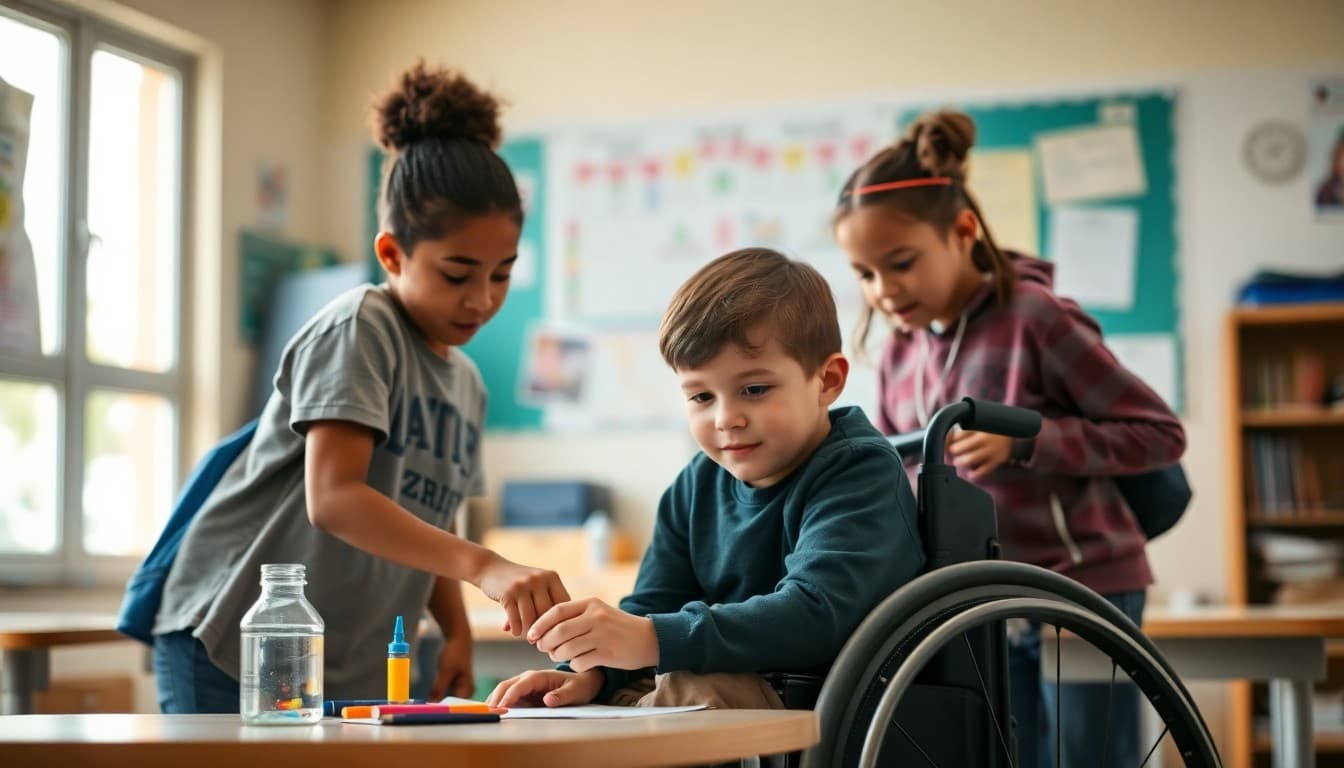
Teacher Newsletter Disability Awareness: Building an Inclusive School Community
Disability awareness education at school does not stay at school. When students learn to see disability as part of normal human diversity rather than as something to pity or fear, they bring that perspective home. A teacher newsletter that supports disability awareness gives families the language and context to reinforce that learning at home and to have real conversations about what inclusion means.
Go beyond the awareness poster
Disability awareness month at school often produces posters and assemblies that raise visibility but do not change anything. A newsletter that goes deeper is more useful. What does your school actually do differently because of its commitment to inclusion? What have teachers learned from working with students with disabilities? What specific practices make your classroom more accessible to all students? Specific and honest content creates more change than inspirational language.
Language shapes how children think about disability
The language families use at home about disability shapes how their children think about disabled peers at school. A newsletter can offer a brief language guide. Avoid: "suffers from," "afflicted with," "confined to a wheelchair," "special needs." These phrasings frame disability as tragedy and as limitation rather than difference. Prefer: "disabled student," "student with a disability," "uses a wheelchair," "blind," "Deaf." Disability communities generally prefer direct language to euphemisms.
How to raise inclusive kids
Give families specific conversation guidance. Talk to your student about how different people have different needs, and that is a normal part of being human. Teach your student to ask before helping rather than assuming someone with a disability needs assistance. Encourage your student to interact with peers with disabilities the way they interact with anyone: with curiosity and directness. If your student asks a question about a classmate's disability, answer it matter-of-factly rather than changing the subject, which signals that disability is something to be embarrassed about.
What inclusion looks like in the classroom
Many families have never seen an inclusive classroom in practice. Describe what you do. Universal Design for Learning means designing lessons that work for the widest range of learners from the start rather than modifying for individual students after the fact. Co-teaching means a general education and special education teacher working together in the same classroom so all students have access to two teachers. Flexible grouping means students work in different configurations for different activities so no group is always the same.
Template: disability awareness newsletter section
"Disability Awareness: What We Are Teaching and Why [Month] is [Disability Awareness Month name]. In our classroom, we are talking about the fact that people have different needs, and that our school works to make sure every student can participate fully. We are discussing how to be good friends and classmates to people whose experience of the world is different from our own. At home, one conversation that makes a difference: if your student asks about a classmate's disability or difference, answer honestly and simply. 'Maya uses a wheelchair because her legs don't work the same way yours do. She still does everything you do; she just does it differently.' Direct answers normalize disability in a way that changing the subject cannot. Resources I recommend: [2-3 specific books or links]."
Highlight disability-led voices and resources
The most credible disability awareness content comes from disabled people themselves. Link to disability-led organizations, books by autistic or disabled authors, and media created by disabled people rather than about them. This is the same shift happening in autism education: from speaking about disabled people to amplifying what disabled people are saying about their own experience.
Daystage makes it easy to include embedded links to recommended books, disability advocacy organizations, and school inclusion policies directly in the newsletter so families can access everything in one place.
Get one newsletter idea every week.
Free. For teachers. No spam.
Frequently asked questions
When is Disability Awareness Month and what should a school newsletter cover?
October is National Disability Employment Awareness Month (NDEAM) in the US, and March is Developmental Disabilities Awareness Month. Disability awareness newsletters work best when they go beyond symbolic support and address something substantive: how the school approaches inclusion, how students with and without disabilities learn together, what families can teach their children about disability, and how the language we use about disability shapes how children think about it. Specific and honest beats general and inspirational.
What language should teachers use in disability awareness newsletters?
Language matters in disability content. Disability communities have different preferences: some communities prefer identity-first language (autistic person, disabled student), others prefer person-first language (person with a disability, student with autism). A newsletter can acknowledge this variation and model respectful language without claiming to have the definitive answer. Avoid: 'suffers from,' 'afflicted with,' 'confined to a wheelchair,' 'special needs,' 'differently abled' (often disliked by disabled advocates). Prefer: 'disabled student,' 'student with a disability,' 'uses a wheelchair.'
What can teachers share in newsletters about how students can be better peers to classmates with disabilities?
Newsletters can offer families concrete conversation starters: talk to your student about how different people have different needs, and that is a normal part of human diversity. Teach your student to ask before helping rather than assuming someone with a disability needs their assistance. Encourage your student to interact with students with disabilities the same way they interact with any peer: with curiosity, kindness, and directness. Disability is not contagious and it is not something to be afraid of or to ignore.
How should teachers handle disability awareness without singling out or exposing students with disabilities?
Disability awareness education should be about the school community and world, not about specific students. A newsletter can discuss disability inclusion, language, and perspective without referencing any student by name or condition. 'Our school includes students with a wide range of learning and physical differences. Every student deserves to be treated with respect and to be included in our community.' This framing educates the community without exposing individual students.
How does Daystage support disability awareness newsletters from teachers?
Daystage lets teachers send disability awareness newsletters with embedded links to books on disability inclusion, disability-led advocacy resources, and school inclusion policy information. A newsletter that links to age-appropriate books about disability for students and families, and to credible disability-led organizations, is far more useful than one that makes general statements about inclusion. Daystage makes it easy to include those resources in a professional format.

Adi Ackerman
Author
Adi Ackerman is a former classroom teacher and curriculum writer with 8 years in K-8 schools. She writes about school communication, parent engagement, and what actually works in real classrooms.
More for Special Education
Ready to send your first newsletter?
3 newsletters free. No credit card. First one ready in under 5 minutes.
Get started free