

Speech Therapist Newsletter Guide: Communication Tips for SLPs
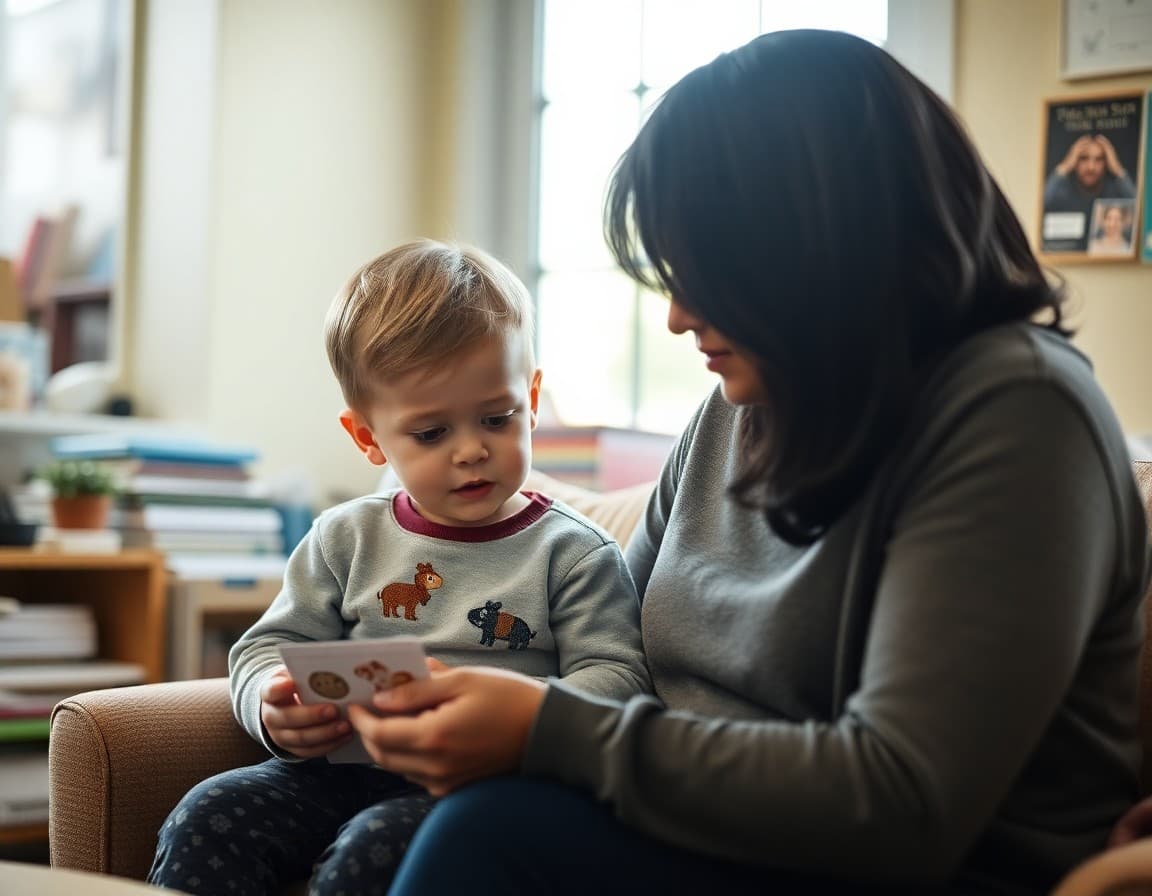
A school SLP who sees each student for 30 minutes twice a week has about 60 minutes of direct contact per week. That is not enough to build fluent, generalized communication skills alone. The students who make the fastest progress are the ones whose families understand what is being worked on and can create practice opportunities throughout the week. A newsletter is how you make that happen at scale.
Write for families who do not know speech therapy terminology
Your newsletter audience is parents and caregivers, not other SLPs. Every technical term needs a plain-language explanation. "Articulation" means accurate sound production. "Pragmatics" means using language appropriately in social situations. "Expressive language" means the ability to communicate ideas and needs. Write as if the reader is intelligent but has no background in speech-language pathology, because most of them do not.
Explain the current focus area in one clear paragraph
Every newsletter should open with a clear explanation of what students are currently working on and why it matters. "This month in speech therapy we are focusing on conversational turn-taking. This is the skill of listening to a partner, waiting for the right moment to speak, and contributing something relevant to the topic. Turn-taking is the foundation of successful peer conversation and classroom discussion. Students who struggle with it often appear to interrupt or ignore others, not because they are being rude, but because the timing skill is still developing."
Give one or two specific home practice activities
This is the most valuable section of any SLP newsletter. Be specific and practical. "A great way to practice turn-taking at home is to play any game that requires waiting for your turn. Even simple games like Connect 4 or Go Fish create natural turn-taking structures. During the game, use explicit language: 'It's your turn.' 'Wait for me to finish.' 'Now it's my turn.' Over time, the game structure supports the student in waiting and timing their communication."
Activities should be embedded in routines families already have, not added as separate therapy homework. Mealtime, car rides, and bedtime stories are all natural speech and language practice opportunities that families can use without feeling like they are doing extra work.
Explain how to observe progress without testing
Families often want to know if their student is improving but do not know what to look for. Give them observable markers. "You can tell turn-taking is improving when your student starts looking at you more when you are speaking, waits a beat before responding instead of immediately jumping in, and introduces responses that connect to what you just said rather than changing the topic." These behavioral descriptions give families something real to notice and celebrate.
Template: SLP newsletter home practice section
"Home practice this month: Many students are working on producing the /r/ sound accurately. Try this daily: say five words that start with /r/ together during breakfast or in the car. Words like 'rabbit,' 'rainbow,' and 'ready' are good starting points. Say each word clearly, have your student repeat it, and give a simple response: 'That sounded great' or 'Try saying it with your tongue a little further back.' Even five minutes of daily practice makes a measurable difference over a month."
Close with an invitation for questions and meetings
Families with questions about their student's speech therapy should feel welcome to ask. End every newsletter with your contact information and an explicit invitation: "If you have questions about your student's goals or would like to observe a therapy session, please reach out. I am happy to discuss progress, demonstrate home practice techniques, or schedule a joint session with you participating."
Daystage makes it easy to send consistent SLP newsletters throughout the school year without the newsletter becoming a major time investment.
Get one newsletter idea every week.
Free. For teachers. No spam.
Frequently asked questions
Why should school SLPs send newsletters to families?
Speech therapy services happen for 20-60 minutes per week. The rest of the student's communication practice happens at home, in the classroom, and in the community. Research consistently shows that family involvement in speech therapy accelerates skill development. A newsletter that teaches families what the SLP is working on and how to support it at home multiplies the impact of the therapy session significantly.
What should a speech therapy newsletter include?
A good SLP newsletter explains the current focus area in plain language, shares one or two specific practice activities families can do at home, explains why the current goal matters for the student's communication development, and gives families a way to observe progress. It should not use jargon like phonological processing or pragmatic language without explaining what those terms mean for this specific student.
How can an SLP explain therapy goals without violating student privacy?
Write at the group or service level, not the individual student level. Instead of sharing individual student goals, explain the types of goals that students in the program are working on. 'This semester many of our students are working on articulation goals, specifically accurate production of late-developing sounds like r, l, and s/z. Others are working on language comprehension, vocabulary, or social communication.' This gives families useful information without disclosing individual student data.
What home practice tips work best for speech therapy families?
The most effective home practice is embedded in daily routines rather than scheduled as a separate activity. Mealtime conversations, car ride discussions, and bedtime story reading all create natural opportunities for speech and language practice. For articulation goals, brief daily practice with a target sound in words and sentences is more effective than longer weekly practice sessions. An SLP newsletter can teach families to create these practice opportunities without them feeling like drills.
How does Daystage support SLP newsletters in schools?
Daystage gives school SLPs a newsletter platform that is easy to use without design expertise. SLPs can send a monthly newsletter that reaches all families on their caseload with home practice strategies, program updates, and information about upcoming evaluations or IEP meetings. Consistent monthly communication through Daystage builds the family partnership that makes speech therapy more effective.

Adi Ackerman
Author
Adi Ackerman is a former classroom teacher and curriculum writer with 8 years in K-8 schools. She writes about school communication, parent engagement, and what actually works in real classrooms.
More for Special Education
Ready to send your first newsletter?
3 newsletters free. No credit card. First one ready in under 5 minutes.
Get started free