

Special Education Placement Newsletter: Your Options Explained
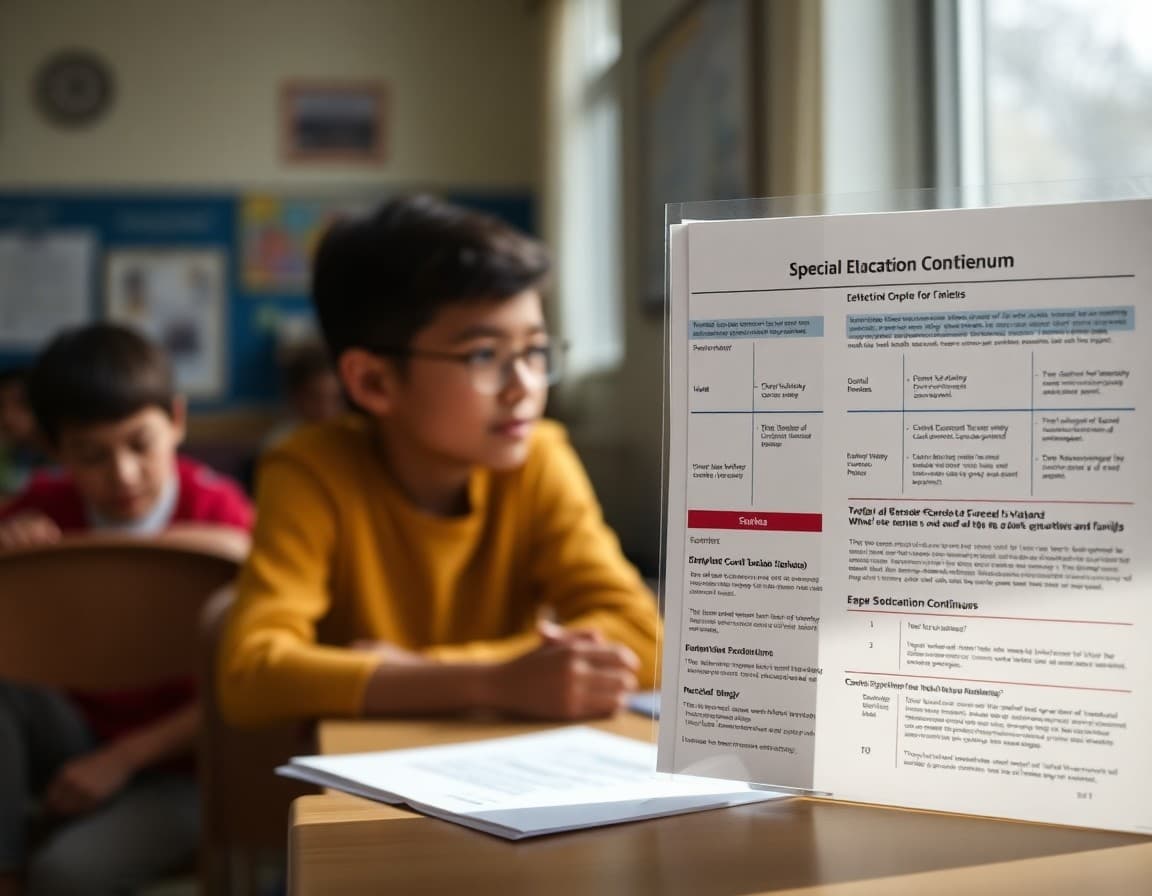
Placement is one of the most significant and most contested decisions in special education. Families who understand the continuum of options, how placement decisions are made, and what rights they have in the process are far better equipped to advocate for their child than families who accept or reject placements without that context.
The Placement Continuum Explained
Special education placement is not a single choice between "regular class" and "special class." IDEA requires schools to maintain a full continuum of placement options. From least to most restrictive:
General education with supplementary aids and services: the student spends the full day in a general education classroom with supports built in, such as accommodations, modified materials, or push-in specialist support.
Resource room or pull-out support: the student spends most of the day in general education but leaves for specific instruction in a smaller special education setting for part of the day.
Self-contained special education classroom: the student spends most or all of the school day in a classroom specifically designed for students with disabilities, within the regular school building.
Special school: a separate school specifically designed for students with more intensive support needs.
Residential or homebound: the most restrictive options, used only when other placements cannot provide appropriate education.
How Placement Decisions Are Made
Placement is determined by the IEP team after the annual goals and services are established. The question the team must answer is: in what setting can this student receive the services described in the IEP while being educated alongside non-disabled peers to the maximum extent appropriate?
The team considers: the student's academic and functional needs, the degree to which the student can participate in general education, the potential benefits of integration, any harmful effects the placement might have on the student or others, and the availability of appropriate services in each setting under consideration.
Placement cannot be made based on disability category alone. Two students with the same diagnosis may have very different appropriate placements based on their individual needs and goals.
Template: Placement Communication to Families
"As we approach your child's annual IEP review, placement will be one of the topics the team discusses. Here is what you should know:
Current placement: your child is currently served in [current placement description]. This decision was made at the last IEP meeting based on [brief rationale].
What we will discuss: whether the current placement continues to be appropriate, whether any changes in your child's needs suggest a different placement should be considered, and what services would be provided in any recommended placement.
Your role: you are a full member of the team making this decision. If you have concerns about the current placement or believe a different setting would better serve your child, please bring those concerns to the meeting. If you would like to discuss placement informally before the formal meeting, I am available by phone or email."
When Families and Schools Disagree on Placement
Placement disagreements are among the most common and most serious conflicts in special education. When a family wants a more restrictive placement than the school recommends, or wants a less restrictive placement than the school recommends, both parties must engage honestly with the data and the student's individual needs.
A newsletter cannot resolve individual placement disputes. But it can communicate clearly that disagreements are manageable through legitimate processes and that the school's process for resolving disputes is mediation, state complaints, and due process, not pressure or capitulation.
Using Neutral Resources
Families facing placement decisions benefit from neutral information sources. Include your state's Parent Training and Information Center in your newsletter as a standing resource. PTIs provide free consultation and information to families of students with disabilities on exactly these types of questions. A family that connects with a PTI before a contested placement meeting is better prepared and more likely to participate effectively.
Get one newsletter idea every week.
Free. For teachers. No spam.
Frequently asked questions
What does least restrictive environment mean in practice?
IDEA requires that students with disabilities be educated in the least restrictive environment, meaning alongside non-disabled peers to the maximum extent appropriate. LRE does not mean every student must be in a general education classroom. It means the placement decision must consider what setting provides the student with appropriate education with as much integration as possible. A highly restrictive placement can be appropriate if it is the setting where the student can receive an appropriate education.
What is the continuum of special education placements?
IDEA requires schools to make available a continuum of placements ranging from least to most restrictive: general education with supplementary aids and services, resource room or pull-out support (part-time), self-contained special education classroom (full-time in the same school), special school specifically designed for students with disabilities, residential placement, and hospital or homebound instruction. Schools must offer this continuum and consider options along it when making individual placement decisions.
Can families refuse a placement recommended by the IEP team?
Yes. Parents are equal members of the IEP team and do not have to agree to a placement recommendation. If a parent disagrees with the proposed placement, they can request mediation, file a state complaint, or request a due process hearing. The school cannot change a student's placement without parental consent for initial placements. For ongoing placements, if parents and the school disagree, the student typically remains in the current placement while the dispute is resolved.
How often can placement be reconsidered?
Placement is reviewed at every annual IEP review meeting. A placement change can also be made at any IEP meeting held during the year if the team agrees a change is warranted. If a parent believes the current placement is not meeting their child's needs, they can request an IEP team meeting at any time. Schools are required to schedule meetings within a reasonable time of such a request.
What resources help families make informed decisions about placement?
Parent Training and Information Centers, funded by the US Department of Education, provide free training and information to families of students with disabilities in every state. Disability-specific advocacy organizations, independent educational evaluators, and educational advocates are also useful resources. A newsletter that names the specific PTI in your state and links to it directly gives families a starting point for independent research and support.

Adi Ackerman
Author
Adi Ackerman is a former classroom teacher and curriculum writer with 8 years in K-8 schools. She writes about school communication, parent engagement, and what actually works in real classrooms.
More for Special Education
Ready to send your first newsletter?
3 newsletters free. No credit card. First one ready in under 5 minutes.
Get started free