Teacher Newsletter Braille Awareness: Celebrating Literacy for Blind Students
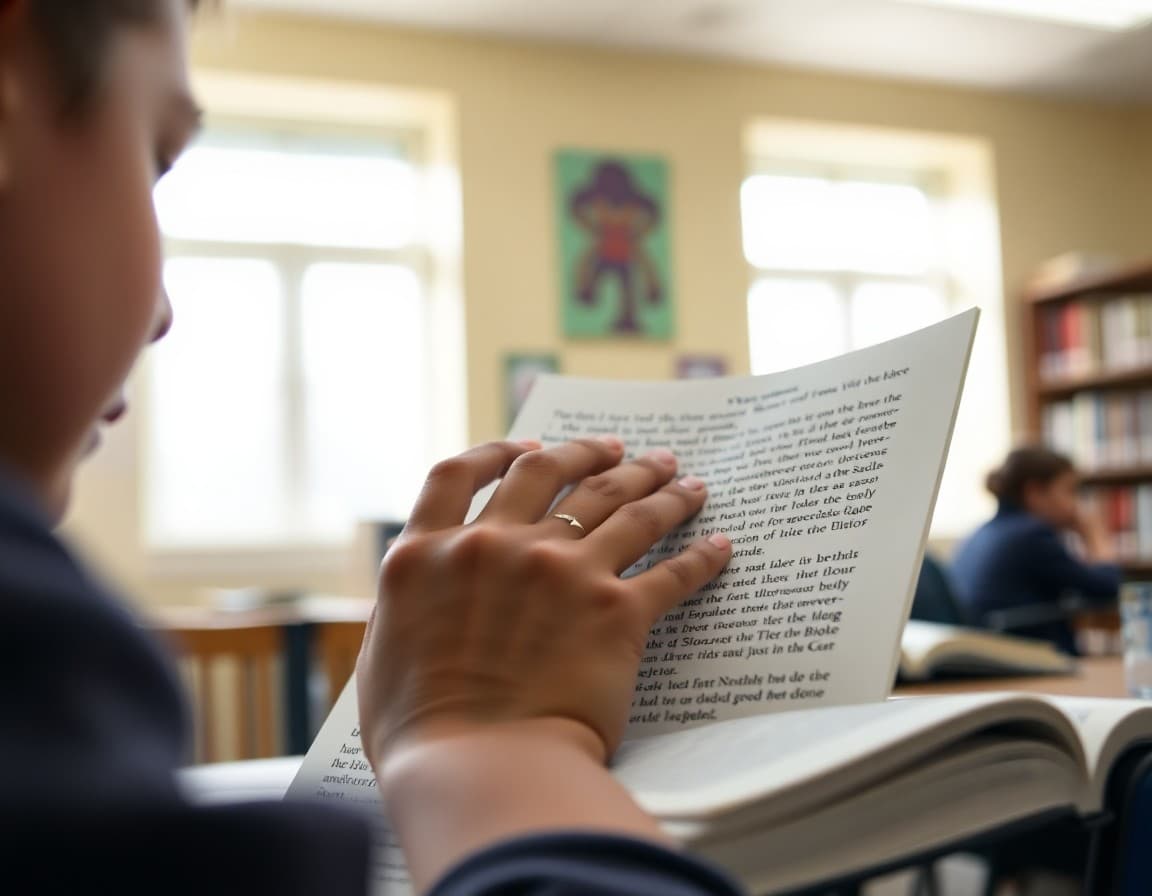
World Braille Day on January 4 is an opportunity for schools to celebrate braille literacy and build community understanding of how blind and visually impaired students access education. A newsletter that explains braille honestly, including why it still matters in the age of screen readers, educates the community and signals that the school takes disability inclusion seriously.
Who was Louis Braille and why does the date matter
Every Braille Day newsletter should briefly acknowledge its origin. "World Braille Day falls on January 4, the birthday of Louis Braille, who was born in France in 1809. Blinded in both eyes at age three after an accident in his father's workshop, Braille developed the tactile reading and writing system that bears his name when he was fifteen years old. The braille code is still used by blind and visually impaired people worldwide as the primary means of tactile literacy." The human story behind the awareness day makes it real for students and families.
Why braille literacy still matters
Many people assume screen readers and audio technology have made braille unnecessary. This is a significant misconception. "Braille literacy is strongly associated with employment, independence, and higher literacy levels for blind individuals. Reading braille is not the same as listening to text being read aloud: it involves the same active, engaged literacy process that print reading does, with the same benefits for spelling, grammar, and writing. A student who cannot read braille is functionally illiterate regardless of how advanced their screen reader is."
How the school supports students with visual impairments
Describe the school's approach to visual impairment accommodation without identifying individual students. "Our school supports students with visual impairments through large-print and braille materials, screen-reading and magnification software, orientation and mobility services, and teacher-of-the-visually-impaired (TVI) services for students who are blind or have significant visual impairment. Students with visual impairments have the same academic expectations as their sighted peers. Their accommodations make those expectations equally accessible."
What sighted students and families should know
Use the newsletter to share a few facts that most families have never been directly taught. Most people with visual impairments are not completely blind: visual impairment exists on a spectrum. Blindness does not indicate intellectual disability. Guide dogs are working animals and should not be petted or distracted when in harness. White canes are navigation tools that represent independence, not limitation. The most respectful response to a blind or visually impaired person is to ask what assistance they want rather than assuming.
Age-appropriate braille activities for classrooms
If the newsletter is for elementary families, include a classroom activity suggestion. "For Braille Day, try printing a braille alphabet chart and inviting students to find the pattern in how the dots are arranged. Even young students find it fascinating to try to read by touch. Books like 'Six Dots: A Story of Young Louis Braille' by Jen Bryant are excellent read-alouds for elementary students. This kind of activity builds empathy and curiosity in a way that posters cannot."
Template: braille awareness newsletter section
"January 4 , World Braille Day January 4 is World Braille Day, celebrating the birthday of Louis Braille, who developed the tactile reading system used by blind people worldwide. In an age of screen readers and audio technology, braille literacy remains essential: research consistently shows that braille readers have higher literacy rates, higher employment rates, and greater independence than those who rely on audio technology alone. In our school, students with visual impairments access the same curriculum as their sighted peers through braille materials, screen-reading software, and specialized services. Resource: [Link to American Foundation for the Blind family guide]."
Daystage makes it easy to send a braille awareness newsletter with embedded links to resources and a professional design that families will read and share throughout the school community.
Get one newsletter idea every week.
Free. For teachers. No spam.
Frequently asked questions
When is World Braille Day and what should a school newsletter cover?
World Braille Day is January 4, the birthday of Louis Braille. A school newsletter around this date can cover: the history of braille and who Louis Braille was, why braille literacy matters for blind and visually impaired students (it is not replaced by audio technology), how the school supports students who are blind or visually impaired, how sighted students and the school community can show inclusive support, and age-appropriate resources for learning about blindness and braille.
Why is braille still important in the age of audio and screen-reading technology?
Braille literacy is strongly correlated with higher employment rates, higher literacy levels, and greater independence for blind individuals. Screen readers and audio technology are valuable tools, but they do not replace the cognitive benefits of reading and writing braille. Braille allows blind individuals to read silently, take notes, access mathematics and music notation, and engage with text in ways that audio technology does not fully replicate. A newsletter can explain this clearly to correct the common misconception that technology has made braille obsolete.
How should a school newsletter describe accommodations for blind and visually impaired students?
Describe accommodations at the program level without identifying individual students. 'Our school supports students with visual impairments through large-print materials, screen-reading software, braille textbooks, and teacher-of-the-visually-impaired (TVI) services. Students who are blind or visually impaired have the same academic expectations as their sighted peers and access the same curriculum through accommodations.' This normalizes accommodation use while preserving student privacy.
What can sighted students and families learn about blindness from a newsletter?
A newsletter can share: that most blind individuals are not completely without light perception (visual impairment exists on a spectrum), that blindness does not imply intellectual disability, that guide dogs and white canes are working tools (not to be petted or moved without permission), and that the most respectful approach to a blind or visually impaired person is to ask what assistance they need rather than assuming. These are facts that children and adults often do not learn unless they are directly taught.
How does Daystage support braille awareness newsletters from teachers?
Daystage lets teachers send braille awareness newsletters with embedded links to the American Foundation for the Blind, the National Federation of the Blind family resources, and age-appropriate books about blindness and visual impairment. A newsletter that links to quality external resources is more useful than one that tells families to search for them. Daystage also makes it easy to include photos from school braille events or activities without design skill.

Adi Ackerman
Author
Adi Ackerman is a former classroom teacher and curriculum writer with 8 years in K-8 schools. She writes about school communication, parent engagement, and what actually works in real classrooms.
More for Special Education
Teacher Newsletter Disability Awareness: Building an Inclusive School Community
Special Education · 6 min read
Teacher Newsletter Assistive Technology: Explaining AT to Families
Special Education · 6 min read
Teacher Newsletter Inclusion Classroom: Explaining Inclusion to Families
Special Education · 6 min read
Ready to send your first newsletter?
3 newsletters free. No credit card. First one ready in under 5 minutes.
Get started free