

Transition Planning Newsletter for Special Education Families: Preparing for What Comes Next
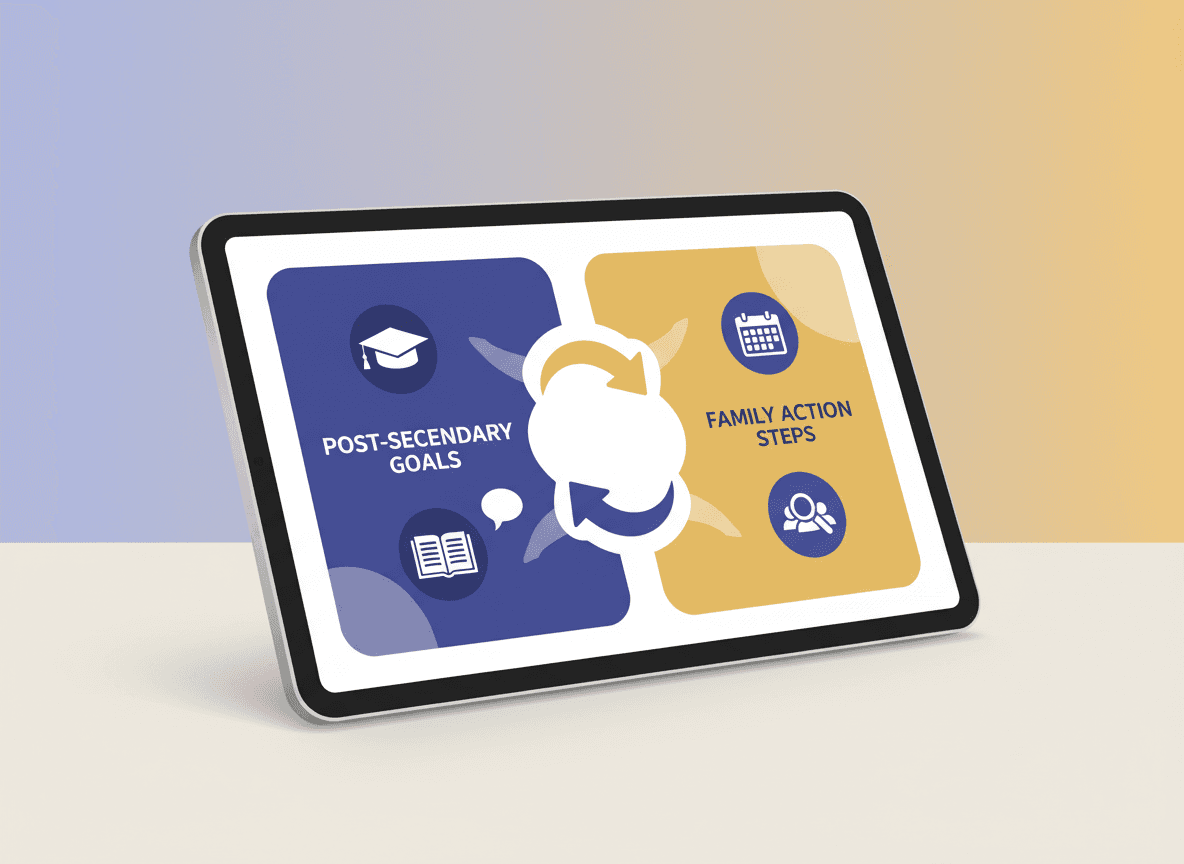
Transition planning for students with disabilities is one of the most consequential and least consistently communicated aspects of special education. IDEA requires that transition planning begin in the IEP by age 16, but the reality is that many families arrive at their child's senior year without a clear picture of what post-secondary options exist, what the transition process looks like, or what they need to do to prepare.
A transition planning newsletter, sent regularly to families of students who are approaching or currently in the transition years, is one of the most practical tools for closing this gap.
What IDEA requires for transition planning
The Individuals with Disabilities Education Act mandates that by the time a student with a disability turns 16, their IEP must include measurable postsecondary goals related to training, education, employment, and where appropriate, independent living skills. The IEP must also include the transition services the school will provide to help the student reach those goals.
This is the legal floor. In practice, effective transition planning starts earlier, involves the student actively in the process, and includes meaningful coordination with postsecondary programs, vocational rehabilitation agencies, and other community resources.
Many families do not know this is coming or what it means until it arrives. Your newsletter is the place to start building that awareness early.
When to start transition communication
Start communicating about transition with families when students are in 8th or 9th grade, even though the formal IEP requirement does not kick in until 16. Families who receive transition information early have more time to explore options, develop realistic expectations, and participate meaningfully in the planning process.
A newsletter for families of students in grades 8-10 might focus on building awareness: what transition planning is, why it matters, and what families can do now to start thinking about postsecondary goals. A newsletter for families of students in grades 11-12 shifts to specific action: what steps are happening now, what families need to do before graduation, and what resources are available in the community.
What to include in a transition planning newsletter
Transition newsletters serve a different purpose than general classroom newsletters. They are informational guides as much as updates. The content that works:
- A clear explanation of the transition planning process. Many families have never heard the term "transition planning" before their child's IEP team brings it up. A newsletter that explains what it is, why it is in the IEP, and what it means for their child's future removes confusion before it becomes a barrier to participation in IEP meetings.
- Postsecondary options that exist in your area. Vocational programs, community college accessibility programs, supported employment options, residential programs, day programs, and other community supports vary significantly by region. A newsletter that gives families a realistic picture of what options exist locally, and where to learn more, is genuinely valuable. Include phone numbers and websites.
- The role of vocational rehabilitation. State vocational rehabilitation agencies are a critical resource for many students with disabilities, but many families do not know they exist. A newsletter section explaining what vocational rehabilitation is, how to apply, and why it makes sense to start the application process in 11th grade (before graduation) is useful information that families often do not get anywhere else.
- Self-determination and student involvement in planning. IDEA emphasizes that the student should be involved in their own transition planning. A newsletter section on how families can support their child in developing self-advocacy skills, knowing their own disability, and being able to communicate their needs is practical and often overlooked.
- Key dates and deadlines. Transition has real deadlines: eligibility cutoff dates for state disability services, application windows for postsecondary programs, graduation timelines. A newsletter that keeps families aware of these dates prevents the painful situation where a student graduates before families have applied for the community supports they will need.
Student involvement in the transition newsletter
One distinctive opportunity with transition newsletters: involve students in the content. A student-authored section of the newsletter, where a graduating student with a disability describes their postsecondary plans and what they learned through the transition process, is both powerful content and a model for younger students and families.
With the student's permission and appropriate privacy protections, a profile of a former student who successfully transitioned to a vocational program, a supported employment position, or a college program can make postsecondary outcomes feel real and achievable for families who are not sure what is possible for their child.
Addressing the emotional dimension
Transition planning is emotionally charged for many families of students with disabilities. The approaching end of school-age entitlement to special education services, the uncertainty about what comes next, and the fear of the so-called "cliff" that many families experience after high school graduation are real and significant concerns.
Your newsletter can acknowledge this directly without dwelling on it. "We know that thinking about what comes after high school can feel overwhelming. The transition planning process is designed to help you and your student figure this out step by step, not all at once." A brief, honest acknowledgment that this is hard goes further than cheerful optimism about all the great options available.
Confidentiality considerations
Transition newsletters are group communications. Individual student transition goals, disability diagnoses, and IEP content remain private and are shared only in individual communications with that student's family.
Any student profiles or stories included in the newsletter require explicit written permission from the student and their family. Keep it general and use first names only, or use composite stories that represent common experiences without identifying specific individuals.
Using Daystage for transition communication
Daystage allows you to create a subscriber group for families of students in transition years and send targeted newsletters to this group rather than the whole school population. Transition planning content is not relevant to families of kindergartners. Targeted delivery keeps the communication focused and useful.
The block editor makes it easy to create a newsletter with multiple sections: a process explanation, a local resources spotlight, a key dates section, and a contact information section. The consistent format helps families navigate the content efficiently even when they are processing it during a stressful period of their child's education.
The stakes are high enough to get this right
Post-secondary outcomes for students with disabilities are significantly worse than for students without disabilities. High unemployment, underemployment, and social isolation are common outcomes in the research. One of the most consistent predictors of better outcomes is family engagement in the transition planning process, starting early.
Your newsletter is one of the most direct ways to bring families into that process. Use it.
Get one newsletter idea every week.
Free. For teachers. No spam.
Frequently asked questions
When should special education teachers begin communicating transition planning to families?
IDEA requires that transition planning be included in the IEP no later than age 16, but best practice is to begin communicating about post-secondary expectations at age 14 or even earlier. Families need time to understand what transition planning involves, what services are available, and how their role changes as their child moves toward adulthood.
What should a transition planning newsletter for special education families include?
Include what post-secondary goals are being discussed in the IEP process, what community or vocational experiences the student may access, upcoming agency contacts or enrollment deadlines, and specific actions families can take at home to support the transition. IDEA's transition planning requirements cover education, employment, and independent living, so the newsletter should address all three areas over time.
How should teachers communicate about transition planning in a way that respects student self-determination?
Center the student's own goals and preferences in the language you use rather than writing from a purely parent-facing perspective. Transition planning under IDEA explicitly requires student involvement in the IEP process, and newsletters that reflect the student's voice signal to families that self-determination is being taken seriously.
What are common challenges with transition planning communication for SPED families?
The emotional weight of transition is the biggest barrier. Parents who have been in IEP meetings for years often resist conversations about graduation or aging out of services because it forces them to confront their child's future in ways they have been deferring. Communication that is factual and practical helps, but it needs to acknowledge the emotional reality without dismissing it.
How can special education coordinators manage transition communication alongside regular IEP newsletters?
A platform like Daystage lets you create a dedicated transition planning subscriber group for families of students in the transition age range, so targeted communication about post-secondary timelines reaches the right families without being irrelevant noise for families of younger students.

Adi Ackerman
Author
Adi Ackerman is a former classroom teacher and curriculum writer with 8 years in K-8 schools. She writes about school communication, parent engagement, and what actually works in real classrooms.
More for Special Education
Visual Impairment Newsletter: School Communication for VI Students and Families
Special Education · 5 min read
Down Syndrome Inclusion Newsletter: Communicating with Families About Inclusive Supports
Special Education · 5 min read
Special Education Resource Room Newsletter: Communicating Targeted Instruction
Special Education · 5 min read
Ready to send your first newsletter?
3 newsletters free. No credit card. First one ready in under 5 minutes.
Get started free