

Teacher Newsletter Special Services: Introducing Support Staff to Families
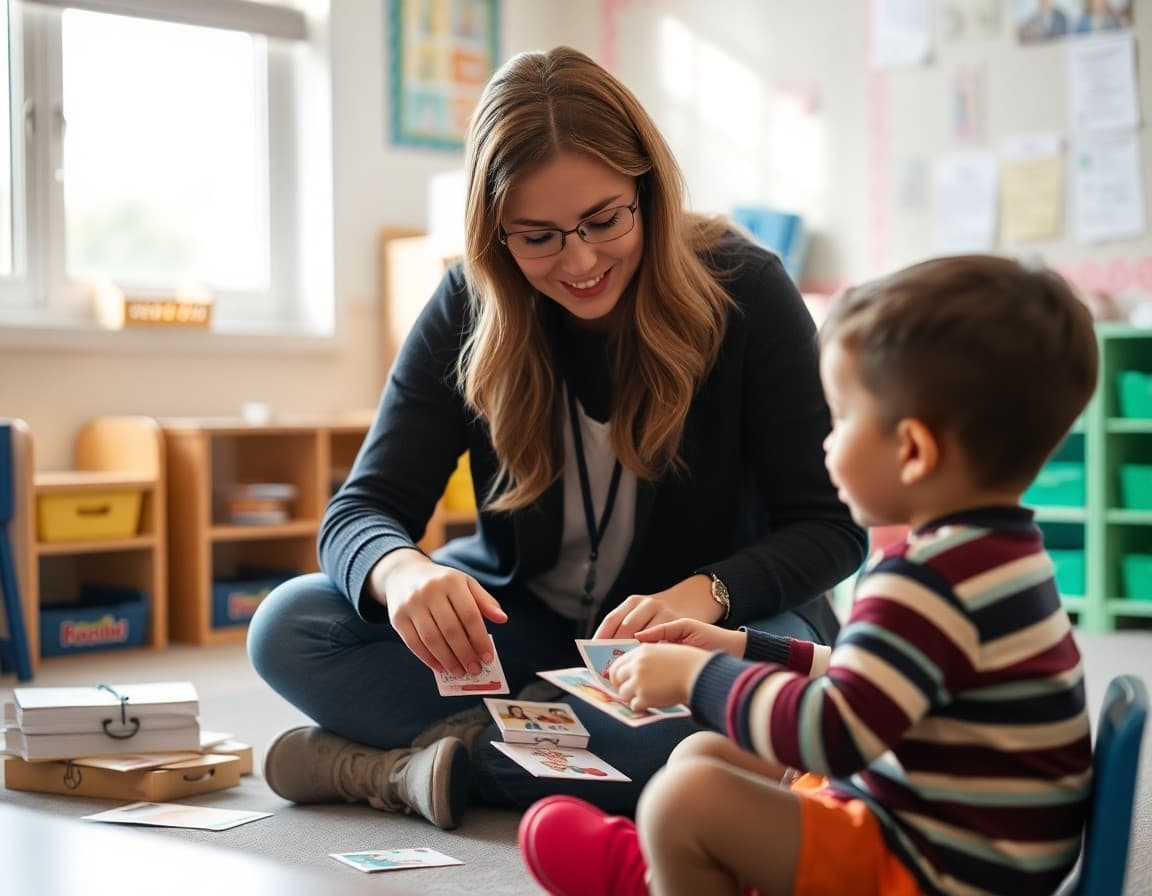
Many families with students receiving special services are not entirely clear on who does what. They know their student has a speech therapist, but they are not sure what the speech therapist does in relation to the classroom teacher. They know there is a paraprofessional in the room, but they are not sure what that person's role is or how to contact them. A newsletter that introduces the special services team clearly solves this confusion and gives families a clearer picture of who is supporting their student.
Introduce each role with functional language
Describe each role in terms of what it means for student participation in school. Not job-title language. "Our school psychologist conducts educational evaluations and provides mental health support for students and families. If you have concerns about your student's learning profile or social-emotional wellbeing, the school psychologist is a good first contact." "Our speech-language pathologist works with students on communication goals: articulation, language development, and the social communication skills needed for peer and classroom participation."
Explain the relationship between services and the classroom
Families often wonder whether services happen in addition to or instead of classroom instruction. Clarify the model. "Most services are pull-out, meaning students leave the classroom for a scheduled session and return. Some services are push-in, meaning the provider works with the student in the general education classroom during instruction. In both cases, the service provider and classroom teacher communicate about what is being worked on so we can reinforce goals consistently."
Occupational therapy and physical therapy: the difference
Many families confuse OT and PT. A brief distinction is useful. "Occupational therapy focuses on fine motor skills (handwriting, scissors, tool use), sensory processing and regulation, and daily living skills. Physical therapy focuses on gross motor skills, mobility, balance, and movement. Some students receive both; most students receive one or neither. Both therapists work within the educational setting toward goals that affect school participation."
The role of paraprofessionals
Paraprofessionals are valuable and often invisible members of the special education team. Name them explicitly. "Paraprofessionals provide direct support to individual students or small groups under the supervision of a licensed teacher. They are not babysitters or informal helpers. They implement specific instructional strategies, support communication device use, help students manage transitions, and assist with daily living skills. Students who have paraprofessional support have it because their IEP team determined it was needed for them to access their education."
Template: special services introduction section
"Meet Our Special Services Team [Name], School Psychologist: Educational evaluations, mental health support, family consultation. Reach [Name] at [email]. [Name], Speech-Language Pathologist: Communication goals, language development, articulation, social communication. Reach [Name] at [email]. [Name], Occupational Therapist: Fine motor skills, sensory strategies, handwriting, daily living skills. Reach [Name] at [email]. [Name], Special Education Teacher: IEP coordination, specialized instruction, family communication. Reach [Name] at [email]. All team members communicate regularly to coordinate support for your student. Questions about who to contact for what? Start with your student's classroom teacher."
Give families contact information for each person
The introduction newsletter is only useful if families know how to reach each person. Include direct email for each service provider. This reduces the bottleneck of every family question flowing through the classroom teacher and empowers families to go directly to the right person. It also signals that the school welcomes family communication with all team members, not just the classroom teacher.
Daystage makes it easy to build a special services introduction newsletter with direct contact links for every team member so families know exactly who to reach and how.
Get one newsletter idea every week.
Free. For teachers. No spam.
Frequently asked questions
What special services staff roles should a school newsletter introduce to families?
A comprehensive special services newsletter should introduce: school psychologists (evaluation, mental health support, consultation), speech-language pathologists (communication goals, language development, articulation), occupational therapists (fine motor, sensory processing, daily living skills), physical therapists (gross motor, mobility, adaptive PE), paraprofessionals and instructional aides (direct support in classrooms and community settings), and resource room or special education classroom teachers (specialized instruction and IEP coordination). Each role should be described in terms of what it means for student participation in school.
How should a newsletter explain the school psychologist's role to families?
Many families think the school psychologist only gets involved when there is a problem. Clarify: 'Our school psychologist conducts educational evaluations to understand how students learn, provides mental health consultation and support, and serves as a resource for teachers and families navigating concerns about a student's development. If you have questions about a possible evaluation or about your student's social-emotional wellbeing at school, the school psychologist is a good first contact.' This expands families' understanding of when and how to seek the psychologist's help.
How should teachers explain the role of paraprofessionals to families?
Explain what paraprofessionals do in concrete terms. 'Paraprofessionals (also called instructional aides or educational assistants) provide direct support to individual students or small groups under the supervision of a licensed teacher. In our classroom, a paraprofessional may help a student access instruction, manage transitions, use communication devices, or practice daily living skills. Paraprofessionals are valuable members of the team who bridge the gap between what a student currently can do and what they need to be able to do to participate fully.'
What should families know about how special services are coordinated?
Families should know that special services are coordinated through the IEP or 504 plan, that all service providers are in communication with the classroom teacher, that progress across services is reviewed together at IEP meetings, and that families can request a coordination meeting at any time if they feel services are not working together effectively. Many families do not realize they can ask for a team meeting outside of the annual review.
How does Daystage support newsletters that introduce special services staff?
Daystage lets teachers and schools send a special services introduction newsletter at the start of the year with photos, bios, and contact information for each services provider. Families can tap through to email or call each provider directly from the newsletter. A well-organized special services introduction newsletter helps families know who to contact about what, which reduces the bottleneck of every question flowing through the classroom teacher.

Adi Ackerman
Author
Adi Ackerman is a former classroom teacher and curriculum writer with 8 years in K-8 schools. She writes about school communication, parent engagement, and what actually works in real classrooms.
More for Special Education
Ready to send your first newsletter?
3 newsletters free. No credit card. First one ready in under 5 minutes.
Get started free