

Teacher Newsletter Paraprofessional Intro: Introducing Classroom Aides to Families
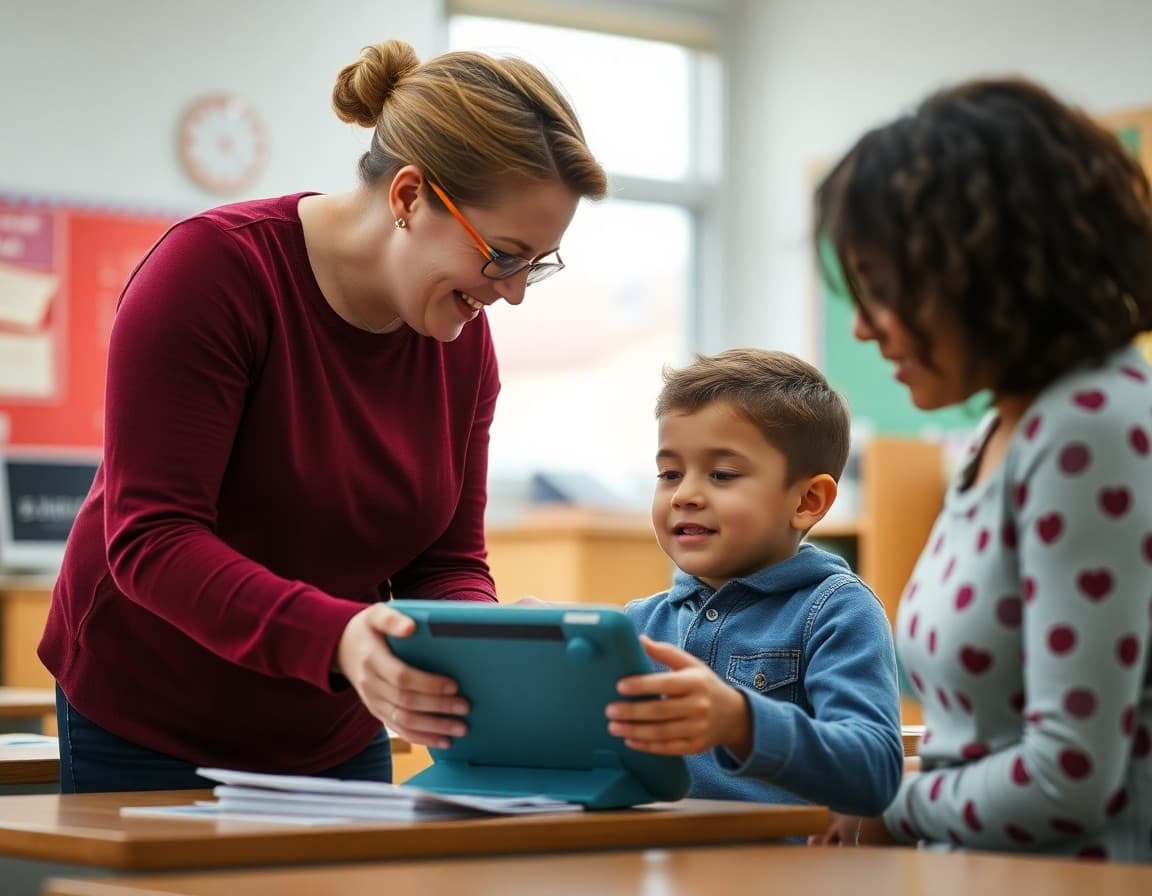
When a paraprofessional joins a classroom, many families are not sure what to make of it. Is this person a volunteer? A student teacher? Someone assigned specifically to their child? A newsletter that introduces the paraprofessional clearly, names their role, and explains what they actually do sets the right expectations from the start and prevents misunderstanding throughout the year.
Introduce the paraprofessional as a professional
Many families have a limited understanding of what paraprofessionals do. Set the record straight from the first newsletter. "Our classroom includes [Name], who serves as a paraprofessional this year. Paraprofessionals are trained educational professionals who implement instructional strategies, support student communication and behavior goals, assist with daily living skills, and help students access the general curriculum. [Name] works under my supervision and is an important member of our team." Naming the role clearly prevents families from underestimating the paraprofessional's contribution.
Explain that the goal is independence, not dependence
Best practice in paraprofessional support uses a prompting hierarchy that gives students only as much support as needed and gradually fades that support as the student develops the skill. Families benefit from understanding this explicitly. "The goal of paraprofessional support is to help your student develop independence, not to do things for them. [Name] uses evidence-based prompting strategies that give your student only the support needed at each step, with the intention of fading that support over time. If you notice your student is becoming over-reliant on adult prompts at home, that is worth discussing with the team."
Clarify the communication structure
Families sometimes contact paraprofessionals directly about program or IEP questions, which creates confusion about roles. Clarify this without diminishing the paraprofessional. "For questions about your student's IEP goals, services, or academic progress, please contact me directly. Paraprofessionals implement the instructional program under my supervision but do not make decisions about the program itself. [Name] can share observations about how your student's day went. Questions about the overall program should come to me."
Address the assigned-aide question
Some families wonder whether the paraprofessional is assigned specifically to their student or supports the whole class. Both arrangements exist and families deserve to know which applies. "Some paraprofessionals are assigned to work with a specific student throughout the day. Others support a classroom or small group of students across different activities. Your student's IEP will specify if one-to-one paraprofessional support is a designated service. If you are not sure, ask at your next IEP meeting." This gives families a place to go with the question rather than feeling uncertain.
Template: paraprofessional introduction newsletter section
"Meet Our Classroom Team This year, our classroom is supported by [Name], who works as a paraprofessional. [Name] helps students access instruction, practice communication and daily living goals, and develop independence in the school setting. Questions about your student's IEP goals, services, or progress? Contact me at [email]. [Name] and I communicate daily and work as a coordinated team to support every student in our room."
Highlight what the paraprofessional contributes
Paraprofessionals are often under-acknowledged. A newsletter that celebrates their contribution models respect for the whole team. "Working alongside [Name] this year, I have been consistently impressed by [their] ability to build trust with students while maintaining high expectations. Students who receive paraprofessional support make faster progress when the paraprofessional is consistent, well-trained, and working as part of a coordinated team. We are fortunate to have [Name] in our program."
Daystage makes it easy to send a team introduction newsletter at the start of the year with professional bios and photos for all classroom staff, so families know exactly who is supporting their student.
Get one newsletter idea every week.
Free. For teachers. No spam.
Frequently asked questions
How should a teacher introduce a paraprofessional to families in a newsletter?
Introduce the paraprofessional by name, explain their role in plain language, and describe what they do in the classroom. 'Our classroom this year includes [Name], who works as a paraprofessional supporting students with specialized needs. [Name] works under my supervision to help students access instruction, practice communication goals, manage transitions, and develop independence in daily routines. [Pronoun] is a trained professional and a valued member of our team.' Naming the role clearly prevents families from thinking of the paraprofessional as an informal helper.
What should families know about how paraprofessionals support student independence?
Best practice in special education uses paraprofessionals to build independence, not to create dependence. Families should know: 'The goal of paraprofessional support is to help your student develop skills so they can do more independently over time. [Name] uses a prompting hierarchy that gives your student only as much support as needed, gradually fading assistance as the skill develops. If your student seems over-reliant on adult support at home, let us know , we can discuss strategies for reducing prompt dependence in both settings.'
Should families contact paraprofessionals directly?
This depends on the school and district policy, but generally: communication about a student's IEP, goals, and progress should go through the licensed special education teacher, not the paraprofessional. Paraprofessionals implement the program; they do not set it. A newsletter can clarify this without diminishing the paraprofessional's role. 'For questions about your student's goals, services, or progress, please contact me directly. [Name] is happy to share observations from the day, and I will coordinate any questions about the overall program.'
What misconceptions about paraprofessionals should teachers address in newsletters?
Common misconceptions worth addressing: paraprofessionals are not babysitters (they implement specific instructional strategies), more paraprofessional support is not always better (over-support can inhibit independence), the paraprofessional is not a replacement for specialized instruction, and paraprofessionals work under the direction of the classroom teacher. Families who understand these distinctions are better positioned to support what happens at school.
How does Daystage support newsletters that introduce paraprofessionals to families?
Daystage lets teachers send a professional newsletter at the start of the year introducing all classroom staff, including paraprofessionals, with photos and brief role descriptions. Families who know who is in the classroom and what each person does feel more informed and connected to the school. A well-organized team introduction newsletter through Daystage sets a collaborative tone for the year and reduces the anxiety of families meeting new support staff.

Adi Ackerman
Author
Adi Ackerman is a former classroom teacher and curriculum writer with 8 years in K-8 schools. She writes about school communication, parent engagement, and what actually works in real classrooms.
More for Special Education
Teacher Newsletter Special Services: Introducing Support Staff to Families
Special Education · 6 min read
Teacher Newsletter Inclusion Classroom: Explaining Inclusion to Families
Special Education · 6 min read
Teacher Newsletter Co-Teaching: Explaining the Co-Teaching Model to Families
Special Education · 6 min read
Ready to send your first newsletter?
3 newsletters free. No credit card. First one ready in under 5 minutes.
Get started free