

Special Education RTI Newsletter: Tiered Support Updates
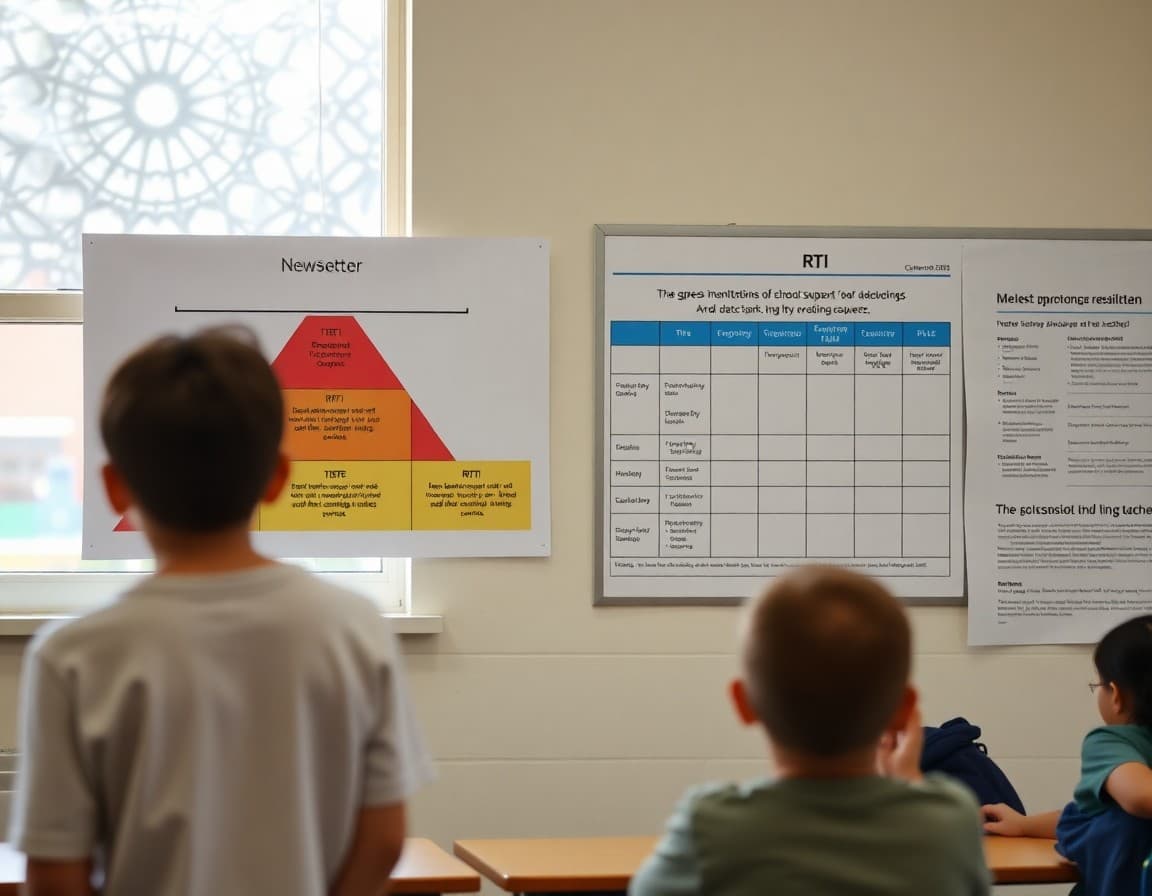
RTI and MTSS frameworks are among the most powerful early intervention tools schools have. They are also among the most poorly communicated. Families often learn their child is in Tier 2 intervention weeks after it started, or they find out their child is being considered for a special education evaluation without understanding how RTI data contributed to that decision. A clear, proactive newsletter changes that.
RTI Basics for Families Who Are New to the Framework
Response to Intervention is a structured approach to supporting all learners through tiered levels of instruction and intervention. Tier 1 is the high-quality instruction all students receive in the general education classroom. Approximately 80 percent of students have their needs met at Tier 1 alone. Tier 2 provides additional targeted support for students who need more than Tier 1 to make adequate progress, typically 15 to 20 percent of students. Tier 3 provides intensive, individualized intervention for students who do not respond adequately to Tier 2, typically 5 to 10 percent of students.
Tier placement is not a permanent label. Students move between tiers based on data showing their response to intervention. A student placed in Tier 2 in October who makes strong progress may return to Tier 1 only by January.
Communicating Tier Placement to Families
Families should not learn their child is receiving Tier 2 support through their child saying "I go to a different reading group now." Send a brief, direct communication when a student is placed in Tier 2 or Tier 3 intervention. Include what the intervention is, why the student was placed, how often it occurs, and what the next review point is.
"Your child has been placed in a Tier 2 reading intervention group that meets for 30 minutes four times per week. This intervention targets [skill area]. Data from our fall benchmark assessment indicated your child would benefit from additional support in this area. We will review progress data in eight weeks and determine whether to continue, intensify, or discontinue the intervention at that point."
That communication is specific, data-grounded, and respectful of the family's right to know what is happening.
Template: RTI Newsletter Update Section
"For families of students in intervention support groups:
We complete progress monitoring data every two weeks for all students in Tier 2 and Tier 3 intervention groups. This data shows us whether the intervention is working and guides our decisions about next steps.
For the current data review period, students in our [reading/math] intervention groups are working on [specific skill]. Progress is measured using [assessment name]. If your child's data shows adequate response to intervention, we will discuss next steps at our scheduled review meeting. If you would like to see your child's data at any point, please reach out to me directly."
When RTI Data Leads to a Special Education Referral
When a student does not show adequate response to well-implemented Tier 2 and Tier 3 interventions, the intervention team typically convenes a meeting to discuss next steps. A special education evaluation referral may result. Families must consent to an evaluation before it can occur.
A newsletter that explains this progression before families experience it helps them understand that a referral is a logical next step, not a failure. "When RTI data shows that a student is not responding adequately to standard interventions, we bring the team together to discuss whether a special education evaluation might help us understand how to better support the student." That framing is accurate and removes the alarm that an unexpected referral often triggers.
What Families Can Do During an RTI Intervention
Families who understand what their child is working on can provide meaningful home support. A newsletter section that names the current intervention focus and provides one or two home practice suggestions makes the parent-school partnership concrete. "Students in our Tier 2 math intervention are practicing number sense with numbers to 20. At home, activities like counting objects, playing number matching games, or doing simple addition with pennies reinforce what we practice at school."
Get one newsletter idea every week.
Free. For teachers. No spam.
Frequently asked questions
What is Response to Intervention and how does it relate to special education?
Response to Intervention (RTI), also called Multi-Tiered System of Supports (MTSS), is a framework schools use to identify struggling students early and provide increasing levels of support based on each student's response to instruction. Tier 1 is high-quality general education. Tier 2 adds targeted small-group intervention. Tier 3 provides intensive, individualized support. RTI data is often used as part of the process for determining whether a student may have a learning disability and needs special education evaluation.
What should families know when their child moves to Tier 2 or Tier 3?
Families should be notified promptly when their child moves to a higher tier of support. They should understand what the additional intervention is, who provides it, how often it occurs, and what data will be collected to measure the student's response. IDEA requires parental notification before a student is placed in Tier 3 intensive intervention in many states. Check your state's specific RTI and notification requirements.
Can RTI data be used to qualify a student for special education?
Yes. Under IDEA's 2004 reauthorization, schools may use a process that determines if a student responds to scientific, research-based intervention as part of the evaluation for a specific learning disability. This means Tier 2 and Tier 3 intervention data, progress monitoring results, and documentation of the student's response can be used as evidence in a special education evaluation. Schools cannot use RTI to delay an evaluation indefinitely, however.
What does it mean if a student does not respond to RTI interventions?
Lack of adequate response to well-implemented intervention is a significant data point that typically triggers a referral for a special education evaluation. It does not automatically mean the student has a learning disability or needs special education. It means the team needs more information about why the student is not progressing and what additional supports might help. A newsletter can explain this distinction so families understand what the next steps are when RTI is not producing sufficient progress.
How can newsletter communication help families support RTI at home?
A newsletter that explains the specific skill area being targeted in Tier 2 or Tier 3 intervention and provides home practice suggestions gives families a way to reinforce the school's work. Even 10 minutes of targeted reading or math practice at home that mirrors the intervention approach significantly accelerates progress. Daystage newsletters let teachers send targeted updates to relevant family subgroups if the platform supports list segmentation.

Adi Ackerman
Author
Adi Ackerman is a former classroom teacher and curriculum writer with 8 years in K-8 schools. She writes about school communication, parent engagement, and what actually works in real classrooms.
More for Special Education
Ready to send your first newsletter?
3 newsletters free. No credit card. First one ready in under 5 minutes.
Get started free