

Speech-Language Therapy Newsletter for School Families
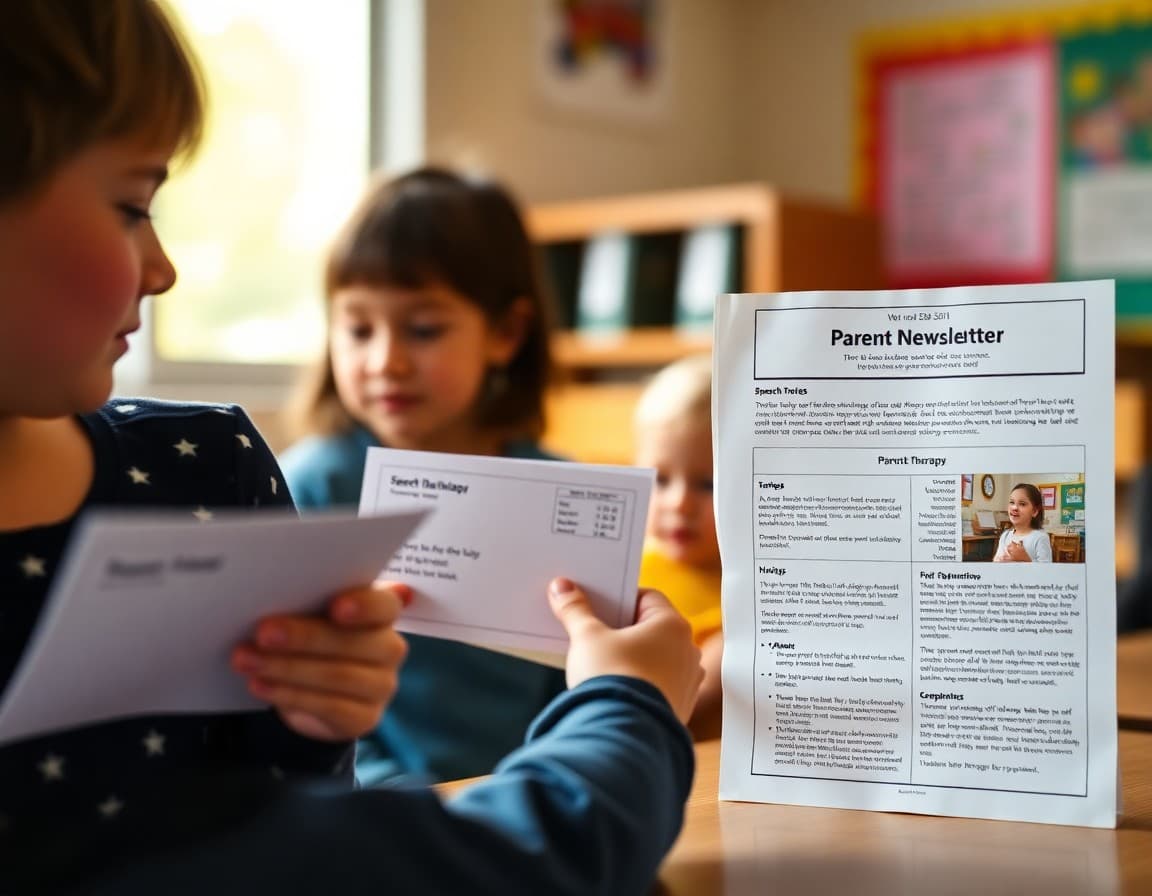
Speech-language pathologists often have the widest family communication gap in the school building. Families know their child goes to speech. Most do not know what happens there, what the goals are, or what they can do at home to help. A consistent newsletter changes that.
What Families Typically Know and Do Not Know About Speech Therapy
Most families know that speech therapy exists and that their child participates. Many do not know what type of goals their child is working on, how progress is measured, how long therapy typically lasts, or what generalization means and why it matters. A newsletter that answers these questions builds the foundation for a family partnership that actually supports the child's progress.
Families often assume that if a child can say a sound correctly in a session with the SLP, they should be able to say it correctly everywhere. Understanding the staged process of articulation therapy, from isolated sound production to conversational generalization, gives families realistic expectations and prevents the frustration of thinking therapy is not working when in fact it is progressing normally.
Explaining Therapy Types to Families
Speech-language therapy addresses a wide range of communication needs. Your newsletter should name what areas you serve at your school and what each area means in practical terms.
Articulation: producing speech sounds accurately. Students who substitute, omit, or distort sounds are working on articulation. Most common targets include R, S, Th, and L sounds depending on age.
Language: understanding and using language effectively. This includes vocabulary, grammar, following directions, making inferences, and organizing spoken or written communication.
Fluency: the flow of speech. Students who stutter or cluture work on fluency strategies and self-monitoring.
Social communication (pragmatics): using language appropriately in social contexts, including turn-taking in conversation, understanding indirect language, and reading social cues.
AAC: students who cannot meet communication needs through natural speech alone may use augmentative and alternative communication systems.
Template: SLP Monthly Newsletter
"Hello, families. Here is a brief update on what we are working on in speech-language therapy this month.
Articulation groups: students in our articulation group are currently working on [target sound] in [stage: words / phrases / conversation]. At this stage, you might hear your child correctly produce [sound] when they are focused on it. Inconsistency in conversation is normal and expected. Practice opportunity: ask your child to read a short passage aloud and gently model correct production when they miss the target sound.
Language groups: this month we are focusing on [skill, e.g., making inferences from context clues]. Practice opportunity: when reading together, pause and ask 'what do you think will happen next?' or 'why do you think that character felt that way?'
Upcoming: IEP progress reports for all students receiving speech-language services will go home with the [quarter] report cards. If you would like to discuss your child's progress before then, please email me at [email]."
Carryover: The Real Work Happens Between Sessions
Students in pull-out speech therapy typically receive 30 to 60 minutes per week of direct service. The rest of their waking hours are practice opportunities. Carryover, applying therapy skills in natural environments outside the therapy room, is where progress becomes permanent. Families who actively provide practice opportunities produce faster and more durable generalization than families who leave progress entirely to the therapy session.
Your newsletter can include a brief "practice this week" section each month that names the current target and two specific home contexts. Dinner conversation, car rides, and bedtime reading are three reliable practice contexts for most families.
Communicating About Progress and Discharge
When a student is approaching discharge from speech therapy services because they have met their goals, communicate with families proactively. Explain what discharge means: the goals have been met and the student no longer requires direct services. Explain that if the family has concerns in the future, they can request a new evaluation. Discharge that is not explained can feel like abandonment to families. Discharge that is explained and celebrated is a success story.
Get one newsletter idea every week.
Free. For teachers. No spam.
Frequently asked questions
What should a speech-language therapy newsletter cover?
Cover how your therapy sessions are structured, what types of goals you typically address (articulation, language, fluency, social communication, voice), how families can identify when a child is practicing a skill versus struggling, and what home practice looks like. Families who understand the therapy process are more consistent supporters of carryover at home, which is where most of the skill generalization actually happens.
How do I explain articulation goals to families without using clinical jargon?
Translate each goal into what it means in daily speech. 'Working on /r/ in all positions in conversation' becomes 'We are practicing the R sound, which is one of the last sounds to develop, in all types of words and in natural conversation.' Explain that articulation therapy is gradual: sound in isolation, then syllables, then words, then phrases, then conversation. Families who understand the stages know what level of carryover to expect at home.
How often should an SLP communicate with families?
At minimum, a formal progress report at each report card period as required by IDEA. Beyond that, a monthly newsletter covering what you are working on broadly is valuable. For students making slow progress or with complex needs, more frequent brief communications help families stay engaged and informed. For any student using AAC or a communication device, weekly brief communication about how device use is progressing is appropriate.
What is the most important thing families can do at home to support speech therapy goals?
Talk. Specifically, the research is clear that conversational interaction with caring adults is one of the strongest predictors of language development. Beyond general conversation, families who practice the specific targets their child is working on in therapy produce significantly better generalization. A newsletter that names the current targets and suggests two to three home practice contexts, like dinner table conversation or reading time, gives families a practical action plan.
Can a newsletter explain why some children receive pull-out therapy and others receive push-in support?
Yes, and it is worth explaining. Families sometimes wonder why their child leaves the classroom for therapy while a classmate gets in-classroom support. A brief explanation that placement decisions are based on individual student goals, session intensity needed, and the least restrictive environment principle helps families understand the decision without feeling like their child is receiving inferior service. Daystage lets you include this kind of contextual explanation clearly.

Adi Ackerman
Author
Adi Ackerman is a former classroom teacher and curriculum writer with 8 years in K-8 schools. She writes about school communication, parent engagement, and what actually works in real classrooms.
More for Special Education
Ready to send your first newsletter?
3 newsletters free. No credit card. First one ready in under 5 minutes.
Get started free