Family Barriers to Attendance Newsletter: Addressing Root Causes With Families
How schools can use newsletters to identify and address the family-level barriers that drive chronic absenteeism, from transportation and housing instability to childcare and economic hardship.
FMLA and Medical Absence Communication Newsletter: What Schools Need to Tell Families
Extended medical absences and FMLA-related school situations are more common than most schools acknowledge in their newsletters. Here is how to communicate what families need to know about extended health absences and educational rights.
High School Attendance Communication Newsletter: What Families Need to Hear at This Level
High school attendance problems carry higher stakes than at any earlier grade level. Here is how to communicate with families about attendance in a way that is honest about those stakes without being alarmist.
How to Communicate Attendance Expectations to New Families
New families join your school every year without any of the context returning families have built up. Here is how to communicate attendance expectations to new families in a way that sets the relationship up right.
Kindergarten Attendance Newsletter for Parents: What to Say and When
A guide for kindergarten teachers and principals on communicating attendance expectations to new school families who are just learning how school works.
Kindergarten Attendance Newsletter: Building Attendance Habits From the First Year
How schools can use kindergarten newsletters to establish consistent attendance habits from the start, communicate the importance of early attendance, and support families navigating the transition to full-day school.
Mental Health and Attendance Newsletter: When School Avoidance Is a Mental Health Issue
How schools can use newsletters to help families recognize when school avoidance and chronic absence are driven by mental health issues, and how to connect students with support rather than treating absence as a discipline problem.

Middle School Attendance Communication: What Parents Need to Hear
Middle school attendance problems look different from elementary. This guide covers how to communicate with families in a way that actually changes behavior.
Middle School Attendance Newsletter: Reaching Families When Student Motivation Declines
How middle schools can use newsletters to address the attendance dip that commonly occurs in grades 6-8, communicate with families about motivational factors, and support student engagement before patterns become chronic.

Multi-Tiered Attendance Support Newsletter: How to Communicate Your MTSS Approach to Families
A multi-tiered attendance support system works better when families understand how it operates. Here is how to explain your MTSS attendance framework in a newsletter that builds family trust and cooperation.
Parent Role in Attendance: How to Communicate Shared Responsibility Through Your Newsletter
Attendance is not just a school responsibility. Your newsletter is the right place to explain what parents can do to support consistent attendance without turning every issue into a lecture.
Perfect Attendance Policy Newsletter: How to Communicate Your Approach Without Pressure
Perfect attendance policies are common but often poorly communicated. Here is how to explain your school's approach to perfect attendance in a way that motivates without inadvertently pressuring families to send sick children to school.
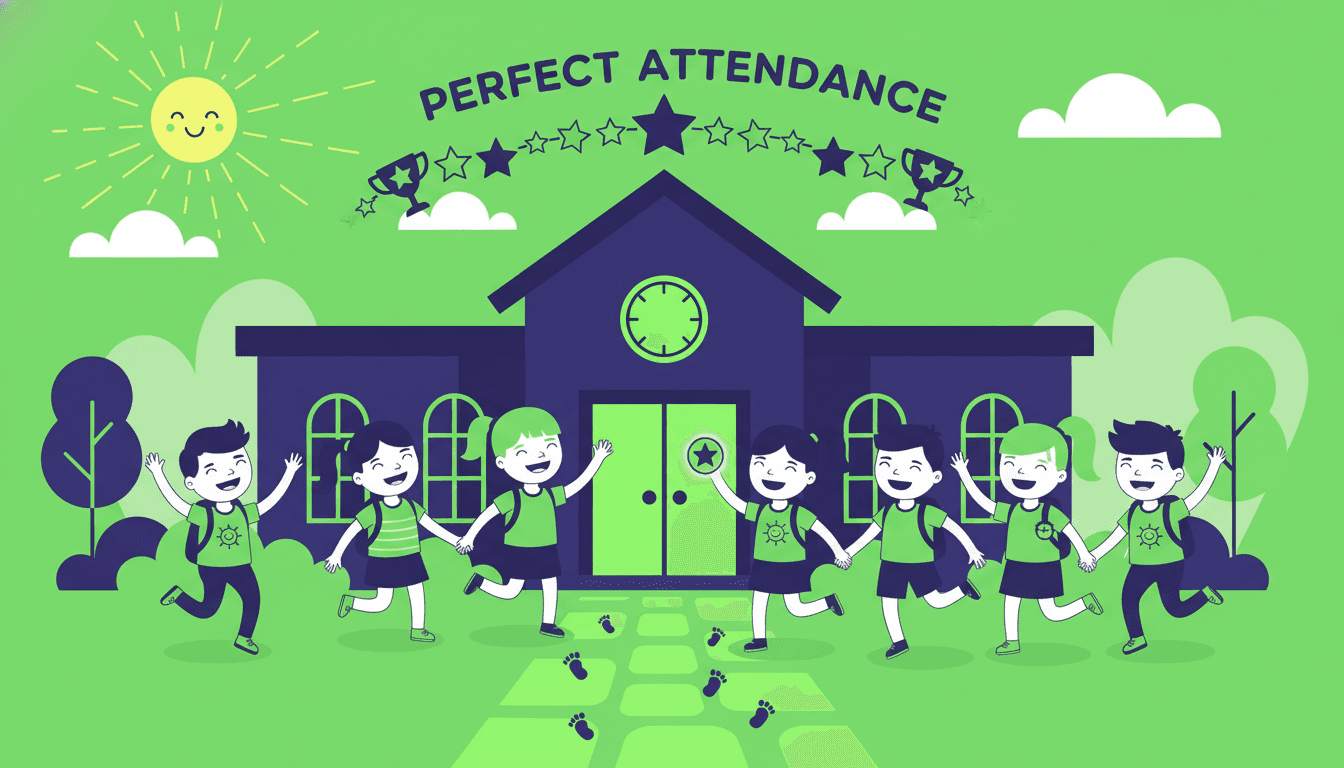
Perfect Attendance Recognition Newsletter: Celebrating Attendance Achievements With Families
How schools can use newsletters to recognize and celebrate perfect and excellent attendance, communicate recognition events to families, and build a school culture where consistent attendance is valued and honored.

Principal Attendance Letter Newsletter: How Principals Can Use Direct Communication to Move Families
A message from the principal carries more weight than a message from an office. Here is how school principals can use newsletter letters and direct communications to make attendance a school-wide priority.
Re-Enrollment and Return-to-School Attendance Newsletter: Welcoming Students Back After Extended Absence
How schools can use newsletters to support students returning from extended absence, communicate re-enrollment procedures, and make the return to school as smooth and welcoming as possible for families.
School Attendance Awareness Month Newsletter: September Communication for Attendance Month
How schools can use September Attendance Awareness Month as a communication opportunity, building family understanding of attendance's importance and launching the year's attendance culture.
School Counselor Attendance Outreach Newsletter: Connecting Families to Support Early
School counselors are often the most effective bridge between attendance problems and real solutions. Here is how counselors can use the school newsletter to make that outreach visible and accessible.

School Nurse and Attendance: How to Communicate the Health-Attendance Connection to Families
The school nurse sees attendance patterns that no other staff member does. Here is how to use the newsletter to help families understand the role the nurse plays in supporting consistent attendance.
Spring Attendance Newsletter: Preventing the End-of-Year Attendance Decline
How schools can use spring newsletters to address the attendance decline that typically occurs in April and May, communicate the importance of maintaining attendance through the final weeks, and keep students engaged heading into summer.

Student Attendance Incentive Program Newsletter: What to Communicate and When
Attendance incentive programs motivate students and families when they are designed and communicated well. Here is how to explain your incentive program in the newsletter in a way that generates real engagement.
Tardiness and Late Arrival Newsletter: Communicating the Impact of Chronic Lateness to Families
How schools can use newsletters to communicate the academic and social impact of chronic tardiness, explain late arrival policies, and support families in building morning routines that bring students to school on time.
Tardy Policy Communication Newsletter: How to Address Chronic Lateness with Families
Tardiness disrupts classrooms and affects student learning in ways families often underestimate. Here is how to communicate your tardy policy through newsletters in a way that gets results.
Title I School Attendance Newsletter: Attendance Communication in High-Poverty Schools
How Title I schools can build attendance newsletter strategies that address the specific barriers faced by high-poverty student populations, from housing instability to food insecurity, with both information and practical support.

Truancy Prevention Newsletter: How to Communicate Before Problems Start
Schools that communicate attendance expectations clearly from day one see fewer truancy referrals. Here is how to structure a newsletter that prevents truancy rather than responding to it.

Weather-Related Absence Communication: How Schools Should Handle Snow Days and Closures
Weather-related closures and absences require fast, clear communication. Here is how to use your school newsletter and communication systems to handle weather events in a way that keeps families informed and minimizes confusion.
Winter Break Return Attendance Newsletter: Managing the January Attendance Dip
How schools can use the post-winter-break newsletter to prepare families for the return to school, address the January attendance spike, and re-establish attendance expectations after the holiday disruption.

District-Wide Attendance Communication Strategy: A Newsletter Approach That Works
A district-wide attendance communication strategy needs to work at scale without feeling generic. Here is how to build a newsletter system that actually reduces chronic absenteeism.
Elementary School Attendance Newsletter: Strategies to Improve Daily Attendance
Elementary attendance newsletters work best when they are specific, warm, and consistent. Here is what to include and how to structure them throughout the year.
High School Attendance Newsletter: How to Reduce Chronic Absenteeism at the Secondary Level
High school chronic absenteeism requires a different communication strategy than elementary school. Here is what actually works in newsletters for secondary families.

Preschool Attendance Communication: How to Talk to Families About Consistent Attendance Early
Preschool attendance sets patterns that follow kids through school. Here is how to talk to families early, clearly, and without making them feel judged.

Principal Communication Strategies for Reducing Chronic Absenteeism
A practical communication framework for principals, what to send, when to send it, and how to build a school culture where consistent attendance is expected and supported.
School Attendance Communication: What Gets Families to Show Up
What the research and on-the-ground evidence says about which school communication tactics actually improve attendance, and which ones waste everyone's time.
How School Newsletters Reduce Chronic Absenteeism: A Communication Playbook for Principals
A research-backed playbook for principals on using consistent school newsletters to reduce chronic absenteeism, what to communicate, when to send it, and what language actually moves families to act.
How to Use Weekly Newsletters to Improve Attendance Rates
A practical guide for teachers and principals on structuring weekly school newsletters to build the family connection that keeps students showing up consistently.
What to Include in an Attendance Newsletter to Families
A practical section-by-section guide for teachers and principals on what to put in a school newsletter that actually improves attendance, and what to leave out.