
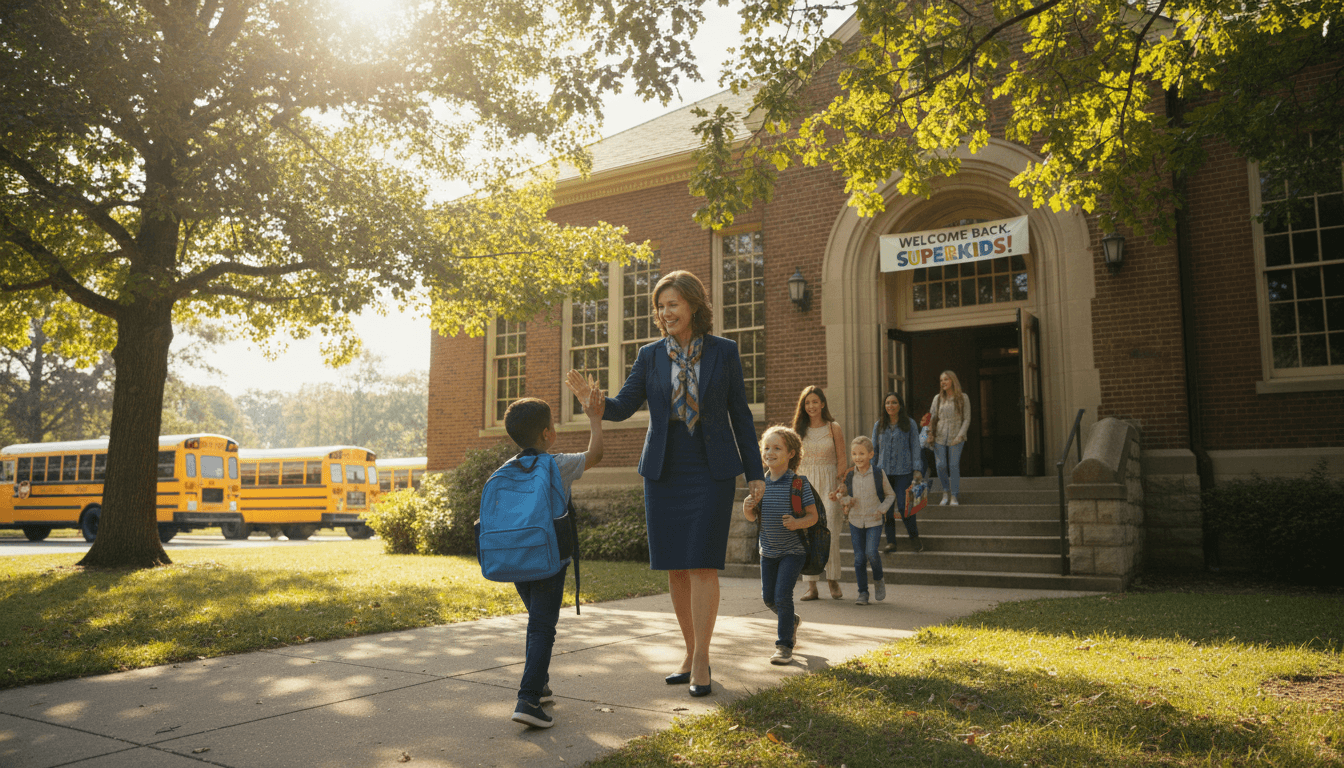
How School Newsletters Reduce Chronic Absenteeism: A Communication Playbook for Principals
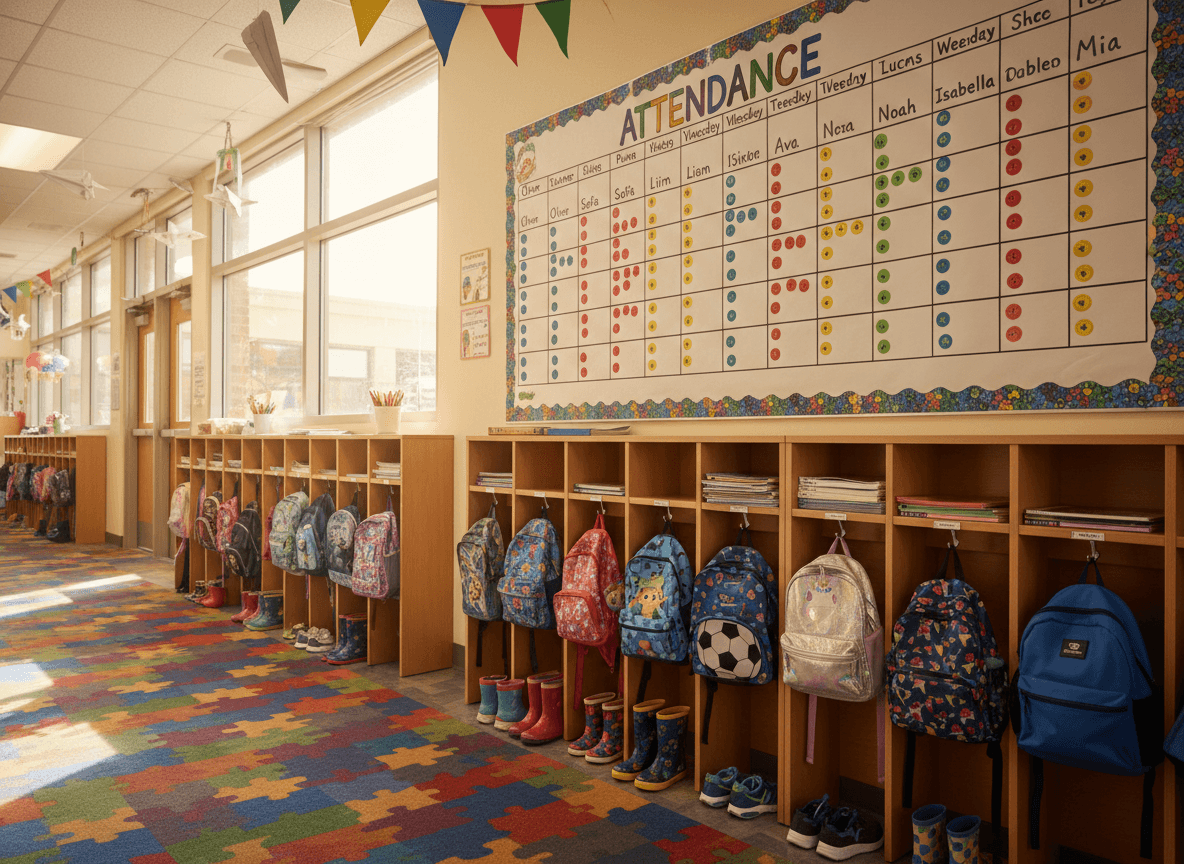
Chronic absenteeism, missing 10 percent or more of the school year, affects roughly 26 percent of K-12 students in the United States. Post-pandemic rates have not returned to pre-2020 levels in most districts. The federal government has named it a priority. Districts are spending significant resources on attendance interventions.
Most of those interventions focus on what happens after a student has already missed enough days to be flagged. The communication playbook in this guide focuses on something different: what schools communicate before and during the year to prevent the slide from starting.
Newsletters are not a cure for chronic absenteeism. Poverty, housing instability, health barriers, and transportation problems are root causes that no newsletter fixes. But consistent, well-timed school communication does move the needle on a specific subset of absences: the ones caused by families who did not feel connected enough to the school to prioritize showing up.
Why Communication Affects Attendance
Research on family engagement and attendance consistently shows the same finding: families who feel informed and connected to a school are more likely to send their children consistently, and more likely to resolve barriers to attendance when they come up.
The mechanism is not complicated. When a family gets a weekly newsletter from their child's teacher or principal, several things happen:
- They know what their child is missing when they keep them home. Absence becomes more tangible when a parent can see "this week we're starting the science fair project" in the newsletter they received Sunday night.
- They have a point of contact. Parents who feel a relationship with the school are more likely to call and say "Maria has a doctor's appointment Thursday" instead of just not showing up.
- They see the school as engaged with their family. The difference between a school that sends generic automated reminders and a school that sends a warm, specific weekly update is felt, even if it is not articulated.
None of this requires an intervention program. It requires consistent communication.
The Attendance Communication Calendar
Effective attendance communication follows a calendar, not just a reaction to absences. Here is the structure that works.
August, Before school starts
The first communication a family receives sets the tone for the year. A principal newsletter sent two weeks before the first day should include:
- A clear statement of attendance expectations. Not a policy recitation. A direct, warm statement: "We count on your child being here every day. Even one or two missed days per month adds up. We want to make sure nothing gets in the way of that."
- What to do when your child has to miss school. Who to call, how to report an absence, and what the process is for making up work. Families who know the logistics are less likely to let a minor illness turn into a missed week because they did not know what to do.
- An invitation to tell you about barriers. "If there is anything making it hard for your child to get to school consistently, transportation, health, anything. Please reach out. We have resources and want to help." This one sentence changes the dynamic for families who were going to stay silent about a real problem.
September, First month of school
September sets attendance habits for the year. Students who miss school in September are significantly more likely to be chronically absent by the end of the year.
Every September newsletter, both teacher-level and principal-level, should reinforce:
- What your child is doing right now (making absence feel costly)
- How to report an absence (reducing friction)
- One upcoming event your child will not want to miss
October, First data point
By mid-October, you have 30 days of attendance data. Use your principal newsletter to share a school-wide attendance update, not individual student data, but aggregate data.
"Our school attendance rate through October 15th is 94.2 percent. Our goal is 96 percent. Here is what that means in real terms: every student who misses just two days a month will have missed 36 days by the end of the year, nearly a full month of school."
This kind of transparent, data-driven communication treats families as partners. It also makes the goal concrete rather than abstract.
November through March, Consistency
The middle months are where attendance communication most often falls apart. Schools get busy. Newsletters skip weeks. The family that was informed in September stops hearing from the school.
The most important thing you can do during this stretch is not improve your newsletter content. It is send the newsletter consistently. A mediocre newsletter sent every week builds more family connection than an excellent newsletter sent once a month.
January, Post-holiday reset
January is when attendance often drops after the holiday break. A strong opening-of-semester newsletter that reconnects families to what is happening in school, names the attendance goal again, and highlights something exciting coming in the spring term can reset habits that slipped during winter break.
March through May, Stretch run
Spring attendance drops are well-documented. Warm weather, seasonal illness, and "senioritis" at every grade level contribute. Your newsletter during this period should:
- Highlight remaining events and milestones (things to show up for)
- Name the attendance data again, how the school is tracking vs. goal
- Acknowledge the stretch directly: "We know spring makes it harder. Here is why these last weeks matter."
What Language Actually Works
Attendance messaging fails in predictable ways. Here is what to avoid and what to use instead.
Avoid shame-based framing
"Students who miss school fall behind their peers" sounds like a threat. Families already know absence is bad. Telling them more forcefully does not change behavior, it makes them feel criticized and less likely to communicate openly about barriers.
Use connection-based framing
"Your child's class is in the middle of the science fair project. Every day they are here, they are building something they will present to the whole school in March. We want them to be there for that." This is specific, positive, and creates a reason to show up, not a reason to feel guilty about missing.
Name the help that is available
Many chronic absenteeism cases involve families who have a real barrier, a sick child, unstable housing, a transportation problem, and no idea that the school can help. A monthly sentence like "If your family is dealing with anything that makes getting to school harder, please call the office. We have support available" is worth more than a comprehensive attendance policy document.
The Principal Newsletter vs. the Teacher Newsletter
Both matter, and they serve different functions.
The teacher newsletter is the relationship. It tells families what their specific child is doing, what is coming up, and what the teacher needs. Families who receive a weekly teacher newsletter feel known by the school.
The principal newsletter is the institution. It communicates the school's values, goals, and data. Attendance messaging at the school level, goal-setting, data transparency, celebration of progress, belongs in the principal newsletter.
The schools with the strongest attendance communication have both: teacher newsletters building family relationships at the classroom level, and a principal newsletter setting school-wide expectations and sharing data.
Measuring Whether It Works
Newsletter open rates tell you if families are reading. Attendance rates tell you if it is working. Run both.
A simple correlation worth tracking: compare the attendance rates of students whose families have higher newsletter open rates vs. those with lower open rates. This is not causal proof, but it tells you whether the families most engaged with your communication are also showing up more consistently.
If your attendance rate is improving and your newsletter open rate is also improving, that correlation is meaningful enough to invest more in communication quality and consistency. If your open rate is high but attendance is not moving, the problem is likely structural: transportation, health, poverty, not communication.
The One Thing That Matters Most
Every attendance communication strategy collapses to one thing: do families feel like the school knows them and wants their child there?
Newsletters are not the only way to create that feeling, but they are one of the most scalable. A principal who writes a real newsletter every week, not a formatted list of events, but a newsletter that sounds like a human being who cares about the school, is communicating something that attendance software, automated reminders, and policy documents cannot: that the school is a place worth coming to.
Get one newsletter idea every week.
Free. For teachers. No spam.
Frequently asked questions
When should school newsletters start addressing attendance each year?
Address attendance in the very first newsletter of the school year, ideally in August before school starts. Families form attendance habits in the first six weeks. Communication that arrives in October is addressing a pattern that is already established.
What should a principal attendance newsletter include to reduce chronic absenteeism?
Include the school's attendance goal for the year, the current data, the specific threshold that defines chronic absenteeism (10 percent of school days), what support the school offers, and the absence reporting process. Data that is transparent and contextual lands better than data that feels accusatory.
What communication cadence actually reduces chronic absenteeism rates?
Monthly attendance mentions in a general newsletter plus two dedicated attendance newsletters per year, one in September and one in January, is the minimum effective cadence. Schools that mention attendance weekly in their regular newsletter see the strongest results.
What mistakes do principals make in attendance newsletters?
Sending attendance newsletters only after the data is already alarming is a reactive approach that rarely changes outcomes. By February, chronic absenteeism patterns are deeply established. The communication that works is the one that starts in August.
How does Daystage help principals build newsletters that improve attendance rates?
Principals use Daystage to create newsletter templates that include a standing attendance section, so each issue reinforces the message without requiring the principal to draft a new attendance communication from scratch every month.

Adi Ackerman
Author
Adi Ackerman is a former classroom teacher and curriculum writer with 8 years in K-8 schools. She writes about school communication, parent engagement, and what actually works in real classrooms.
More for Attendance
Multi-Tiered Attendance Support Newsletter: How to Communicate Your MTSS Approach to Families
Attendance · 6 min read
Tardiness and Late Arrival Newsletter: Communicating the Impact of Chronic Lateness to Families
Attendance · 5 min read
School Attendance Committee Newsletter: Building a School-Wide Attendance Culture
Attendance · 5 min read
Ready to send your first newsletter?
3 newsletters free. No credit card. First one ready in under 5 minutes.
Get started free