

Principal Communication Strategies for Reducing Chronic Absenteeism
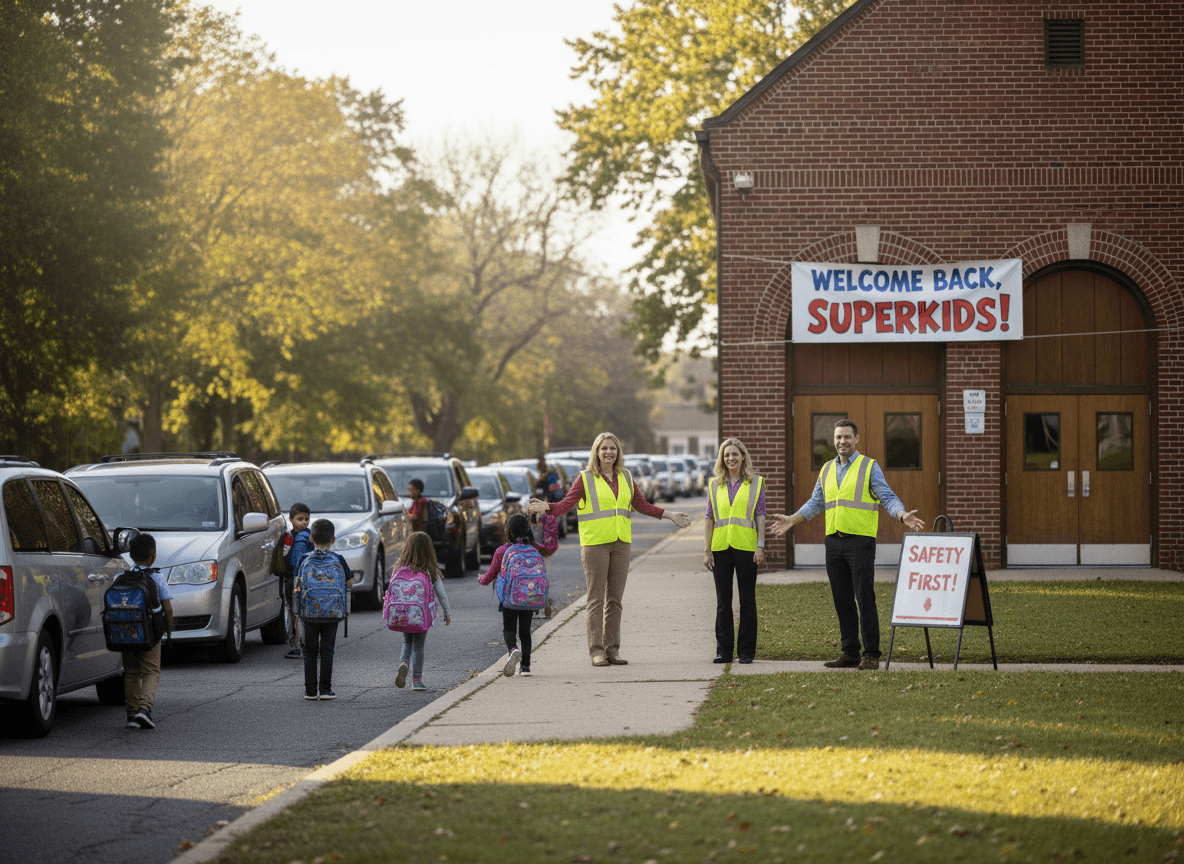
Chronic absenteeism is a whole-school problem. It cannot be solved entirely at the classroom level. The principal's communication sets the school-wide attendance culture: what is expected, what is measured, and what support is available.
This guide covers the specific communications a principal should send throughout the year, what to include in each, and how to build a communication infrastructure that makes attendance a school-wide priority without making it an adversarial one.
Set the Tone Before School Starts
The first principal communication of the year should name attendance as a priority. Not buried in a list of back-to-school logistics, front and center.
The August principal newsletter (sent two weeks before school starts) should include:
- The school's attendance goal for the year. State a specific percentage. "Our goal is 96 percent daily attendance. That means being here all but 7 days of the school year." A specific goal is more motivating than a general aspiration.
- What chronic absenteeism means in plain language. "Missing 10 percent or more of the school year, about 18 days, is what researchers call chronic absenteeism. At that level, students typically struggle to keep pace with grade-level work regardless of effort." Most families have never heard the term.
- How to report absences. The phone number. The email. The app if there is one. Repeated every single communication, all year.
- An explicit invitation to reach out about barriers. "If your family is dealing with anything that makes getting to school consistently harder, health, transportation, anything, please reach out before it becomes a pattern. We have resources and we want to use them."
September: Reinforce Before the Habits Form
Research on attendance consistently shows that September patterns predict year-end outcomes. Students who miss multiple days in September are significantly more likely to be chronically absent by June.
The September principal newsletter should double down on the attendance message from August. Add:
- What is happening at school this month that makes attendance valuable right now. Name a specific project, assessment period, or event.
- A reminder of the absence reporting process, phone number, email, timing.
- An early acknowledgment for families who have sent their children every day so far: "We are three weeks in and many of our families have sent their children every single day. Thank you. That consistency is already making a difference."
Monthly: Share the Data Transparently
Once a month throughout the year, include a brief attendance update in the principal newsletter. Aggregate data only, never individual student information.
The monthly data update should include:
- Current school-wide attendance rate (percentage)
- How it compares to the goal
- How it compares to the same period last year, if available
- A brief acknowledgment of progress or an honest statement about the gap
Example: "Our attendance rate through October is 93.4 percent. Our goal is 96 percent. We are 2.6 points behind pace. The good news: October is historically our strongest month. If we can close that gap before the holidays, we are well-positioned for the second semester."
This kind of transparent, data-driven communication is unusual in school newsletters. It stands out. Families read it because it treats them as adults who can handle information about the school's performance.
Build a Communication Infrastructure, Not Just a Newsletter
The principal newsletter is the foundation, but effective attendance communication is a system, not a document.
Teacher newsletters as the front line
Every teacher newsletter is an attendance communication tool, whether the teacher thinks of it that way or not. A teacher who sends a specific, weekly update about what students are doing in class is building the family connection that makes absence feel costly and school feel worth attending.
As principal, your most impactful attendance communication decision may be requiring every teacher to send a weekly newsletter. Not a recommendation, a standard.
Early warning system
Set a threshold for direct outreach: five absences triggers a personal phone call from the teacher or counselor. Not a form letter, a call. "We noticed [Student] has been out a few times. Is everything okay? Is there anything we can do?"
This call, at five absences, prevents the situation that requires the letter at twenty absences.
Mid-year reset communication
January is when attendance often drops after winter break. A strong January newsletter that acknowledges the second-semester stretch and reconnects families to what is happening at school, what their child is doing, what milestones are coming, resets the attendance habit before it slides.
What Not to Communicate
As important as knowing what to send is knowing what creates the wrong dynamic.
Avoid threatening language. "Students who continue to miss school may be referred to the district attendance supervisor." This may be legally accurate in your district. It should not be in a mass newsletter. Save it for private conversations with families whose situations require escalation.
Avoid generic statistics without a school-specific context. "Studies show that chronically absent students are more likely to drop out." True. Irrelevant to a family reading a newsletter about their kindergartener. Keep the data specific to your school and your community.
Avoid making attendance the only topic. A newsletter that exists only to remind families about attendance becomes noise. The attendance message lands more effectively when it is embedded in a newsletter that is genuinely useful: upcoming events, classroom updates, school news. The relationship content is what keeps families reading. The attendance content is what changes behavior.
The Long Game
Attendance culture does not change in one year. But it does change. Schools that commit to consistent, relationship-building communication, principal newsletters that are real and data-honest, teacher newsletters that show families what their child is doing every week, see attendance improve over time because they are building something that automated reminders and policy documents cannot: a community where families feel like they belong, and where sending their child to school feels like something worth doing.
Get one newsletter idea every week.
Free. For teachers. No spam.
Frequently asked questions
When should principals start communicating about attendance to prevent chronic absenteeism?
Start in August, before the school year begins. Families who receive an attendance expectation before the first day are more likely to treat attendance as a school culture norm rather than a rule to comply with when reminded.
What should principal communications about chronic absenteeism include?
Share actual attendance data monthly, even when it is uncomfortable. Include the percentage of students meeting the attendance target, what support the school offers families who are struggling, and a direct path to reach the school with concerns.
How should principals build attendance communication into a sustainable infrastructure?
Establish a predictable communication calendar with defined touchpoints in August, September, after the first grading period, in January, and at the end of April. Principals who communicate attendance consistently do not need emergency campaigns.
What mistakes do principals make in chronic absenteeism communication?
Waiting until attendance is already a crisis before communicating broadly is the most common mistake. By the time the data is alarming, the families most at risk have already established an absence pattern that is hard to reverse.
How does Daystage help principals execute a consistent attendance communication plan?
Principals use Daystage to schedule the full year of attendance newsletters before the school year starts, so each touchpoint goes out on schedule without requiring the principal to remember to send it during busy periods.

Adi Ackerman
Author
Adi Ackerman is a former classroom teacher and curriculum writer with 8 years in K-8 schools. She writes about school communication, parent engagement, and what actually works in real classrooms.
More for Attendance
Attendance and Academic Performance Newsletter: Communicating the Connection to Families
Attendance · 5 min read
Attendance Team Newsletter for Staff: Keeping Teachers and Counselors Aligned
Attendance · 5 min read
High School Attendance Communication Newsletter: What Families Need to Hear at This Level
Attendance · 5 min read
Ready to send your first newsletter?
3 newsletters free. No credit card. First one ready in under 5 minutes.
Get started free