
High School Attendance Newsletter: How to Reduce Chronic Absenteeism at the Secondary Level
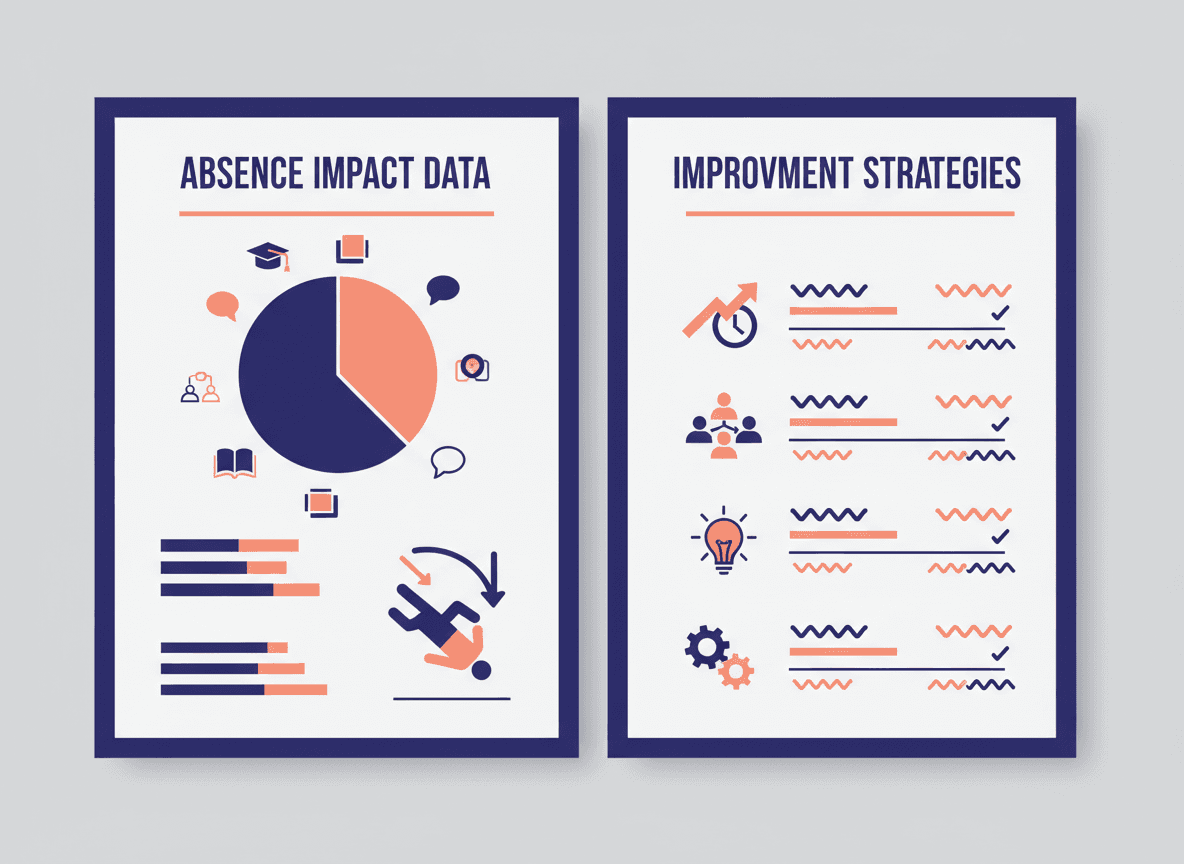
Chronic absenteeism at the high school level is one of the most reliable predictors of dropout. Students who miss 10 percent or more of school days, roughly 18 days in a 180-day year, are significantly more likely to fall behind on credits, disengage from school, and fail to graduate on time.
What makes high school attendance communication difficult is that the dynamic has shifted from elementary school. Parents are less directly in control of whether a teenager goes to school. Students themselves are making decisions. And the reasons for absence are often more complex: work obligations, mental health, transportation, family responsibilities, or genuine disengagement from a school environment that does not feel relevant.
A high school attendance newsletter has to navigate all of this. Here is how to approach it.
Who the audience actually is
At the high school level, your newsletter audience is split. Parents are one group. But many of them have teenagers who manage their own schedules and do not always tell their parents what is happening at school. The other group, increasingly, is the students themselves.
If your school sends newsletters to student emails in addition to parent emails, your attendance communication has a chance of reaching the person who most needs to hear it. Frame a section of your newsletter for students directly. "Here is what you need to know about your attendance standing and how it affects your semester." Teenagers respond to direct, non-preachy communication that treats them as capable of making decisions.
For the parent audience, the communication goal is different. You want parents to know what the attendance patterns look like across the school, what the threshold for chronic absenteeism is, and what happens when their student crosses it.
What to include in a high school attendance newsletter
The most effective high school attendance newsletters include four elements:
- The current data. Share your school's attendance rate for the current month or quarter. Something like "As of October, our school-wide daily attendance rate is 87 percent. Our goal is 93 percent. Here is what that gap means for students." Numbers make the issue concrete. Families who only hear "attendance is important" in vague terms do not feel urgency.
- Credit and graduation implications. At the high school level, attendance has direct academic consequences that parents and students understand. If a student misses more than X days in a semester course, they lose credit. State this clearly. "Missing more than 10 days in a single course this semester puts that credit at risk." This is not a threat. It is information families need.
- The distinction between excused and unexcused absences. Many families do not know this. An excused absence for a doctor's appointment counts differently from an unexcused absence. Explain your school's policy and how families should report absences to protect their student's standing.
- A path forward for students already in the chronic absenteeism zone. If a student has already missed 15 days, a stern newsletter does nothing. What helps is a concrete offer: "If your student has already missed significant school this semester, contact your counselor. We have options for credit recovery and attendance contracts that can help get them back on track."
The tone problem in high school attendance communication
Attendance newsletters from high schools often read like legal notices. They list consequences, cite district policies, and use passive voice throughout. Families read these and either tune out or feel defensive.
The tone that actually moves behavior is warmer and more direct. Acknowledge the real challenges. "We know teenagers navigate a lot. Work obligations, family responsibilities, and the emotional weight of high school are all real. And we also know that showing up is the foundation of everything else we are trying to accomplish together. We want to help."
A newsletter that reads like it was written by a human who cares about students will get further than one that reads like it was written by a compliance officer.
Frequency and timing that works at the secondary level
High school attendance newsletters work best as a quarterly communication, with a brief attendance update included in whatever regular newsletter your counseling department or principal's office already sends.
Send a focused attendance newsletter at three key moments in the school year: the start of first semester (set expectations), around midterm season (flag students approaching the chronic threshold before it is too late to intervene), and at the start of second semester (reset the clock and communicate that second semester is a fresh opportunity).
Avoid sending attendance communications only after problems have already reached a crisis. The families most likely to respond to a newsletter are the ones who are close to the threshold but not yet chronic. Those are your highest-leverage targets.
Connecting attendance to what students care about
A high school student who does not feel connected to school will not respond to a newsletter that emphasizes graduation rates and college applications. You need to meet students where they are.
In your newsletter, connect attendance to things students actually care about in the near term. Sports eligibility. The ability to participate in prom, senior activities, or graduation ceremonies. Maintaining relationships with teachers who write recommendation letters. The ability to get a job with a reference from the school.
These are the real incentives for a 16-year-old. Name them.
How Daystage supports high school attendance communication
Sending consistent attendance newsletters across a large high school community requires a reliable tool. Daystage lets counselors and principals build a subscriber list by grade level or homeroom, so attendance communications can be targeted. A newsletter about junior credit requirements goes to junior families. A message about freshman transition challenges goes to freshman parents.
The analytics in Daystage show open rates and click rates, which tells you which families are actually reading the communication. If a family with a chronically absent student has not opened three consecutive newsletters, that is a signal to pick up the phone instead.
The block-based editor makes it straightforward to include data sections, call-to-action sections for counselor contact, and a clean formatted layout that works on phones, which is where most high school parents read their email.
What the research says works
The most effective attendance interventions at the high school level combine two things: early identification and personal outreach. Newsletters are the early identification layer. They normalize the conversation about attendance, set expectations, and communicate what is at stake before it becomes a crisis.
The personal outreach layer, a phone call or counselor meeting for students approaching the chronic threshold, is what turns around individual situations. Newsletters are not a substitute for that. But they create the context that makes the personal outreach feel less surprising and more like a natural next step in a conversation that has been ongoing.
Start the newsletter communication early in the year. Make it direct. Make it human. And build in a clear path for families to get help when they need it.
Get one newsletter idea every week.
Free. For teachers. No spam.
Frequently asked questions
When should high schools send attendance newsletters, and to whom?
Send attendance newsletters at the start of the year, after the first grading period, and whenever district data shows attendance declining. Address both students and parents directly, since high school students have meaningful agency over their own attendance.
What should a high school attendance newsletter include?
Include the specific absence threshold that triggers academic consequences, the connection between attendance and grades or graduation, the process for reporting absences, and what support the school offers students who are struggling to attend.
How should high school attendance communication address student disengagement?
Connect attendance to what students care about: grades, graduation, college applications, or career programs. Abstract arguments about the importance of education do not move teenagers. Specific consequences and specific opportunities do.
What tone mistakes do high schools make in attendance communication?
Punitive or warning-heavy language in newsletters increases adversarial relationships with students and families without improving attendance. Research consistently shows that outreach framed as support rather than enforcement produces better outcomes.
How does Daystage support high school attendance communication strategies?
High school administrators use Daystage to send consistent attendance newsletters to both student and parent email lists, with different versions tailored to each audience, so the communication reaches the people who can actually act on it.

Adi Ackerman
Author
Adi Ackerman is a former classroom teacher and curriculum writer with 8 years in K-8 schools. She writes about school communication, parent engagement, and what actually works in real classrooms.
More for Attendance
Attendance Incentive Program Newsletter: Communicating Recognition Systems to Families
Attendance · 5 min read
District Attendance Goal Newsletter: How to Communicate a Shared Target Across Schools
Attendance · 5 min read
Perfect Attendance Policy Newsletter: How to Communicate Your Approach Without Pressure
Attendance · 5 min read
Ready to send your first newsletter?
3 newsletters free. No credit card. First one ready in under 5 minutes.
Get started free