
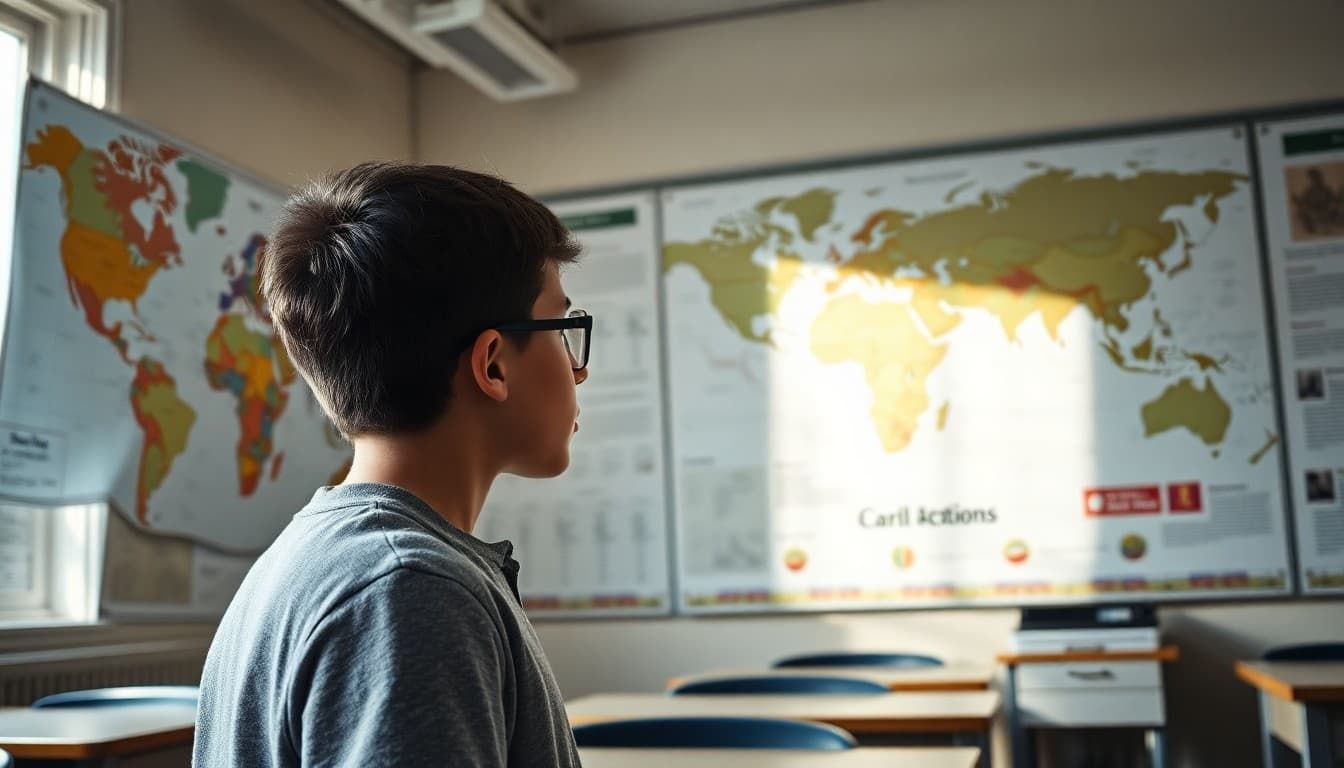
Teacher Newsletter for World History Units: Helping Families Connect to Global Historical Learning
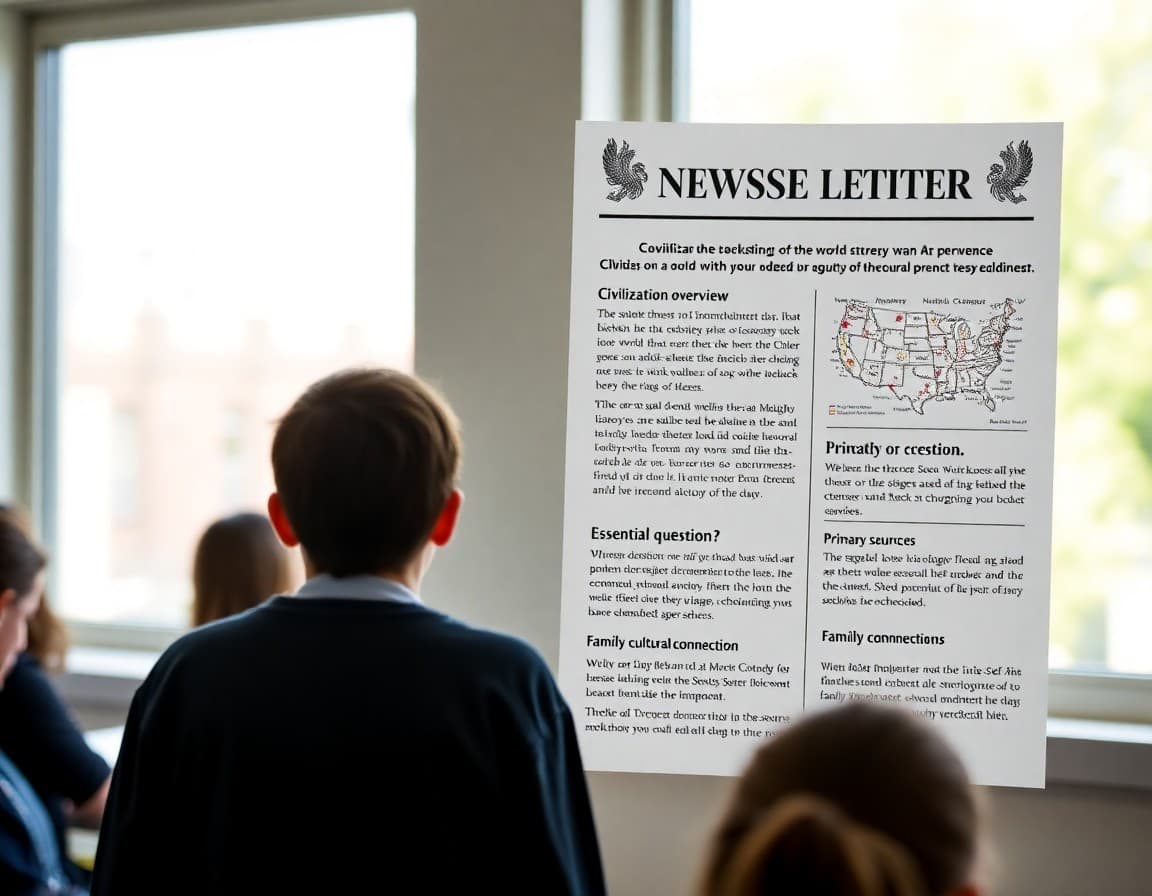
World History Asks Students to See Themselves in the Global Story
World history is not a survey of foreign places and foreign peoples. It is the story of human civilizations including the ones students' families came from, traded with, were shaped by, and sometimes survived. A newsletter that opens each world history unit by naming the civilizations or events being studied and inviting families to recognize their own cultural connection to them transforms a global survey into something personal. The family with Yoruba heritage studying West African kingdoms, the family with Greek heritage studying the ancient Mediterranean, and the family with Aztec ancestry studying pre-Columbian Americas all have something to contribute to a class whose curriculum includes their history.
What This World History Unit Covers
World history covers an enormous span of time and geography. A unit might examine the origins of agriculture across the Fertile Crescent, East Asia, and Mesoamerica simultaneously. Another might trace the Mongol Empire across Eurasia and examine its effects on trade, disease transmission, and cultural exchange. Another might compare the development of democracy in Athens with political systems in other ancient civilizations. A newsletter that names the specific scope of the current unit and frames it as a question, "what allowed some civilizations to expand and others to collapse?", gives families the frame for meaningful conversation.
Primary Sources From Multiple Cultures
World history primary sources come from every corner of the globe. A student analyzing a Chinese imperial decree, an African oral history account, a Mayan codex, and a European merchant's travel diary in the same unit is doing something that national history education cannot: reading the past from multiple cultural perspectives at once. A newsletter that names the types of primary sources the class will analyze helps families understand the intellectual range of what their student is doing and gives them questions to ask about what it was like to read history from inside another culture.
Patterns and Connections Across Civilizations
World history is not a list of isolated civilizations. It is the study of connections: trade networks that moved goods and ideas, migrations that spread populations and cultures, environmental changes that affected societies differently, and exchange patterns that transformed every civilization involved. A newsletter that names the pattern or connection at the center of the current unit, "how did the plague that devastated Europe in the 14th century arrive via trade routes from Central Asia?", gives students and families the conceptual thread to follow throughout the unit.
Inviting Family Cultural Knowledge
In most classrooms, at least some families have cultural heritage connected to every world history unit at some point in the year. A newsletter that explicitly acknowledges this and asks families to share what they know transforms the classroom's diversity from background to foreground. A family that shares a photograph of a historical site, a family recipe connected to a traded good, a name whose meaning connects to the region being studied, or a grandparent's oral history adds to the class's collective historical knowledge in a way that no textbook can replicate.
Maps and Geographic Thinking in World History
World history requires geographic thinking because history happens in specific places, and the shape of those places affected what happened there. A newsletter that names the geographic features central to the current unit, "this unit covers the Silk Road trade network, which followed specific mountain passes and desert routes that shaped where cities formed and which goods could be traded," helps families understand why map work is a genuine historical skill rather than cartographic busywork.
World History Unit Communication Through Daystage
World history teachers who use Daystage for unit newsletters open the most diverse subject in the curriculum to the cultural wealth families bring. A well-timed newsletter before each major unit invites the personal, cultural, and familial contributions that make world history more than a global facts survey and turns it into the genuinely human story it is.
Get one newsletter idea every week.
Free. For teachers. No spam.
Frequently asked questions
What should a world history unit newsletter include?
A world history unit newsletter should name the civilizations, regions, or periods the unit examines, state the essential question framing the unit's inquiry, explain what types of sources and evidence students will analyze, describe the major assessment, invite families to share cultural or family connections to the region or period being studied, and provide discussion prompts for conversations at home.
How can teachers connect world history units to the diverse cultural backgrounds of their students' families?
World history units regularly cover regions and periods that connect directly to families' cultural backgrounds. A unit on East Asian history connects to families with Chinese, Japanese, Korean, or Southeast Asian heritage. A unit on the Middle Ages connects to European, Middle Eastern, and African families. A newsletter that explicitly invites families to share their cultural knowledge, objects, stories, or traditions connected to the unit transforms the classroom's diversity from a demographic fact into an educational resource.
What does "world history" mean as a discipline different from traditional history?
World history examines the past across geographic and cultural boundaries rather than within the national frame. It looks for patterns of trade, migration, cultural exchange, and comparative development across civilizations. World history asks how the Silk Road connected East and West, how the Columbian Exchange transformed both hemispheres, and how industrialization spread differently across different societies. A newsletter that frames the unit this way helps families understand why world history is not just a list of foreign facts.
How can families use their cultural knowledge to support world history learning?
Families with cultural backgrounds connected to the current unit period have knowledge, objects, stories, and experiences that classroom learning cannot provide. A family with Iranian heritage studying Persian empires, or a Nigerian family studying West African kingdoms, or a Chinese family studying the Ming Dynasty, may have oral history, family connections, or cultural practices that are directly relevant to the unit. A newsletter that acknowledges and invites this contribution makes world history personally significant.
What tool helps world history teachers send unit newsletters efficiently?
Daystage is built for school communication. World history teachers use it to send formatted unit newsletters with civilization overviews, essential questions, primary source previews, and family cultural connection prompts directly to parent email lists.

Adi Ackerman
Author
Adi Ackerman is a former classroom teacher and curriculum writer with 8 years in K-8 schools. She writes about school communication, parent engagement, and what actually works in real classrooms.
More for Subject Teachers
Teacher Newsletter for US History Units: Connecting Historical Learning to Family and National Stories
Subject Teachers · 6 min read
Teacher Newsletter for Civics Units: Connecting Civic Learning to Real Government and Community
Subject Teachers · 6 min read
Teacher Newsletter for Unit Introductions: How to Launch Every New Unit With Family Communication
Subject Teachers · 6 min read
Ready to send your first newsletter?
3 newsletters free. No credit card. First one ready in under 5 minutes.
Get started free