

Teacher Newsletter for US History Units: Connecting Historical Learning to Family and National Stories
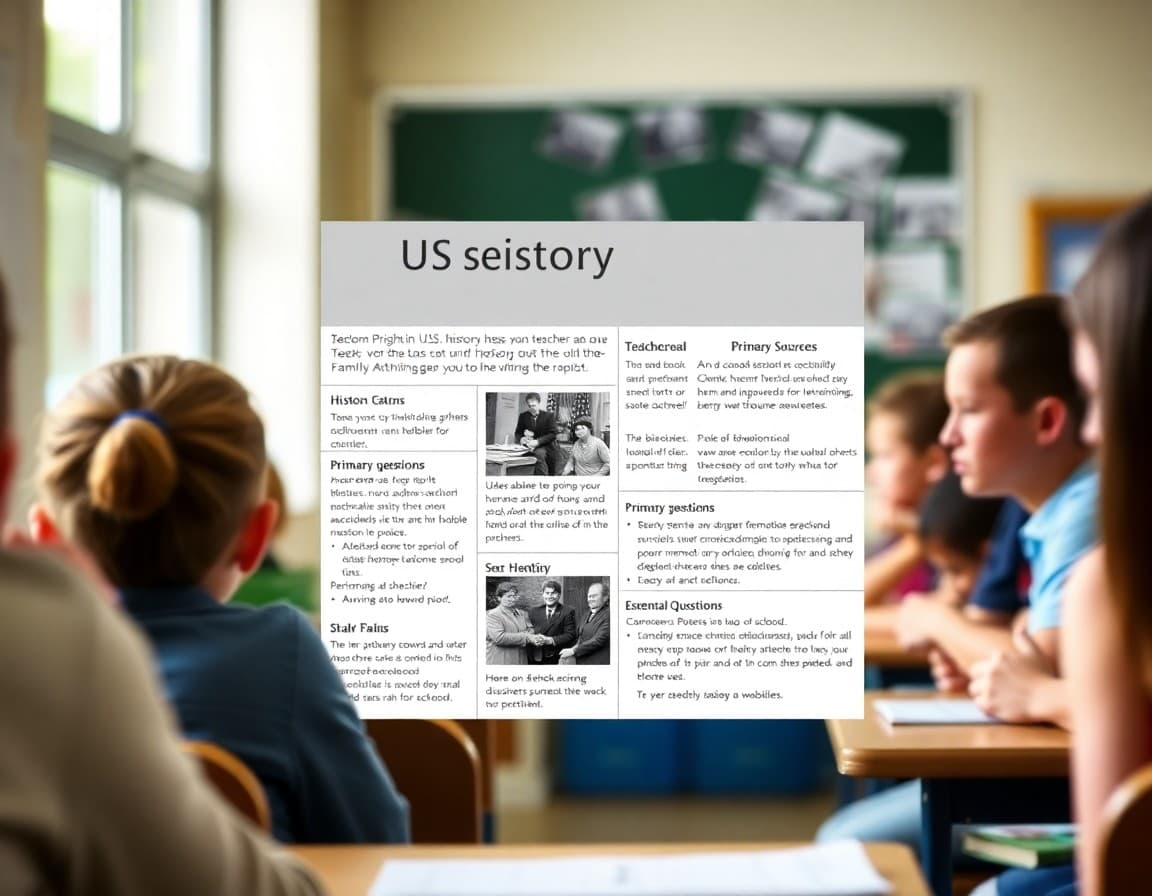
History Is More Than Events: It Is Questions
Students who approach US history as a list of dates and names miss what the subject is actually teaching. History asks students to examine why events happened, how people experienced and interpreted them, what forces were in conflict, and what consequences followed for different groups. A newsletter that opens each unit with the essential question the class will be investigating, "how did Reconstruction succeed and fail?" or "what made the New Deal transformative and limited at the same time?", signals to families that the goal is thinking, not memorizing. Students whose families ask about the question rather than the dates approach history differently.
What This US History Unit Covers
US history spans several centuries and many distinct periods, each with its own central conflicts and historical significance. A newsletter that names the specific period, the events at the center of the unit, and the different groups whose experiences the class will examine gives families enough context to engage with what their student is learning. Naming whose experiences are centered, not just the dominant narrative, also signals the kind of historical thinking the unit values.
Primary Sources: Reading History From the Inside
Primary source analysis is one of the most important skills in history education. A primary source is a document, image, speech, or artifact created during the period being studied. Students who analyze primary sources develop the ability to understand historical perspectives from the inside rather than only from summaries. A newsletter that names the primary sources students will use during the unit and explains briefly what each one is, "we will read Frederick Douglass's 1852 speech 'What to the Slave Is the Fourth of July?'," gives families a window into the intellectual work the unit involves.
Family Connections to the Historical Period
Almost every US history unit connects to some family's personal story. Immigration units connect to families who arrived during that era. Civil rights units connect to families who lived through the movement or were directly affected by segregation. Labor history units connect to families whose economic experience was shaped by unionization or industrial change. A newsletter that names the period and invites families to share connections, "if your family has stories connected to this period, please encourage your student to share them," turns family history into a learning resource.
Understanding Different Perspectives
History looks different depending on where you stand. The same event is experienced differently by different groups, and historical understanding requires grappling with multiple perspectives rather than only the dominant narrative. A newsletter that explains how the class approaches historical perspectives, not as relativism but as a way of understanding the full human experience of events, helps families understand why the class might examine the experience of people whose story does not appear in the traditional textbook narrative.
Connecting History to Current Events
US history is never only about the past. Reconstruction's unfinished business is visible in current voting rights debates. Immigration debates echo patterns from the 1920s. Economic inequality debates reference arguments made during the Gilded Age and the New Deal. A newsletter that names the connection between the current unit and ongoing public debates helps students see history as a continuous thread rather than a sealed archive, which is the understanding that history education ultimately aims to build.
US History Unit Communication Through Daystage
US history teachers who use Daystage for unit newsletters give families the essential questions, primary sources, and discussion prompts that make history come alive beyond the classroom. When families engage with the same historical questions their student is examining in class, the thinking that history education aims for happens at home as well as at school.
Get one newsletter idea every week.
Free. For teachers. No spam.
Frequently asked questions
What should a US history unit newsletter include?
A US history unit newsletter should describe the historical period or events the unit covers, state the essential question that frames the unit's inquiry, explain what types of primary and secondary sources students will be analyzing, describe the major assessment, connect the historical period to current or family experience where applicable, and give families specific discussion prompts to use at home.
How should teachers address controversial historical content in a newsletter?
US history includes events and periods that are genuinely contested, including slavery, Indigenous displacement, immigration restriction, and civil rights struggles. A newsletter should describe the content accurately, explain the historical significance of studying it, and acknowledge that these topics may prompt feelings and discussions at home. Giving families specific framing for these conversations is more useful than either avoiding the difficulty or treating it as routine.
What is an essential question and why does it matter for history units?
An essential question is an inquiry-based frame that gives a history unit coherence beyond dates and events. Questions like "when is revolution justified?" or "whose voices shape the historical record?" or "how does economic inequality affect political power?" turn content coverage into genuine historical thinking. Families who know the essential question can ask about it throughout the unit and help students see that history is about thinking, not just remembering.
How can families with personal connections to historical events support US history learning?
Family history is one of the richest resources for US history education. Families who immigrated during a period the class is studying, who have ancestors who lived through events being discussed, or who have documents, photographs, or oral histories connected to the unit can offer their student a first-person historical connection that no textbook can provide. A newsletter that names the period being studied often prompts families to share these connections they otherwise would not think to mention.
What tool helps US history teachers send unit newsletters efficiently?
Daystage is built for school communication. US history teachers use it to send formatted unit newsletters with period overviews, essential questions, primary source previews, and family discussion prompts directly to parent email lists.

Adi Ackerman
Author
Adi Ackerman is a former classroom teacher and curriculum writer with 8 years in K-8 schools. She writes about school communication, parent engagement, and what actually works in real classrooms.
More for Subject Teachers
Teacher Newsletter for World History Units: Helping Families Connect to Global Historical Learning
Subject Teachers · 6 min read
Teacher Newsletter for Civics Units: Connecting Civic Learning to Real Government and Community
Subject Teachers · 6 min read
Teacher Newsletter for Unit Introductions: How to Launch Every New Unit With Family Communication
Subject Teachers · 6 min read
Ready to send your first newsletter?
3 newsletters free. No credit card. First one ready in under 5 minutes.
Get started free