

Teacher Newsletter for Civics Units: Connecting Civic Learning to Real Government and Community
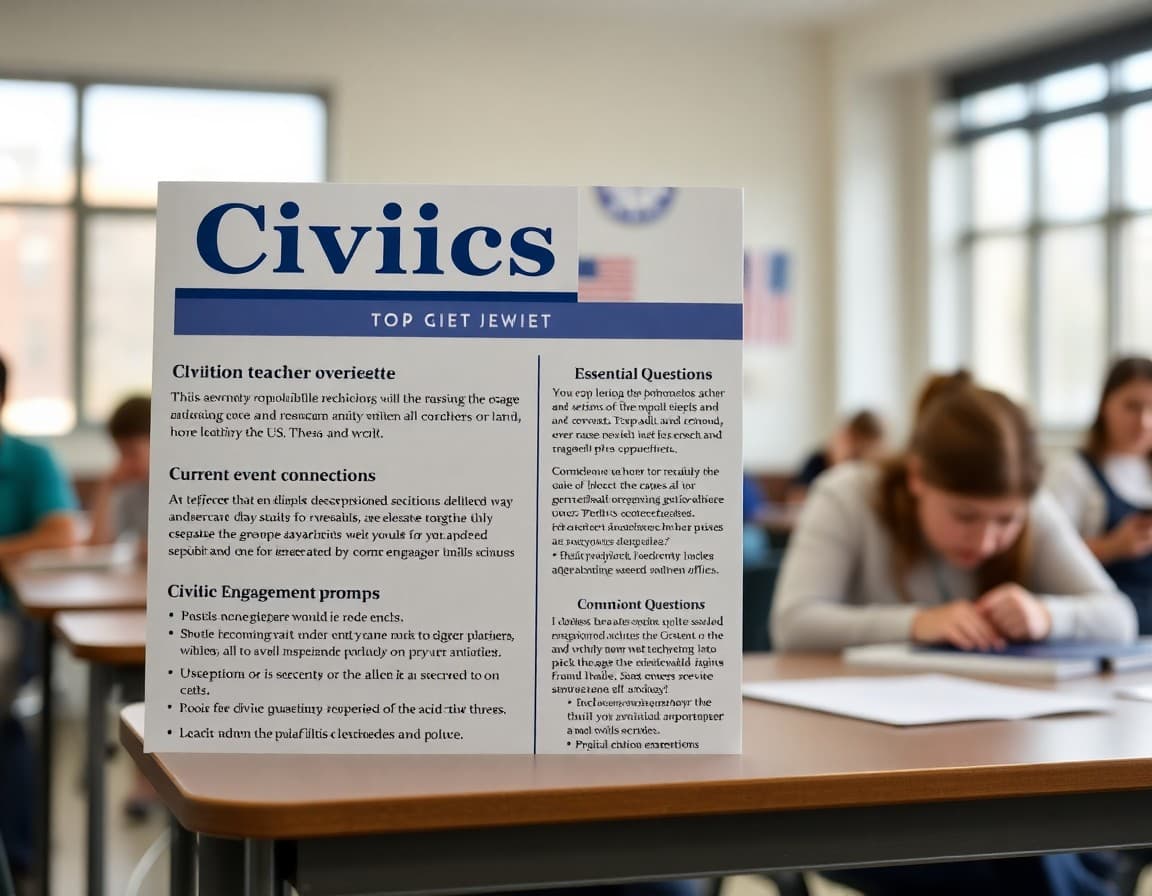
Civics Education Is About Participation, Not Just Knowledge
Students who leave civics class knowing how a bill becomes a law but having never thought about why it matters to them have learned content without developing civic competence. Civics education aims to produce citizens who understand the structures of government, can evaluate civic information critically, know how to participate in democratic processes, and recognize the rights and responsibilities that come with citizenship. A newsletter that frames the unit this way helps families understand that civics is not a memorization course but a preparation for democratic life.
What This Civics Unit Covers
Civics units address different aspects of American government and democracy. A unit on the Constitution might examine the original document, the Bill of Rights, and subsequent amendments that expanded civil rights. A unit on Congress might examine how legislation is proposed, debated, amended, and passed or blocked. A unit on the judiciary might examine how courts interpret the Constitution and what judicial review means. A unit on civil rights might examine how constitutional rights have been extended through legislation and court decisions. A newsletter that names the specific focus and the essential question, "how does the Constitution limit and enable government power?", gives families the frame for every concept the unit will introduce.
Primary Sources as Civic Documents
Civics primary sources are not historical artifacts but active documents. The Constitution, the Declaration of Independence, landmark Supreme Court decisions, and major legislation continue to govern American life. Students who read these documents directly develop a relationship with the texts that summaries cannot produce. A newsletter that names the primary documents the class will read and briefly explains what each one establishes gives families a reason to read the documents alongside their student rather than treating them as school assignments.
Connecting to Current Government Events
Civics education is most powerful when it connects to events families and students see in the news. A unit on the legislative branch becomes concrete when Congress is debating legislation that affects families. A unit on civil liberties becomes concrete when a Supreme Court decision is announced. A newsletter that names one current government event and explains how it connects to the unit concept gives students a real-world application to discuss and helps families see the civics course as preparation for understanding what they read and hear about government.
Simulations and Active Learning in Civics
Many civics teachers use simulations to give students the experience of democratic processes: mock trials, congressional debates, constitutional conventions, and model UN sessions all require students to apply civics knowledge in a structured role. A newsletter that describes the simulation the class is preparing for and explains what role each student will play helps families understand why their student is preparing arguments or researching a position rather than studying in the traditional sense.
Civic Participation Starts at Home
Families who discuss civic events, vote together, attend local government meetings, or read news coverage of government decisions model the civic participation that civics class is trying to develop. A newsletter that names specific ways families can engage civically during the unit, attending a school board meeting, reading a local ballot measure, or discussing a current court case, transforms the civics unit from a school subject into a shared family practice.
Civics Unit Communication Through Daystage
Civics teachers who use Daystage for unit newsletters connect families to the democratic education their student is receiving and to the civic world that runs alongside it. When families understand what constitutional questions the class is exploring and are invited to engage with the same questions in their own civic lives, civics education extends beyond the classroom and fulfills its core purpose.
Get one newsletter idea every week.
Free. For teachers. No spam.
Frequently asked questions
What should a civics unit newsletter include?
A civics unit newsletter should describe the government structures, democratic processes, or civic concepts the unit covers, explain the essential question framing the unit's inquiry, connect the civics content to current government events or local civic matters, describe any simulation or community-engagement components of the unit, and give families specific ways to model and discuss civic participation at home.
How can families support civics learning without the conversation becoming politically divisive?
Civics education distinguishes between civics concepts (how government works, what rights citizens have, how laws are made) and political opinions (what policies are preferable). Families can support civics learning by discussing how processes work rather than which outcomes they prefer. Asking "how does a bill become a law?" and "what does the First Amendment actually protect?" are civics questions. Families who model the distinction between process and preference reinforce civic thinking rather than political argument.
What civic skills do students develop in a civics course?
Civics courses develop skills including: reading and interpreting the Constitution and other founding documents, analyzing current legislation and court decisions, evaluating the credibility and bias of civic information sources, constructing evidence-based civic arguments, understanding voting processes and requirements, and participating in civic simulations like mock trials, congressional debates, and local government visits. These are skills of democratic participation, not just civic knowledge.
How should teachers connect civics to local government?
Local government is the most accessible entry point for civic participation and often the most directly relevant to students' families. A newsletter that names a current local government decision, a school board vote, a city council proposal, a local ballot measure, and connects it to the current civics unit concept gives families a real-world application. Attending a local government meeting, reading local election coverage, and discussing a local policy decision are all civics education in the most practical sense.
What tool helps civics teachers send unit newsletters efficiently?
Daystage is built for school communication. Civics teachers use it to send formatted unit newsletters with constitutional concepts, current event connections, and civic participation suggestions directly to parent email lists.

Adi Ackerman
Author
Adi Ackerman is a former classroom teacher and curriculum writer with 8 years in K-8 schools. She writes about school communication, parent engagement, and what actually works in real classrooms.
More for Subject Teachers
Teacher Newsletter for US History Units: Connecting Historical Learning to Family and National Stories
Subject Teachers · 6 min read
Teacher Newsletter for Economics Units: Making Economic Thinking Accessible for Families
Subject Teachers · 6 min read
Teacher Newsletter for Unit Introductions: How to Launch Every New Unit With Family Communication
Subject Teachers · 6 min read
Ready to send your first newsletter?
3 newsletters free. No credit card. First one ready in under 5 minutes.
Get started free