

Teacher Newsletter for Project Rubrics: How to Share Grading Criteria With Families Before a Project Begins
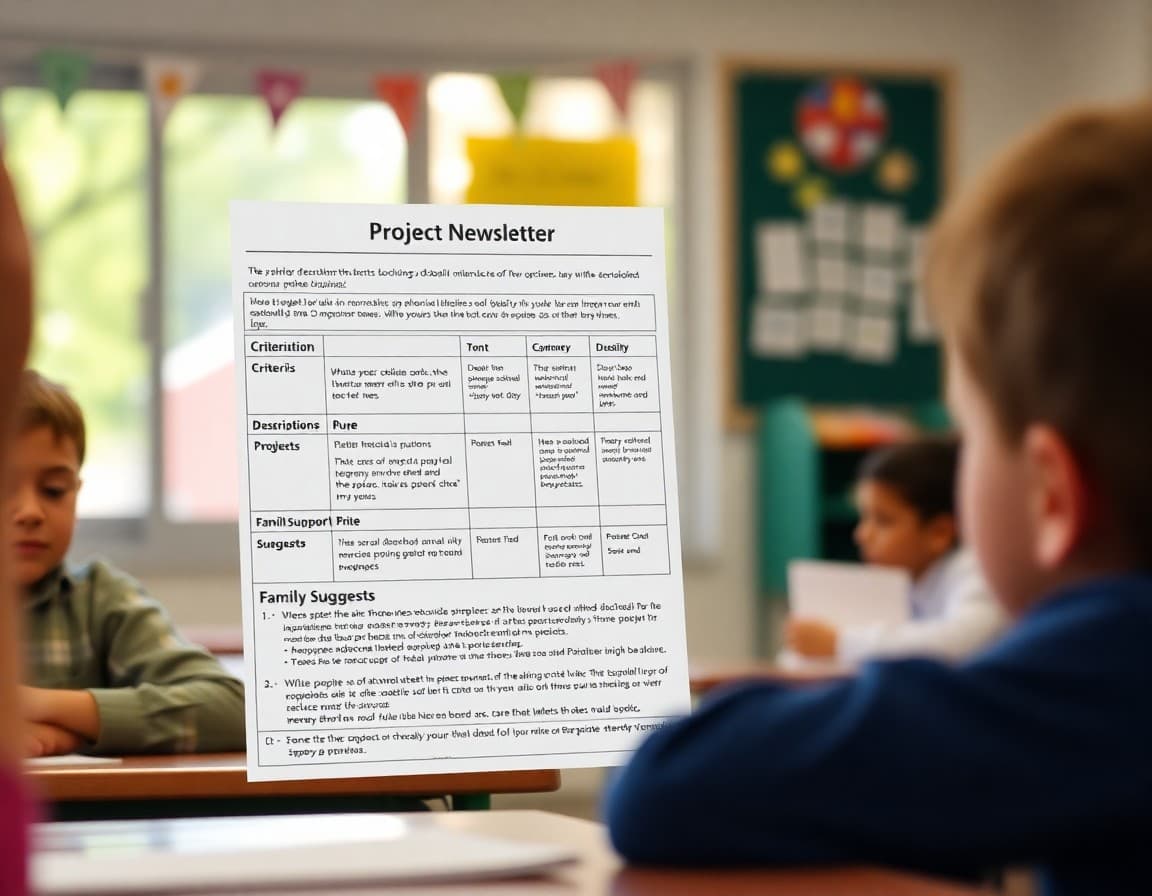
Rubrics Are Invitations, Not Surprises
A rubric sent home before a project begins transforms the grading document from a post-submission judgment into a pre-submission guide. Students who know the criteria before starting work make different choices during every phase of the project than students who discover the criteria at the same time they receive their grade. The highest-performing students in any class are almost always the ones who have internalized the rubric and use it to self-evaluate during the process. A newsletter that shares the rubric and explains what it means gives all students access to that advantage.
What Each Criterion Is Actually Measuring
Rubric language is often compressed for space, which means the criteria words can be unclear. A newsletter that translates each criterion into plain language does the interpretation work for families and students. If the rubric says "demonstrates sophisticated analysis," a newsletter that explains this means "the student connects evidence to the argument and explains why that evidence matters, not just what it shows" gives families a usable picture. Plain-language translations of every criterion, one sentence each, are more useful than reposting the rubric verbatim.
What the Top Score Looks Like
The most useful information in a rubric newsletter is a description of what excellent work looks like in each category. Students who can picture the top level aim for it. Students who only know that "four" is better than "three" aim for whatever they produce naturally. A newsletter that describes a specific concrete example of top-level work for the two or three most important criteria gives students the mental model they need to produce it.
How Families Can Use the Rubric During the Project
A rubric newsletter is most useful when it gives families a specific role during the project process. The most effective role is asking their student to self-evaluate against the criteria before submission. Going through the criteria together and asking the student to rate their own work forces the student to look at the project from the evaluator's perspective rather than the creator's. Families do not need subject expertise to facilitate this conversation; they only need the rubric and the willingness to ask.
Timeline and Checkpoints
Projects succeed when they are planned rather than rushed. A newsletter that includes the project timeline with specific checkpoints, whether a proposal due date, a draft review day, or a peer feedback session, helps families support their student's planning rather than waiting until the night before the due date to discover the scope of the work. Timeline information in a newsletter does what a calendar entry cannot: it gives families context for why the project requires attention before the deadline.
Materials, Resources, and Support
A project rubric newsletter is also a good place to name the resources available to students as they work, whether that is access to the school library, a specific online database, a list of approved sources, or time during class to work and ask questions. Families who know what resources are available can direct their student toward them when the student gets stuck rather than trying to fill the resource gap themselves.
Rubric Communication Through Daystage
Teachers who use Daystage to share project rubrics before projects begin give students and families the information they need to work toward a clear target. Proactive rubric communication is one of the single most effective things a teacher can do to raise project quality without changing the assignment itself.
Get one newsletter idea every week.
Free. For teachers. No spam.
Frequently asked questions
Why should teachers share rubrics with families before projects begin?
Sharing a rubric before a project begins gives students and families a clear target to aim toward rather than discovering the grading standard after the work is submitted. Students who understand what excellent work looks like produce stronger projects than those who guess at the expectations. Families who understand the rubric can ask more useful questions during the project process rather than checking only whether the project is done.
How should teachers explain rubric criteria in a newsletter?
Rubric criteria are best explained with a plain-language description of what each level looks like in practice rather than only the percentage or letter grade attached to each level. A newsletter that says "the top score on the analysis section means the student connects at least three pieces of evidence to the central argument with explanation" gives families a concrete picture of what to encourage, not just a number.
How can families use a rubric to support a student without doing the work?
Families can use a rubric as a conversation tool rather than a correction tool. After reviewing a draft or in-progress project, asking "which rubric category are you most confident about?" and "which one do you think needs the most work?" helps students evaluate their own work against the criteria. This self-assessment builds the metacognitive skill the rubric is meant to develop.
What is the difference between a holistic rubric and an analytic rubric?
A holistic rubric gives a single overall score for the whole project. An analytic rubric scores each criterion separately, which gives students more specific feedback about which aspects of their work were strong and which need development. Most teachers use analytic rubrics for projects because the specific feedback helps students grow more than a single number. A newsletter that explains which type is being used helps families interpret the grade they receive.
What tool helps teachers share project rubrics with families efficiently?
Daystage is built for school communication. Teachers use it to send formatted project newsletters with rubric criteria descriptions, timeline reminders, and family support suggestions directly to parent email lists.

Adi Ackerman
Author
Adi Ackerman is a former classroom teacher and curriculum writer with 8 years in K-8 schools. She writes about school communication, parent engagement, and what actually works in real classrooms.
More for Subject Teachers
Teacher Newsletter for Peer Review: What Families Need to Know Before Peer Feedback Days
Subject Teachers · 6 min read
Teacher Newsletter for Unit Introductions: How to Launch Every New Unit With Family Communication
Subject Teachers · 6 min read
Teacher Newsletter for Unit Reflections: Closing the Loop With Families After Each Unit
Subject Teachers · 6 min read
Ready to send your first newsletter?
3 newsletters free. No credit card. First one ready in under 5 minutes.
Get started free