
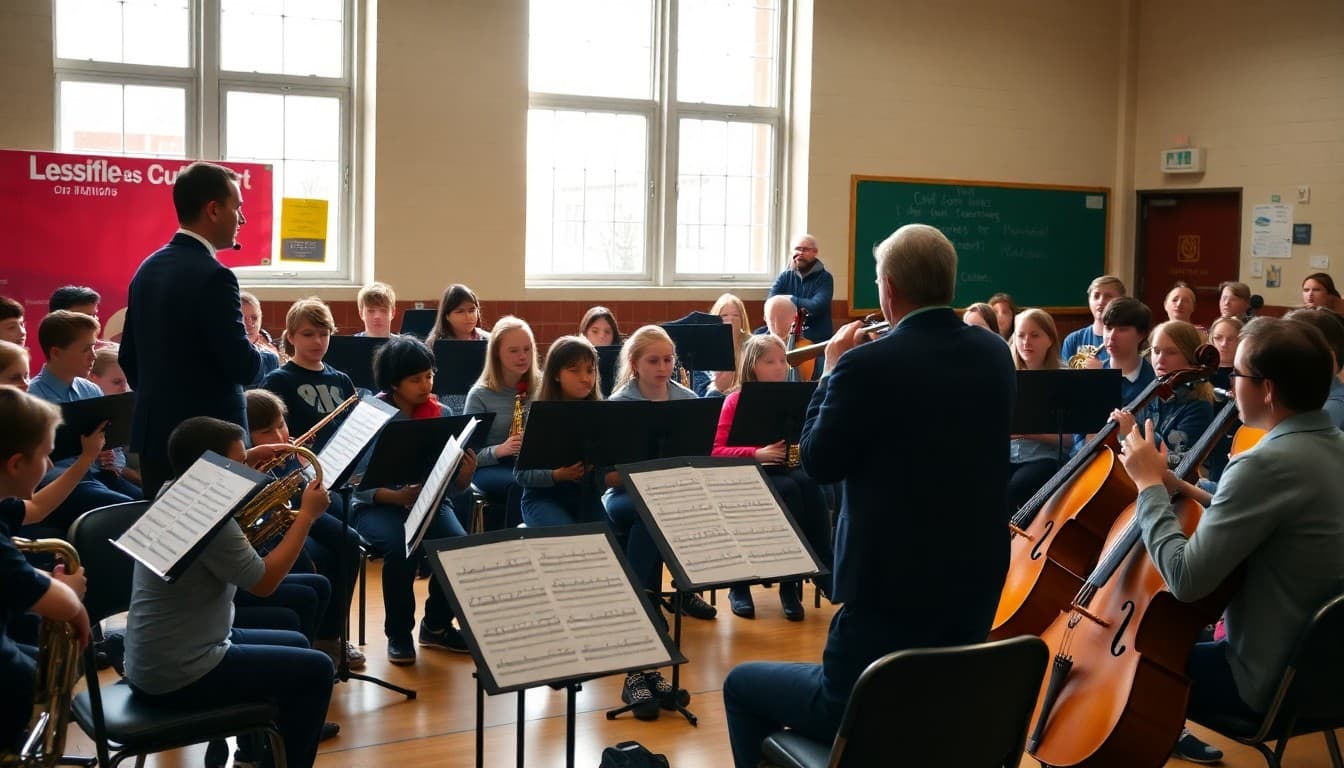
Teacher Newsletter for Music Class Performances: Preparing Families for Concerts and Recitals
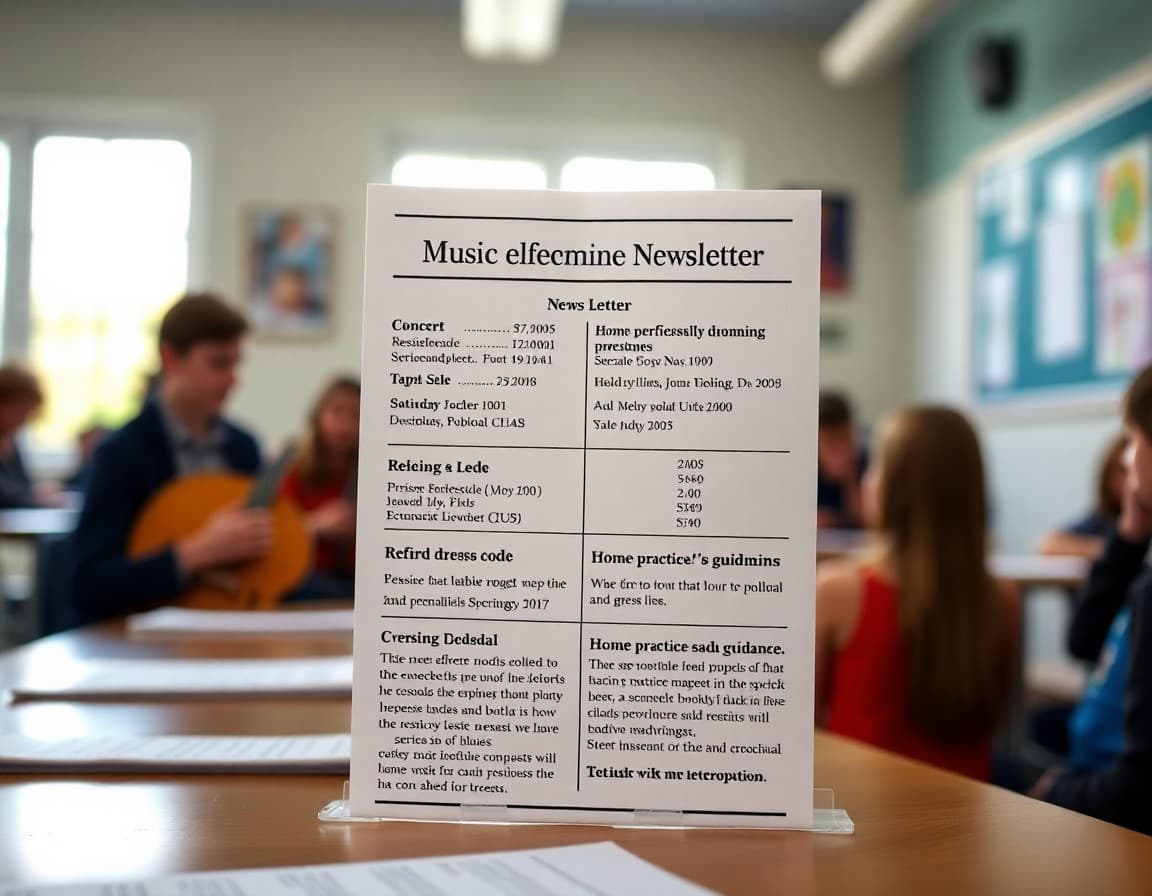
A Concert Is Not Just an Event: It Is the Goal of Every Rehearsal
Every rehearsal in a music class is preparation for a moment when the music is shared with an audience. The concert is not an add-on to the music curriculum; it is the curriculum's culminating purpose. Students who understand that every scale, exercise, and ensemble piece is building toward the performance experience practice with different intention than those who see rehearsal as separate from performance. A newsletter that communicates this connection helps families understand what their student's home practice is for and why attendance at the concert matters to the student's complete musical education.
What Students Are Performing and Why It Was Selected
Concert repertoire is chosen for educational reasons: to develop specific technical skills, to expose students to particular musical styles or historical periods, to match the ensemble's current ability level while stretching it appropriately. A newsletter that names each piece, identifies the composer and style, and explains briefly what musical skill it develops transforms the concert program from a list of titles into a window on the musical curriculum. Families who arrive at the concert knowing what they are hearing and why it was chosen listen differently.
Home Practice in the Lead-Up to the Concert
The last few weeks before a concert are when home practice matters most. Students who practice their concert pieces from start to finish without stopping develop the performance continuity that class rehearsal cannot fully replicate. A newsletter that gives families a specific home practice schedule, even just three ten-minute sessions per week of full-piece run-throughs rather than section drilling, gives families a concrete way to support their student's final preparation. Families who know when and how to encourage practice do not have to invent that guidance from scratch.
Concert Logistics: What Families Need to Know
Concert logistics prevent frustration. A newsletter that provides the exact venue with directions, parking information, arrival time for students (typically thirty to sixty minutes before audience arrival), dress code requirements, and what students should bring prevents the last-minute questions that arrive by text and email on concert morning. Families who have all the logistical information in one place can prepare without stress and arrive ready to enjoy the performance rather than worried about whether they are in the right place.
Supporting Performance Confidence at Home
Many students experience performance anxiety, and the way families respond to it either helps or complicates the issue. A newsletter that explains performance anxiety as normal, suggests specific family responses, "try asking your student to play the piece for you at home as a low-stakes performance before the concert," and recommends focus on communication rather than perfection gives families tools for the conversations that happen in the days before the concert.
After the Concert: What the Experience Taught
The musical learning that happens in performance is different from what happens in rehearsal. A post-concert newsletter or debrief moment, whether in class or in a follow-up newsletter, that names what students learned about performing, what went well, and what the class will carry into the next performance cycle closes the loop on the concert experience and treats it as the significant educational milestone it is.
Performance Communication Through Daystage
Music teachers who use Daystage to communicate about concerts and performances give families everything they need to show up, support their student, and appreciate the musical education the performance represents. Clear, advance communication about every aspect of performance preparation builds the family partnership that music education depends on to thrive.
Get one newsletter idea every week.
Free. For teachers. No spam.
Frequently asked questions
What should a music performance newsletter include?
A music performance newsletter should state the concert or recital date, time, and location with clear directions, describe what students are performing and what it took to prepare, name the dress code or uniform requirements, give families specific home practice guidance for the remaining preparation period, explain what students should bring on performance day, and describe how families can support their student's performance anxiety in a healthy way.
Why is the concert or recital the most important part of music education?
Performance is where musical learning is applied under pressure and in community. A student who can play a piece in rehearsal but not in performance has not yet internalized it completely. Performance requires a different kind of mental engagement than practice: maintaining focus while aware of an audience, recovering from small errors without stopping, and communicating the music rather than just executing it. These are skills that only develop through performance experience, not additional practice.
How can families support a student who is nervous about performing?
Performance anxiety is normal and manageable. Families help most by normalizing it rather than trying to eliminate it: "it is normal to feel nervous, and it shows you care about doing well." Encouraging the student to focus on communicating the music to the audience rather than on executing every note perfectly shifts the focus from fear of error to purpose of communication. Families who attend and applaud genuinely, regardless of the quality of the performance, create the safe environment that performance confidence develops in.
What does home practice look like in the final weeks before a concert?
In the weeks before a concert, home practice should shift from learning the notes to performing the piece. Students should practice performing the full piece from start to finish without stopping, which builds the stamina and continuity that concert performance requires. Playing through the piece once slowly and once at tempo, using a metronome, is more effective than drilling difficult passages repeatedly. A newsletter that gives families this specific practice guidance helps them encourage their student toward performance readiness.
What tool helps music teachers send performance newsletters efficiently?
Daystage is built for school communication. Music teachers use it to send formatted performance newsletters with concert details, rehearsal schedules, home practice guidance, and dress code information directly to parent email lists.

Adi Ackerman
Author
Adi Ackerman is a former classroom teacher and curriculum writer with 8 years in K-8 schools. She writes about school communication, parent engagement, and what actually works in real classrooms.
More for Subject Teachers
Teacher Newsletter for Art Class Supplies: What Families Need to Know About Materials and Costs
Subject Teachers · 6 min read
Teacher Newsletter for PE Class: What Families Need to Know About Physical Education
Subject Teachers · 6 min read
Teacher Newsletter for Unit Reflections: Closing the Loop With Families After Each Unit
Subject Teachers · 6 min read
Ready to send your first newsletter?
3 newsletters free. No credit card. First one ready in under 5 minutes.
Get started free