
Music Teacher Newsletter: How to Write Your First Unit Newsletter
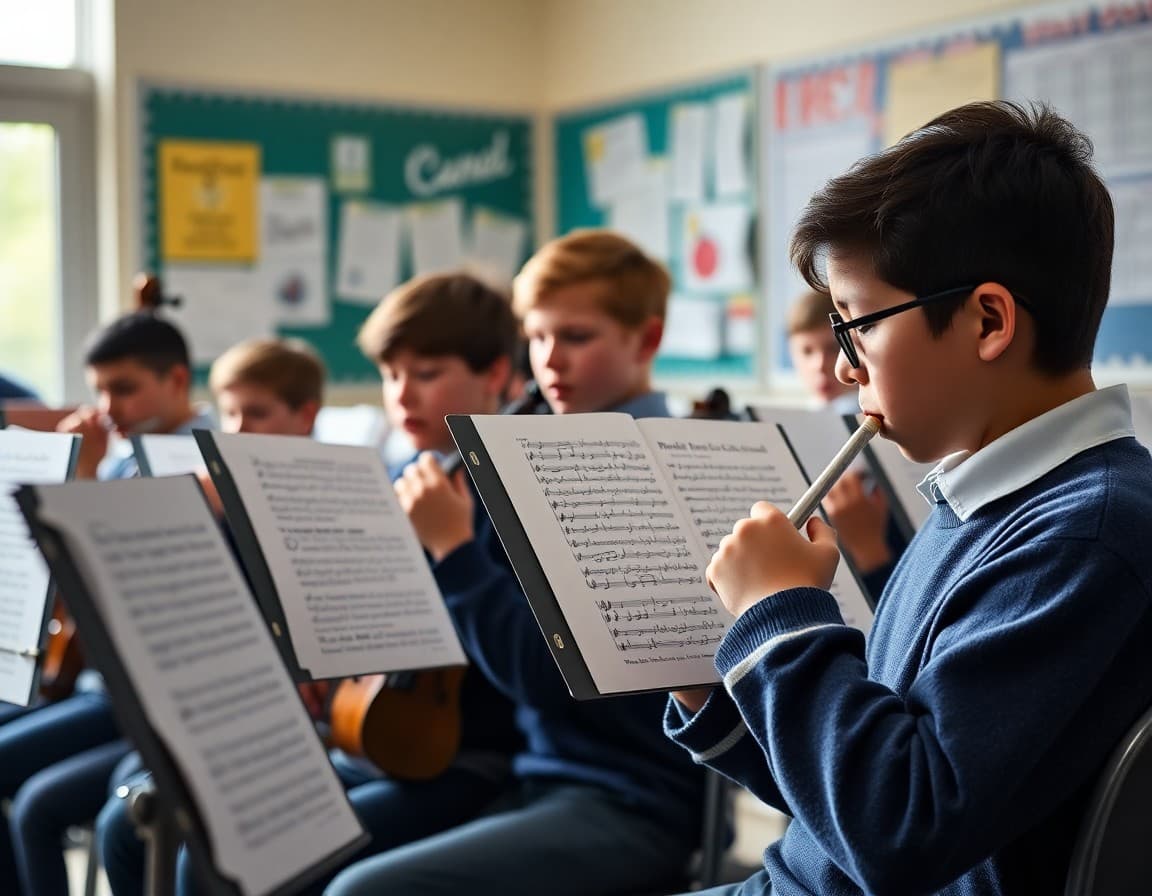
The first-unit newsletter for a music teacher is where repertoire meets practice, and where the abstract promise of "students will develop as musicians" becomes concrete. Families who know what their student is learning, why that piece was chosen, and what to listen for during home practice are the families who show up at the concert having heard the music before. Those are the best audiences for a student ensemble.
Announce the repertoire with context
Name every piece and give families something interesting about each one. Not music theory. Human context. "For our fall concert we are learning three pieces: Samuel Hazo's Ride for band (an energetic, driving piece that requires precise ensemble rhythmic locking, especially in the brass), Ralph Vaughan Williams's Fantasia on Greensleeves arranged for orchestra (a slow, lyrical piece where every instrument has to listen and blend rather than project), and a Sousa march, The Stars and Stripes Forever, for the finale." Each description tells families something meaningful about what their student is doing in rehearsal.
Include a YouTube or Spotify link to a recording of each piece. Families who listen to the recording before the concert know what to listen for and notice details, like the melody appearing in the oboe that they would have missed in the full ensemble sound, that make the concert more rewarding.
Describe the rehearsal focus for the first weeks
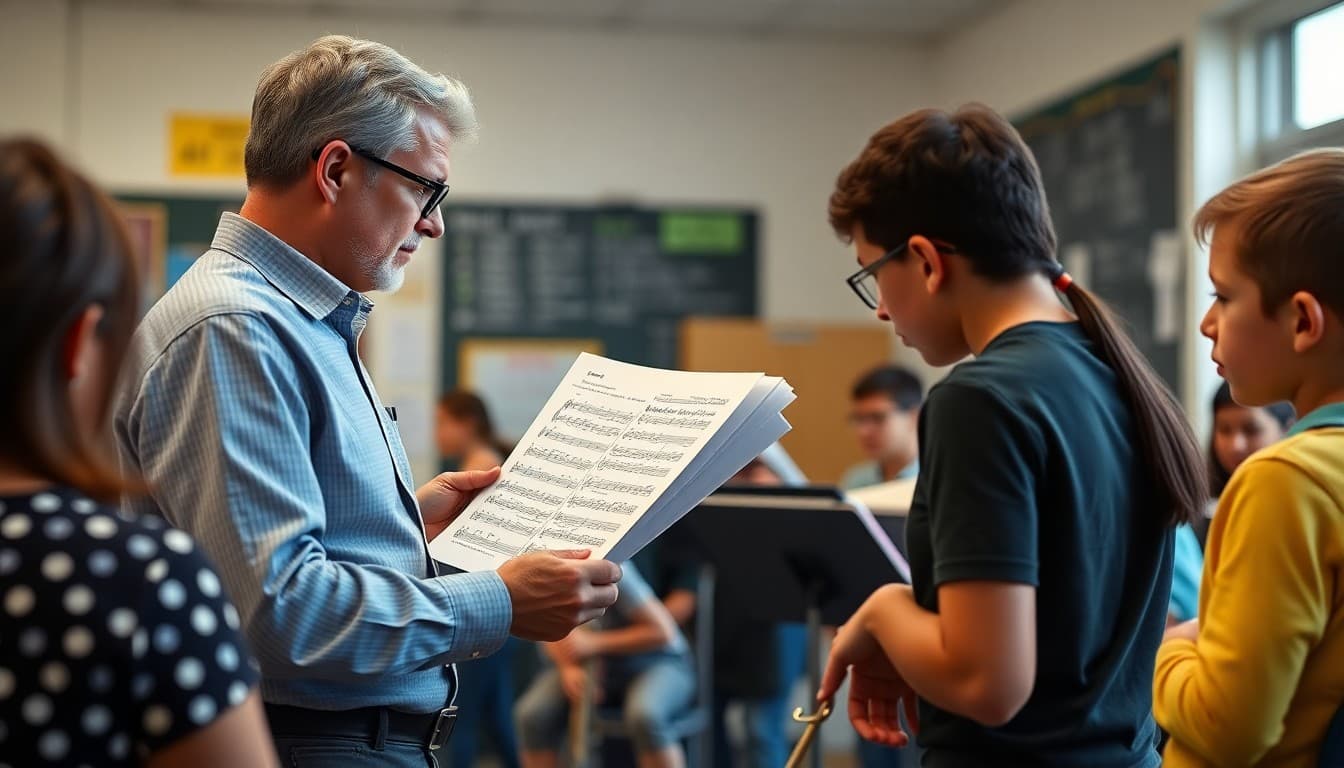
Families often wonder what happens in rehearsal when students cannot bring the music home. Give them a picture. "In the first two weeks, we are working on three things: ensemble blend (learning to hear the full group sound rather than your own instrument), rhythmic precision in the driving sections of Hazo's Ride, and maintaining pitch center in the slow sections of the Vaughan Williams. Students will work on short passages, sometimes just four measures at a time, playing them multiple ways before we settle on the ensemble interpretation." This level of detail helps families understand why three hours of rehearsal per week is not enough and why home practice matters.
Set individual practice goals for the first week
Here is a newsletter section that sets clear, achievable first-week goals:
"Home practice focus for this week: Measures 1 through 24 of Ride. Play them at quarter-note equals 80 (slow), counting out loud, before you play at any faster tempo. If the counting feels mechanical and awkward, that is correct. You are building a metronome inside your head. Do not speed up until measures 1 through 24 are clean and confident at 80. Students who arrive at Thursday's rehearsal with those measures solid will add 10 to 15 more measures. Students who arrive having run through the whole piece at a faster tempo without cleaning the first 24 will spend Thursday rehearsal going backwards. Go slow first."
Explain what the first concert experience will be like
For families whose students are performing in a concert ensemble for the first time, name what the experience will be. "The fall concert is December 10 at 7:00 PM. The ensemble will perform three pieces, approximately 15 minutes of music. Students should arrive at 6:30 to tune and warm up. Concert dress is required (see the beginning-of-year newsletter for the complete list). Families should be seated by 6:55. The concert ends by approximately 8:00. After the concert, there is an informal meet-the-ensemble time in the hallway outside the auditorium. Students are dismissed to their families after the director thanks them." Families who know what to expect experience the concert differently from families who are figuring it out as it goes.
Name what students should bring to every rehearsal
Missing materials waste rehearsal time and frustrate everyone. "Every rehearsal, students need: their instrument in working order (no broken keys, leaking pads, or worn reeds without replacements), all assigned music in their folder, a pencil for marking the music, and their practice record signed by a parent for the previous week. Students who arrive without their music cannot participate in full-ensemble work and will be asked to use the time for individual practice in the hallway. That is a waste of their time and the ensemble's rehearsal time. Please help your student leave the house with everything they need."
Give families a specific listening task before the concert
"Before the December 10 concert, listen to the recording of Ride at full professional speed. Then ask your student to tell you what their part does. They should be able to say: 'I play the melody in the first section, then the countermelody in the middle, and then the rhythm figure at the end.' Families who listen to the recording before the concert hear their student's part specifically. Families who hear the concert cold hear only the general effect." That specific preparation turns family members from casual observers into attentive, proud witnesses.
Get one newsletter idea every week.
Free. For teachers. No spam.
Frequently asked questions
What should a music teacher include in a first-unit newsletter?
Name the repertoire students are learning, the technical skills this repertoire develops, the rehearsal structure and schedule, the individual practice focus for the first weeks, and the timeline to the first performance. For ensemble directors, naming the pieces by title and composer gives families something to listen to on YouTube or Spotify before the concert, which transforms them from passive audience members into engaged ones. Families who have heard a piece before a concert listen very differently from families who are hearing it cold.
How do I explain the first concert's repertoire to families who are not musicians?
Describe each piece in terms of what it teaches students musically, not in technical jargon. 'Our first concert piece, Holst's First Suite in E-flat for Military Band, has three movements. The first movement is a passacaglia, a theme that repeats in the bass while other voices build layers above it. For students, this means learning to hold their part steady while a lot of other things are happening around them. That independence is one of the most important ensemble skills we build.' Families who understand what their student is learning from a piece are more invested in hearing it performed.
How do I set individual practice goals for the first unit without overwhelming beginning students?
Keep it to one or two specific measures or technical issues. 'For beginning students, your first goal for this week is to play the first eight measures of piece number one at 60 beats per minute, counting out loud, with the correct fingerings. Nothing else yet. Get those eight measures clean before you add more. Students who try to learn the whole piece at once before any of it is solid end up with a thin layer of knowledge across the whole piece rather than a solid foundation in any of it.'
What do I tell families about how to support home practice during the first unit?
Give them one specific listening task and one specific coaching prompt. 'This week, listen to your student practice the first eight measures. Ask them to play it once while you watch their fingers. Ask: are all the keys going down? Most beginning students have one finger that they think is going down that is actually hovering. The parent who notices the hovering finger saves a week of struggling with a note that will not sound.' Families who have a specific thing to listen for give more useful practice feedback.
What platform makes sending music first-unit newsletters efficient?
Daystage works well because you can send to the full ensemble family list at once and include concert dates, repertoire information, and a link to a recording of the piece on YouTube all in one clean email. Families who can listen to the piece before the concert are more engaged at the performance. Including that link in the newsletter is one of the easiest ways to build family investment in the program before the first concert even happens.

Adi Ackerman
Author
Adi Ackerman is a former classroom teacher and curriculum writer with 8 years in K-8 schools. She writes about school communication, parent engagement, and what actually works in real classrooms.
More for Subject Teachers
Music Teacher Newsletter Guide: Keeping Families Connected to the Music Program
Subject Teachers · 7 min read
Music Teacher Newsletter: Setting Up the Year for Students and Families
Subject Teachers · 6 min read
After-School Program Newsletter Guide: Keeping Families Engaged Beyond the School Day
Subject Teachers · 6 min read
Ready to send your first newsletter?
3 newsletters free. No credit card. First one ready in under 5 minutes.
Get started free