

After-School Program Newsletter Guide: Keeping Families Engaged Beyond the School Day
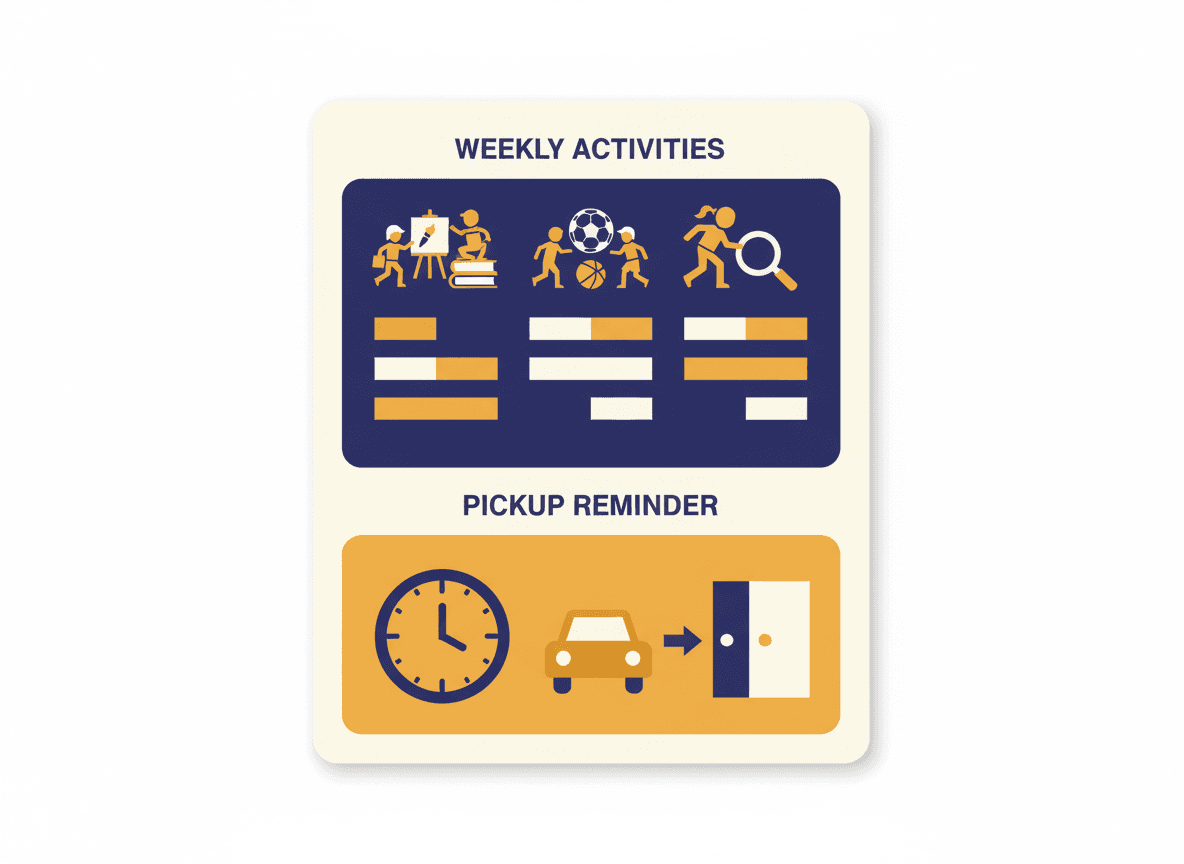
After-school programs occupy a unique space. Families chose to enroll their child, which means they are already invested. But because the program happens at the end of the school day, when parents are at work and communication is hardest, many families feel disconnected from what actually happens during that time. A good after-school newsletter bridges that gap and keeps the enrollment decision feeling like the right one.
This guide covers what to include in an after-school program newsletter, how often to send it, and how to keep families engaged in ways that support retention and strengthen the program.
What after-school newsletters do that school-day newsletters cannot
After-school programs often have more flexibility than the regular school day. Students explore interests, work on projects, play, and build relationships in ways that structured class time does not always allow. That richness is worth communicating.
When a family reads that their child spent forty-five minutes building a cardboard city, learned three new chess openings, or completed their third watercolor painting, they feel confident in their enrollment decision. That confidence directly affects retention. Families who feel informed stay enrolled. Families who feel disconnected withdraw.
How often to send an after-school newsletter
Bi-weekly newsletters work well for most after-school programs. Weekly is better if your program runs five days a week with changing activities. Monthly is the floor.
If your program has a theme or project cycle, align your newsletter to those cycles. Sending a newsletter at the start and end of each project or theme gives families a clear narrative: here is what we are starting, here is what we accomplished. That narrative structure is more satisfying than a weekly log of activities.
What to include in an after-school program newsletter
- What students have been doing. Be specific. "Students have been working on a stop-motion animation project for the past two weeks" tells a family something real. "We have been doing fun creative activities" tells them nothing. Name the activity, describe it briefly, and explain what skill or experience it builds. Families who enrolled for enrichment want to know the enrichment is actually happening.
- Student highlights or moments worth sharing. A specific funny or impressive thing a group of students did, a problem-solving moment, a project breakthrough: these micro-stories make the newsletter feel human. Keep students anonymous by default unless you have clear photo and name permissions. "A group of fourth graders spent an entire session redesigning their LEGO bridge after it collapsed, and the second version held three times the weight" is a compelling story that does not require any names.
- Upcoming schedule changes or closures. After-school families depend heavily on the program for childcare. Any schedule change, holiday closure, or staffing change needs to reach families as early as possible. The newsletter is the right primary channel for advance notice. Follow up with a one-line reminder email the day before.
- Enrollment and registration information. If there are upcoming enrollment deadlines, new session openings, or sibling enrollment opportunities, include them in the newsletter. Families already in the program are your best source of referrals. Make it easy for them to share or refer.
- A specific ask for family involvement. Volunteer opportunities, donation requests for program materials, or invitations to a showcase: one concrete ask per newsletter. Keep it simple and specific. "We need three more volunteers for our coding showcase on May 15. Sign up here" gets more response than "we welcome parent involvement in the program."
Using newsletters to reduce parent anxiety about after-school time
Many parents feel a low-level guilt about their child being in after-school care rather than at home. They wonder if their child is happy, if they are getting enough attention, and if the time is well spent.
A newsletter that shows specific, joyful learning happening after school addresses that anxiety directly. You do not have to address the guilt explicitly. Just show families what their child is doing, and let the richness of the program speak for itself.
Photos help enormously here. A photo of students gathered around a project, laughing during a game, or concentrating on a painting says more than any paragraph you can write. Check your program's photo policy, and if you can include images, include them.
Communicating program quality to decision-makers
After-school programs often depend on grants, district contracts, or parent fees. The people who make funding decisions sometimes read family communications or hear from families who do. A newsletter that clearly communicates program quality, student engagement, and outcomes is also a light-touch advocacy document.
When you describe the engineering challenge students completed, the mentorship relationship a student developed with a staff member, or the reading growth measured over the semester, you are building the case for program value in the minds of every reader.
Using Daystage to run after-school program newsletters
After-school program staff are often stretched thin. Building newsletters manually takes time that most programs do not have. Daystage makes the drafting fast: program update block, student highlight, schedule note, family ask. Draft it in ten minutes, send to your entire program family list, and check open rates to see how many families actually engaged.
If your program serves families with limited English, Daystage newsletters can be drafted in any language. Building a Spanish or bilingual version of your newsletter alongside the English version is practical and demonstrates genuine commitment to serving your whole community.
Retention starts with families feeling seen
Families re-enroll in programs where they feel their child is known and their investment is respected. A newsletter that tells them specifically what their child has been part of, and invites them into the life of the program, signals both. It costs you fifteen minutes a month. The retention it supports is worth far more than that.
Get one newsletter idea every week.
Free. For teachers. No spam.
Frequently asked questions
When should after-school programs send newsletters to parents?
Bi-weekly newsletters work well for most after-school programs. Weekly is better if your program runs five days a week with changing activities. Monthly is the floor. Align newsletters to your project or theme cycles rather than arbitrary weekly dates so each newsletter tells a complete narrative: here is what we started, here is what we accomplished.
What should an after-school program newsletter include?
Be specific about what students have been doing: name the project, describe it, and explain what skill or experience it builds. Include one or two student highlight moments (anonymized) that make the newsletter feel human. Communicate schedule changes and closures as early as possible, since many families depend on the program for childcare. Add one enrollment or referral opportunity, and one specific family involvement ask (volunteer date, donation of materials, showcase attendance).
How often should after-school programs communicate with parents by newsletter?
Bi-weekly is the recommended frequency for programs running five or more days a week. Monthly is the minimum for any after-school program. Families who chose to enroll their child are already invested, and consistent bi-weekly communication is the primary tool that keeps the enrollment decision feeling like the right one.
What are common mistakes after-school programs make in parent newsletters?
Vague activity descriptions are the most common mistake. 'We did fun creative activities' tells families nothing. 'Students spent two weeks building a stop-motion animation project, learning to use frame-by-frame filming to create the illusion of movement' tells them everything. A second mistake is burying schedule changes inside content updates rather than flagging them clearly at the top.
What tool helps after-school programs send newsletters quickly with limited staff time?
Daystage makes the drafting fast: program update block, student highlight, schedule note, family ask. Draft in ten minutes, send to your full program family list, and check open rates to see how many families engaged. If your program serves families with limited English, newsletters in Daystage can be drafted in any language with minimal extra effort.

Adi Ackerman
Author
Adi Ackerman is a former classroom teacher and curriculum writer with 8 years in K-8 schools. She writes about school communication, parent engagement, and what actually works in real classrooms.
More for Subject Teachers
School Counseling Department Newsletter: Coordinating Team Communication Across a Multi-Counselor Program
Subject Teachers · 6 min read
School Social Worker Newsletter: How to Communicate Resources and Support to Families
Subject Teachers · 6 min read
Academic Support Teacher Newsletter: Communicating Intervention Services and Progress to Families
Subject Teachers · 6 min read
Ready to send your first newsletter?
3 newsletters free. No credit card. First one ready in under 5 minutes.
Get started free