
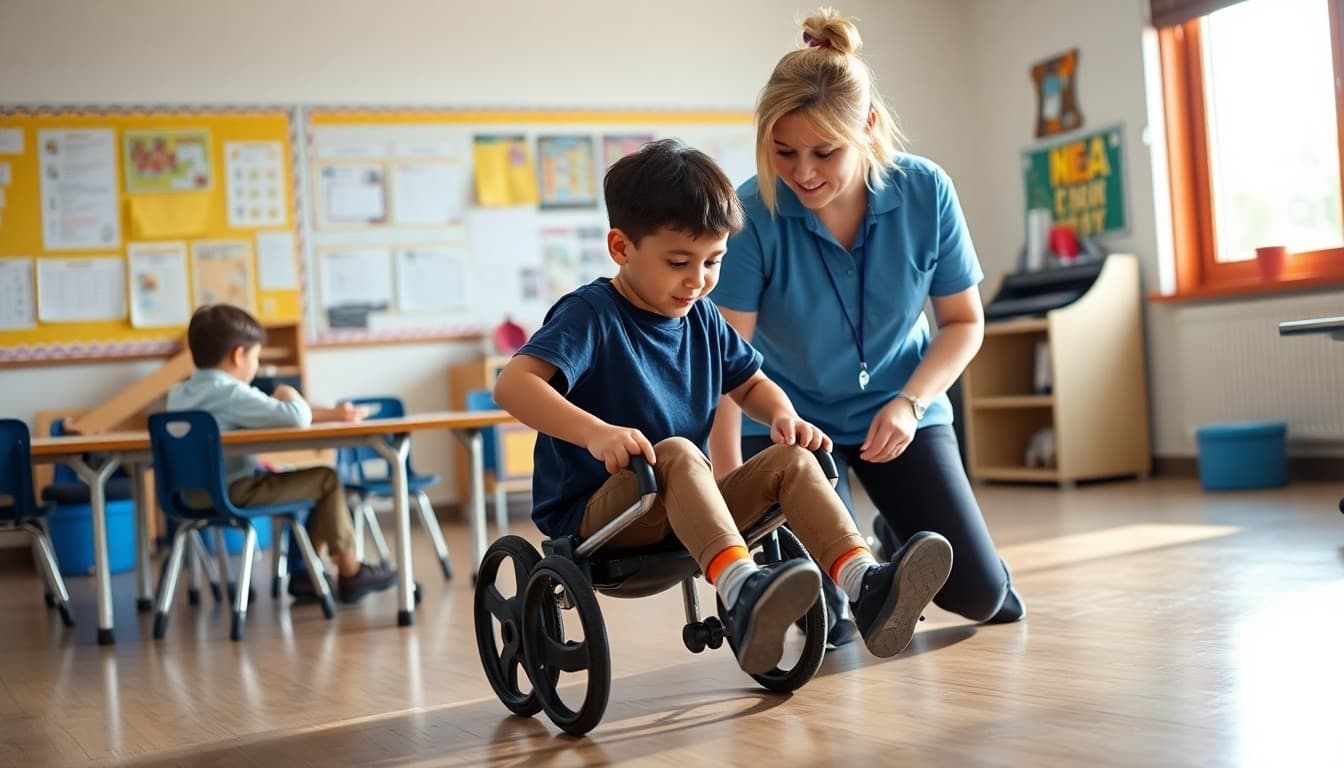
Physical Therapy School Newsletter for Families

Physical therapy in schools is specifically scoped to what a student needs to access their education. Families who understand that distinction, and who know what their child's PT is working toward, become far better partners in supporting the home program that makes school progress sustainable.
The Scope of School-Based Physical Therapy
School-based PT focuses on motor skills needed for educational participation. Getting to class, navigating the cafeteria, participating in PE, managing a locker, and positioning for seated learning are all within the scope of school PT. Medical goals that are not educationally necessary, like preparing for surgery or managing a chronic condition unrelated to school function, fall outside the school PT scope.
This distinction sometimes surprises families who have worked with PTs in clinical settings where the scope is broader. Explaining it clearly in your newsletter prevents mismatched expectations and helps families understand what supplementary services they might need to pursue outside school.
Explaining PT Goals to Families in Plain Language
IEP PT goals are written in clinical language that most families do not process naturally. Translate each goal into what it means for daily school life. "Given a complete school day, the student will navigate all areas of the school building including stairs and ramps using forearm crutches with contact guard assist for safety, measured by PT observation, in 4 out of 5 trials" becomes "we are working toward [student] being able to move through the entire school building using forearm crutches with just a teacher nearby for safety, rather than needing hands-on support."
That translation is accurate, concrete, and meaningful to a family member who loves the student but is not a PT.
Template: School PT Monthly Newsletter
"Hello, families. Here is a brief update from the physical therapy team.
What we are working on this month: we are focusing on [goal area, e.g., stair negotiation with a railing, independent wheelchair propulsion, balance during standing tasks]. For students working on [specific skill], we are practicing [brief description of activity or exercise type].
Home exercise program reminders: if your child has an active home program, this month we are prioritizing [exercises]. Please ensure these are done [frequency] for [duration] each day. If you have questions about technique or need a refresher demonstration, please reach out. Consistent home practice is one of the biggest factors in how quickly students meet their motor goals.
PE and recess: students receiving PT services participate in general education PE with modifications as specified in their IEP. If you have questions about what PE looks like for your child specifically, please contact your child's PT at [email]."
Mobility Equipment Communication
Students who use walkers, crutches, wheelchairs, or other mobility equipment require specific communication with families about equipment care, transport, and school usage. A newsletter that explains how equipment is stored, who is responsible for maintenance, and what happens if equipment is damaged at school prevents a lot of anxious parent calls.
For power wheelchair users, charging protocols are especially important. A power chair that arrives at school uncharged because no one communicated the home charging responsibility affects the entire school day. A clear, specific newsletter communication about charging eliminates this common problem.
Participation in PE and Recess
Physical education and recess participation for students receiving PT services is a frequent area of family questions. Explain the modifications and supports your student uses during PE, what the PT's role is in PE planning, and how you determine when full versus modified participation is appropriate. Families who understand the decision-making process are better advocates when they disagree with a recommendation.
Home-School Communication for Home Programs
The research on home exercise program adherence in pediatric populations is clear: adherence is highest when programs are brief, clearly explained, and directly relevant to things families see as meaningful for their child. A monthly newsletter that reminds families of current exercises, updates them when exercises change, and reinforces the connection between home practice and school progress produces meaningfully better outcomes than a printed HEP that gets filed and forgotten.
Get one newsletter idea every week.
Free. For teachers. No spam.
Frequently asked questions
What does school-based physical therapy address?
School physical therapists focus on gross motor skills that affect a student's ability to participate in the educational environment. This includes mobility within the school building (navigating hallways, stairs, cafeteria, and classrooms), physical education participation, posture and positioning for learning, the use of mobility equipment like walkers or wheelchairs, and any other movement-related needs that affect educational access. School PT is distinct from medical PT and is tied specifically to what the student needs in order to function in school.
Who qualifies for school-based physical therapy?
Students qualify for school PT when they have a motor disability that adversely affects their educational performance. Qualifying conditions include cerebral palsy, spina bifida, traumatic brain injury, muscular dystrophy, orthopedic impairments, and other conditions affecting gross motor function. PT must be listed as a related service in the student's IEP. The decision is made by the IEP team, including the physical therapist, based on evaluation data and educational need.
How do school PTs communicate with families about home exercise programs?
A home exercise program (HEP) is a set of exercises or activities the PT prescribes for daily practice outside of school. Effective HEP communication includes a written description of each exercise, a demonstration or video if possible, how often and how long to practice, and what correct performance looks like. Monthly newsletter updates that remind families of current HEP activities and note any changes support consistency in home practice.
What are common gross motor IEP goals?
Common goals include: navigating a full flight of stairs independently with a railing, walking a given distance on level ground using an assistive device, transitioning from seated to standing independently, participating in grade-level physical education with specified modifications, or operating a manual or power wheelchair for functional distances. Goals are individualized based on the student's current level of function and the specific skills needed for educational participation.
How do PT services change as students age?
PT goals in early childhood focus heavily on basic mobility and motor development. In elementary years, the focus shifts to participation in PE, playground access, and classroom mobility. In high school, transition-related skills like community mobility, transportation, and workplace access become more relevant. A newsletter that reflects the age-appropriate focus of PT services helps families understand why goals look different at different stages.

Adi Ackerman
Author
Adi Ackerman is a former classroom teacher and curriculum writer with 8 years in K-8 schools. She writes about school communication, parent engagement, and what actually works in real classrooms.
More for Special Education
Ready to send your first newsletter?
3 newsletters free. No credit card. First one ready in under 5 minutes.
Get started free