
IEP Parent Communication Newsletter: What Families Need to Know
Families of students with IEPs often feel like they only hear about their child's education during formal meetings or when something goes wrong. Regular newsletter communication from special education teachers changes that dynamic. It keeps families informed, prepared, and engaged between the required touchpoints.
Why Regular Communication Matters Under IDEA
The Individuals with Disabilities Education Act guarantees parents the right to be active participants in their child's educational planning. That right is not satisfied by an annual IEP meeting. Families who receive consistent communication throughout the year are better partners in implementing IEP supports at home, more confident advocates at meetings, and less likely to file complaints or request due process hearings.
Regular communication is not just good practice. It demonstrates procedural compliance with IDEA's emphasis on parental involvement and can protect the district in situations where family satisfaction is low.
What to Cover in a Special Education Newsletter
Your newsletter can cover program-level information without violating student privacy. Describe what skills the class is working on broadly, what instructional approaches you use, and how the day is structured. Explain upcoming events like transition planning sessions, evaluation periods, or group activities. Cover any changes to the classroom schedule, staffing, or support resources.
For families of individual students, supplement the newsletter with direct, private communication about their child's specific progress. A newsletter is the public channel. Individual email or phone calls are the private channel. Both are necessary.
Template: IEP Progress Newsletter Introduction
"Hello, families. I am writing with a mid-quarter update on how our students are progressing toward their IEP goals.
As a reminder, each student's IEP includes annual goals in [areas, such as reading, math, written expression, or behavior]. We measure progress toward those goals using [brief description of methods: data collection, work samples, observation]. Every student receives a formal progress report at the end of each quarter, delivered on the same schedule as report cards.
If you have questions about your child's specific progress before the formal report arrives, please reach out to me directly. I am happy to share what the data shows and talk through any areas where you are noticing changes at home.
Next month we will begin scheduling annual review meetings for students whose IEPs are up for renewal. I will reach out to each family individually to coordinate a time."
Explaining Families' Rights Without Making It Feel Adversarial
IEP newsletters can include brief rights reminders without framing them as confrontational. "As an IEP parent, you have the right to receive progress reports, request additional evaluations, bring an advocate to meetings, and disagree with placement decisions" is informational, not hostile. Families who understand their rights exercise them more effectively and tend to be more engaged partners overall.
Frame rights language as empowering rather than warning: "Here is what you can access and request" rather than "Here is what you should fight for." Families who feel supported rather than combative are easier to work with and better advocates for their children.
Pre-Meeting Communication
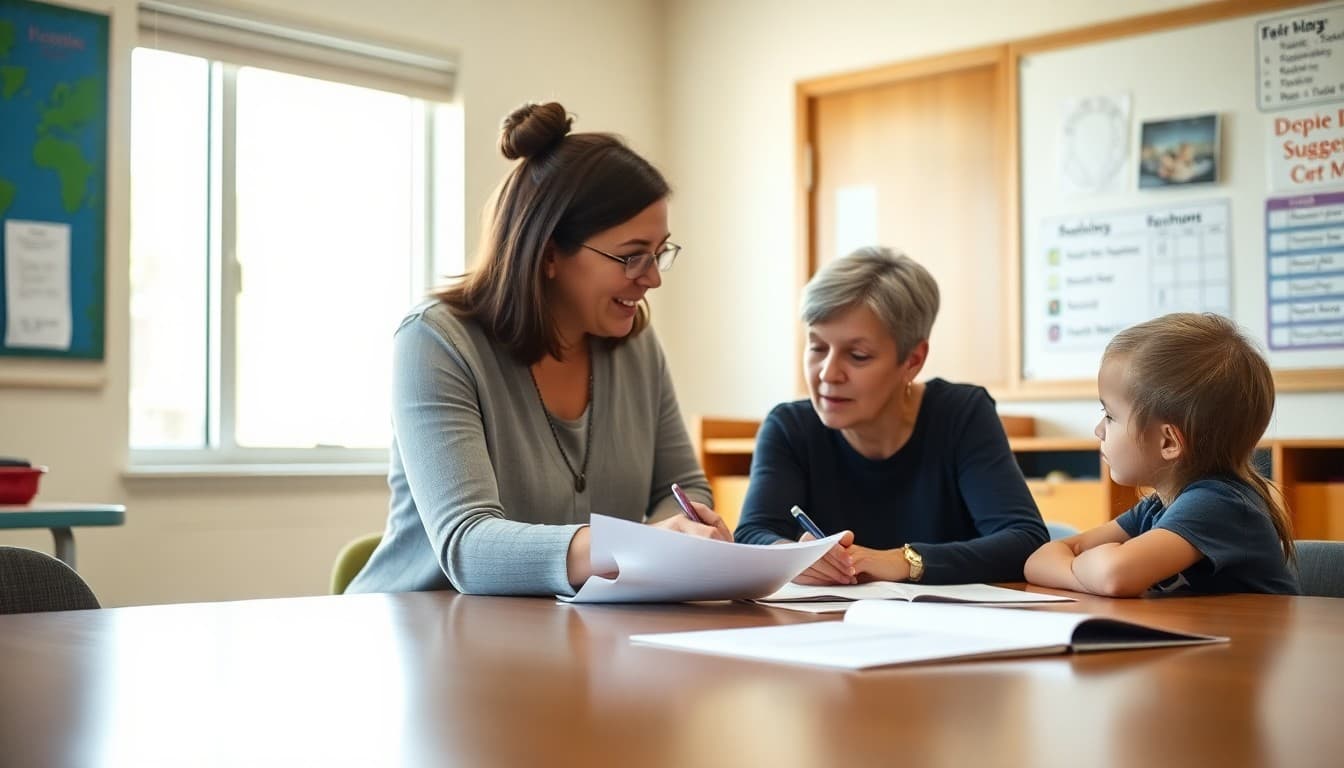
Send a newsletter to IEP families two to three weeks before a major meeting season. Include what the meeting agenda typically covers, what decisions families should be prepared to make, and what questions they might want to bring. "At your child's annual review, we will discuss progress toward current goals, proposed goals for the next year, and any changes to services, placement, or accommodations."
A family who arrives at an IEP meeting knowing what to expect asks better questions and signs documents with more confidence. That benefits everyone at the table.
Following Up After Meetings
After a major IEP meeting, send a brief summary newsletter to participating families. Not the official prior written notice or meeting notes, which have specific legal formats, but a warm follow-up: "Thank you for attending [child's] IEP meeting on [date]. We agreed on [brief summary of key decisions]. The next steps are [brief list]. Please reach out if you have any questions as you review the documents." This closing loop communication reduces the anxiety that sometimes follows complex meeting discussions.
Get one newsletter idea every week.
Free. For teachers. No spam.
Frequently asked questions
What IEP information should go in a regular classroom newsletter?
General newsletter updates should describe what the class or program is working on broadly, not individual student IEP goals. Individual IEP progress communication happens through progress reports, direct parent contact, and IEP meetings. A newsletter can explain how the IEP process works, what rights families have, and what to expect at different stages of the year without ever identifying individual students or their specific goals.
How often should special education teachers communicate with IEP families outside of required meetings?
IDEA requires periodic progress reports at least as often as general education report cards. Beyond that legal minimum, families of students with IEPs benefit significantly from regular brief communication: a quick email noting a goal milestone, a brief weekly update on how skill practice is going, or a short newsletter covering what the class is doing and how it connects to IEP goals. Monthly communication at minimum; weekly is better for students with significant needs.
What should I include in a newsletter before an upcoming IEP meeting?
Remind families of the meeting date, time, and location. Describe what will be covered and what decisions will be made. Remind families that they are equal partners in the IEP process and have the right to bring an advocate, ask for an interpreter, and request additional evaluations. A pre-meeting newsletter that prepares families produces more productive IEP meetings because families arrive knowing what to expect and what questions to bring.
How do I communicate about IEP goals without using jargon families do not understand?
Translate every goal into plain language. 'Given a 5th grade reading passage, the student will identify the main idea and two supporting details with 80% accuracy' becomes 'We are working on helping your child identify the main point of what they read and find evidence that supports it.' Plain language does not mean dumbing it down. It means respecting families enough to communicate clearly.
Can newsletter communication replace formal IEP progress reports?
No. IDEA requires periodic progress reports on IEP goal attainment sent to families at required intervals. Newsletter communication is supplementary and informal. It does not satisfy the legal requirement for progress reporting. Daystage newsletters are useful for building the relationship and keeping families informed between formal reports, but they do not replace the required documentation.

Adi Ackerman
Author
Adi Ackerman is a former classroom teacher and curriculum writer with 8 years in K-8 schools. She writes about school communication, parent engagement, and what actually works in real classrooms.
More for Special Education
Ready to send your first newsletter?
3 newsletters free. No credit card. First one ready in under 5 minutes.
Get started free