
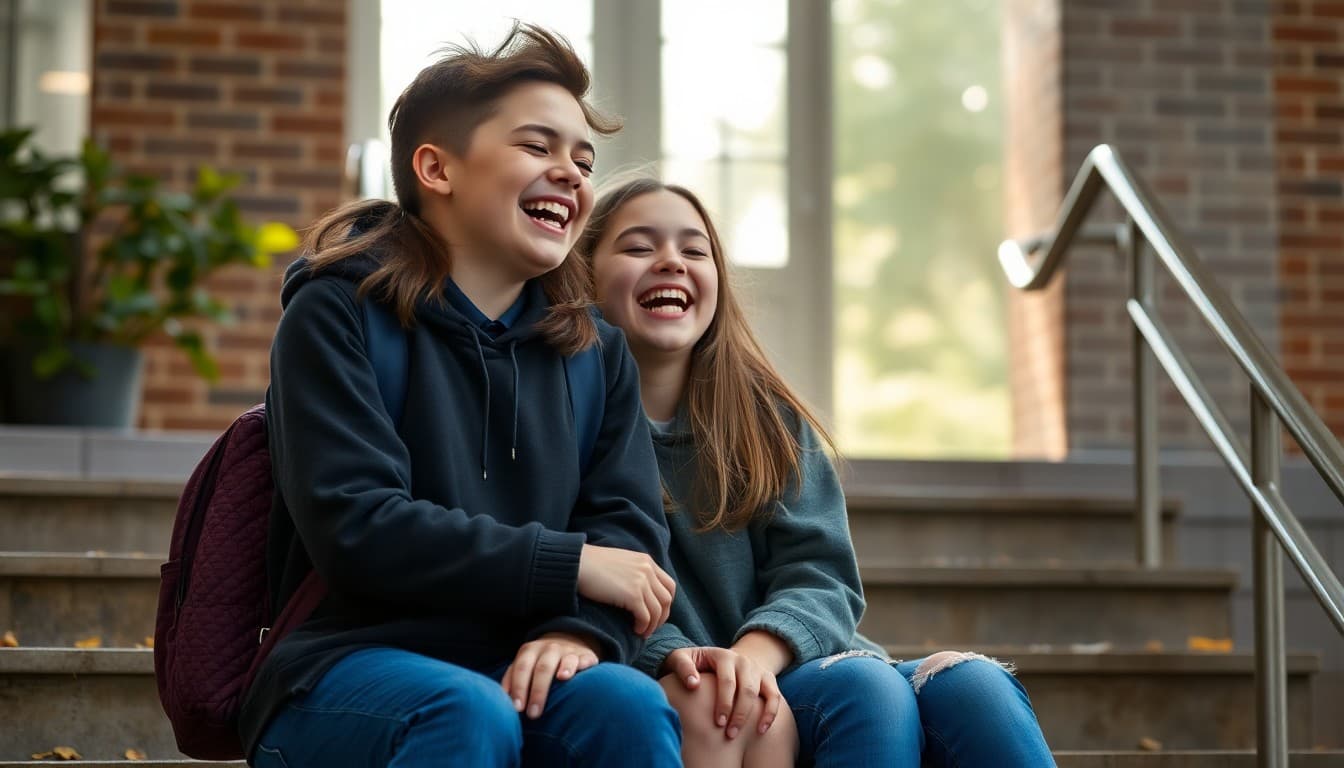
September Friendship Skills Newsletter for School Families

September is when the social landscape of the school year solidifies. The connections students make in these first weeks tend to persist. A counselor newsletter that helps families support friendship-building at home right now can change the trajectory of a student's entire year.
The Critical Window in September
Research on peer relationships in schools consistently shows that the first four to six weeks determine a student's social position for much of the year. Students who make at least one meaningful connection by mid-September tend to feel safer, more motivated, and more willing to take academic risks. Those who do not can fall into a pattern of social avoidance that becomes self-reinforcing. Your September newsletter can help families be intentional about this window while it is still open.
Friendship Conversations for Different Ages
Elementary families can help by facilitating playdates with one classmate at a time in a low-stakes environment. Middle school families can encourage their student to try one extracurricular activity where they are likely to meet peers with shared interests. High school families often need to step back and trust their teenager while staying available for debrief conversations after school. Age-appropriate strategies matter because what works at seven rarely works at fifteen.
What Schools Do in September to Build Community
Let families know what is happening in school. If you run community-circle guidance lessons in September, describe what students are doing and why. When families understand that classroom guidance in September is specifically designed to help students find their footing socially, they reinforce the work at home instead of wondering what the counselor actually does all day. Transparency builds support.
Helping the Child Who Says They Have No Friends
Families often panic when their child says they have no one to play with or sit with. Give them a productive response. First, validate the feeling without catastrophizing it. Second, ask curious questions rather than rushing to fix it. Third, contact you if the pattern continues past two or three weeks. Many children who say they have no friends are still learning how to recognize emerging friendships. But some genuinely need adult support, and families should know when to ask for it.
Social Skills Are Teachable
One of the most important messages you can send to families in September is that friendship skills are not innate. They are learned, practiced, and improvable at any age. A student who struggles to make friends is not broken or fundamentally unlikeable. They may simply need explicit instruction in the social moves that other students have absorbed without noticing. Your counseling program provides that instruction. Families can reinforce it at home by naming and celebrating social successes, however small.
Recognizing Social Anxiety vs. Introversion
Not every student who prefers to be alone is struggling. True introversion is not a problem to solve. Social anxiety, on the other hand, causes real distress and avoidance that limits a student's life at school. Help families distinguish between a child who is content spending time alone and a child who desperately wants connection but is too afraid to try. The second child needs support. The first child needs space and respect.
When to Call the Counselor
Give families clear criteria. Call if your child cries before school on multiple mornings due to social fears, consistently eats alone and seems distressed about it, describes being excluded or mocked by peers, or has stopped talking about school entirely. These are not signs of a dramatic child. They are signals that something needs attention before September turns into a very long year.
Scheduling Your September Issue With Daystage
If you wrote your August newsletter in Daystage, your September issue takes less than an hour to update and schedule. Swap the content, adjust the dates, and set the delivery. Families who already expect a monthly counselor newsletter are primed to open September's issue, especially when the subject line tells them exactly what's inside.
Get one newsletter idea every week.
Free. For teachers. No spam.
Frequently asked questions
What friendship skills are most important in September?
In September, the most critical skills are initiating conversations with new peers, joining activities gracefully, and reading social cues about whether someone wants to talk or play. These first-contact skills determine whether students make connections or stay isolated through the fall.
How can families support friendship development in the first month of school?
Ask specific questions after school: not 'How was your day?' but 'Who did you sit with at lunch?' or 'Was there someone new in your class?' Specific questions produce specific answers and give you real information about your child's social world.
What if a student has not made any friends by the end of September?
That's worth a conversation with the school counselor. One month of isolation can harden into a longer pattern if not addressed. Counselors can observe the student in unstructured settings, facilitate introductions, or start a social skills group if multiple students are struggling.
How does classroom guidance address friendship in September?
Most elementary counselors run community-building lessons in September that focus on learning names, finding things in common, and practicing kind conversation. Secondary counselors often address the social-emotional aspects of the transition between grade levels or schools.
How do counselors send timely September newsletters?
Daystage lets counselors schedule September newsletters to deliver in the first week of school, while families are still in 'start of year' mode and most likely to read and act on the content.

Adi Ackerman
Author
Adi Ackerman is a former classroom teacher and curriculum writer with 8 years in K-8 schools. She writes about school communication, parent engagement, and what actually works in real classrooms.
More for School Counselors
Ready to send your first newsletter?
3 newsletters free. No credit card. First one ready in under 5 minutes.
Get started free