
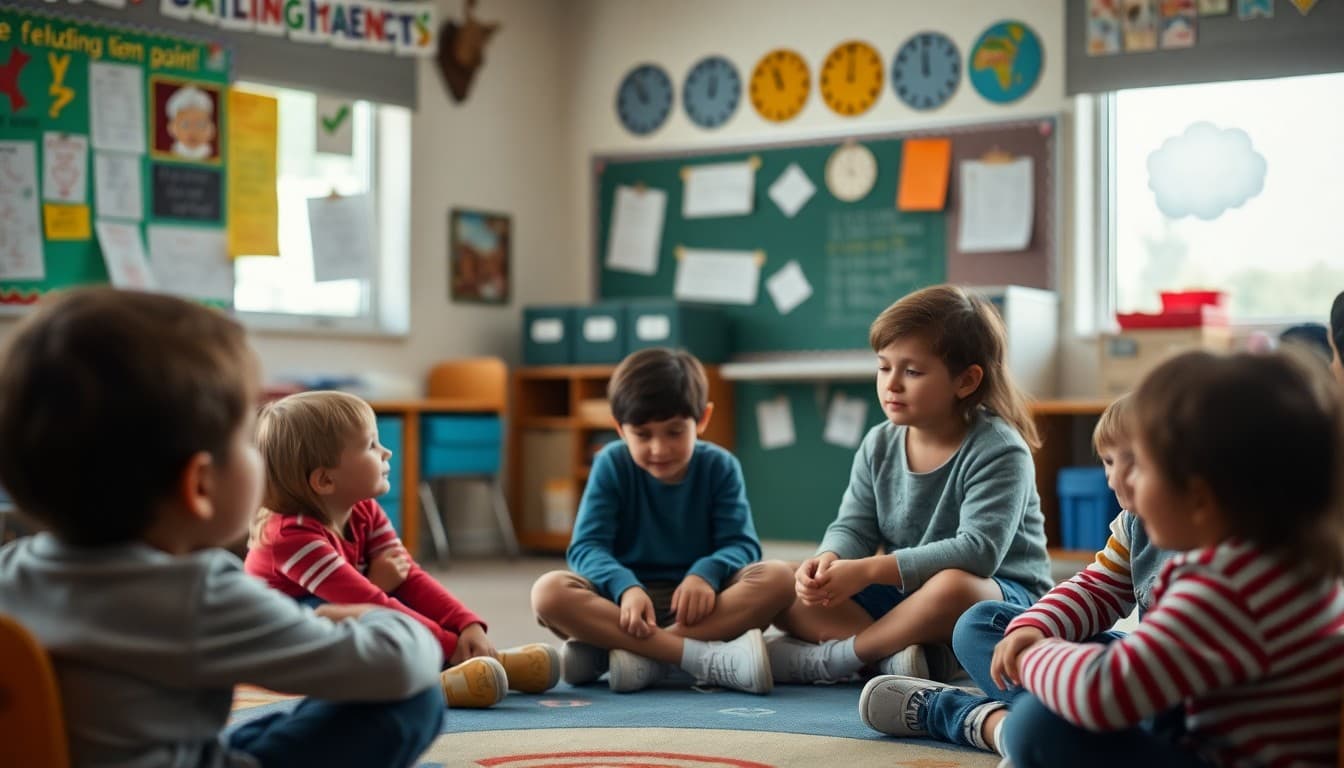
School Newsletter Self-Regulation: Building Student Emotional Control

Self-regulation is the foundational skill beneath academic engagement, conflict resolution, and mental health. A student who can manage frustration, shift focus, and stay with difficulty is a student who can learn. A newsletter that explains self-regulation to families gives them the language and strategies to support this skill at home in the way that has the most impact.
What self-regulation is and why it matters
"Self-regulation is the capacity to manage thoughts, feelings, and behaviors. It is what allows a student to take a breath when they are frustrated instead of pushing someone. To keep working on a problem when they would rather stop. To wait their turn when they are excited. To shift from recess to math without a meltdown. It is not a personality trait and it is not about willpower. It is a skill, shaped by both brain development and experience, that can be taught and strengthened."
What self-regulation instruction looks like in our school
Describe the specific program or practices. "In our school, students learn self-regulation skills through [specific program like Zones of Regulation, Second Step, or classroom mindfulness practices]. They learn to: identify their emotional state, name it, understand what it feels like in their body, and choose a strategy to help them move toward a calm and focused state. These are explicit skills taught in the classroom, not assumed."
The Zones of Regulation: a common language
"Many classrooms use the Zones of Regulation framework: Green (calm, focused, ready to learn), Yellow (frustrated, anxious, or excited but still in control), Red (overwhelmed, out of control), Blue (sad, tired, disengaged). Students who can identify their zone can begin to use strategies to move toward Green. The framework is most powerful when the same language is used at school and at home. If you know the framework, you can ask: 'What zone are you in right now? What strategy helps you?'"
Simple strategies families can use at home
Give families three or four strategies they can practice at home without professional training. Box breathing: in for four counts, hold four, out four, hold four. Body scan: notice how the body feels from head to toe when calm. Movement break: five minutes of physical activity before returning to a difficult task. Name it: 'I feel frustrated because I can't figure this out.' Research shows that naming an emotion activates the reasoning brain and reduces the intensity of the emotional response.
Modeling matters more than instructing
"The most powerful self-regulation practice families can offer is modeling. When you are frustrated, let your student see you use a strategy: 'I am feeling overwhelmed right now so I am going to take a few deep breaths before I decide what to do.' Narrating your own regulation process gives students a real-life template for what self-regulation looks like from the inside. Instructions alone are far less powerful than modeling."
Template: school self-regulation newsletter section
"Self-Regulation in Our School Self-regulation is the skill beneath academic engagement and positive behavior. We teach it explicitly through [specific program/practices]. This month students are learning: [specific strategy or skill]. To practice at home: [One specific strategy with step-by-step instructions]. Try it before homework this week. Questions about our SEL program? Contact [school counselor] at [email]."
Daystage makes it easy to send self-regulation newsletters with embedded links to strategy videos and family guides so families can practice the same skills at home that students are learning at school.
Get one newsletter idea every week.
Free. For teachers. No spam.
Frequently asked questions
What is self-regulation and how should a school newsletter explain it to families?
Self-regulation is the capacity to manage thoughts, feelings, and behaviors in response to internal and external demands. A newsletter explanation: 'Self-regulation is what allows a student to take a deep breath when they are frustrated instead of acting out, to keep working on a problem when it is hard, to wait their turn in conversation, and to shift focus from one activity to another without a meltdown. It is not a personality trait. It is a skill that can be taught, practiced, and strengthened.'
What self-regulation strategies should schools share in newsletters?
Newsletter-appropriate self-regulation strategies are brief, practical, and applicable at home without any special materials. Box breathing. The 5-4-3-2-1 grounding technique. Taking a movement break before returning to a challenge. The 'name it to tame it' strategy of labeling an emotion before responding to it. The Zones of Regulation framework (identifying whether you are in the green, yellow, red, or blue zone). These are concrete enough for families to understand and use immediately.
How does the Zones of Regulation framework work and how should a newsletter explain it?
The Zones of Regulation is a widely used framework that helps students identify their emotional state: Green (calm, focused, ready to learn), Yellow (frustrated, anxious, excited but still in control), Red (overwhelmed, out of control, angry), Blue (sad, bored, tired, disengaged). Students who can identify which zone they are in can begin to use strategies to move toward Green. A newsletter can explain the four zones and give families one or two strategies that help students move from Yellow or Red to Green.
How can families practice self-regulation at home with their students?
Families can support self-regulation by: naming emotions in everyday family life ('I notice you look frustrated, that makes sense because this is hard'), teaching and practicing breathing strategies before moments of crisis, building predictable home routines that reduce the demand for regulation by creating structure, modeling their own regulation by narrating what they do when they are stressed ('I am feeling frustrated right now so I am going to take a few deep breaths before I respond').
How does Daystage support school newsletters about self-regulation?
Daystage lets schools send self-regulation newsletters with embedded links to Zones of Regulation family guides, calming strategy videos for students, and school counselor contact information. A newsletter with a direct link to a two-minute calming strategy video is far more actionable than one that describes the strategy in text. Daystage makes it easy to include these embedded resources in a professional newsletter format that families will read and reference.

Adi Ackerman
Author
Adi Ackerman is a former classroom teacher and curriculum writer with 8 years in K-8 schools. She writes about school communication, parent engagement, and what actually works in real classrooms.
More for Professional Development
School Newsletter Emotional Intelligence: Why EQ Matters for Students
Professional Development · 6 min read
SEL Newsletter for Middle School: Navigating Emotions and Friendships
Professional Development · 6 min read
Mindfulness Newsletter for Schools: Practices That Support Student Well-Being
Professional Development · 6 min read
Ready to send your first newsletter?
3 newsletters free. No credit card. First one ready in under 5 minutes.
Get started free