

School Newsletter Emotional Intelligence: Why EQ Matters for Students
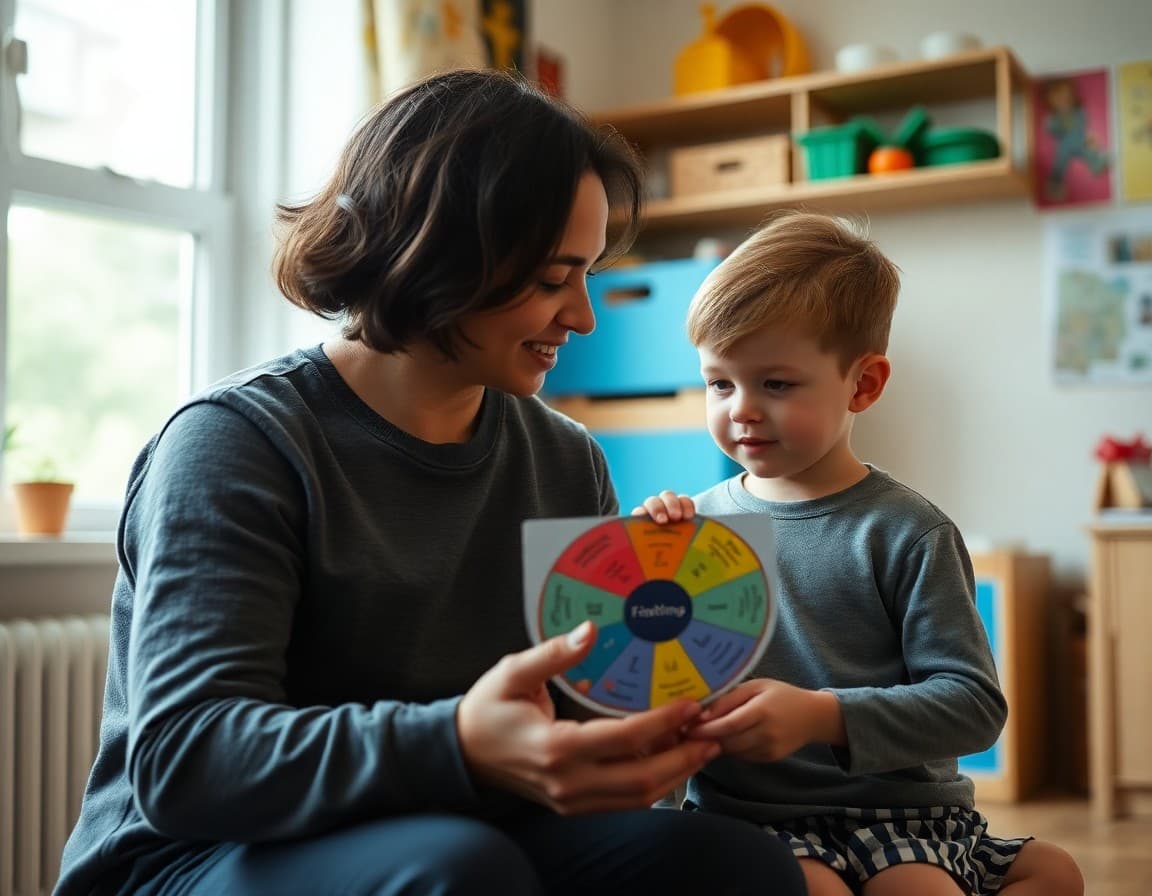
Emotional intelligence is not a soft skill. It is a measurable set of competencies that predict academic performance, career success, and relationship quality better than IQ alone. A newsletter that explains EQ to families and gives them specific tools to develop it at home makes a lasting contribution to the skills their students are building.
What emotional intelligence actually is
"Emotional intelligence is the capacity to recognize, understand, and manage your own emotions, and to recognize and respond appropriately to others' emotions. It includes four core abilities: knowing what you are feeling and why, managing those feelings productively, recognizing what others are feeling (empathy), and using that awareness to navigate relationships effectively. Unlike IQ, which is relatively fixed, EQ develops through deliberate practice and experience."
Why EQ matters for academic and life success
"Research by Daniel Goleman and subsequent studies show that IQ accounts for roughly 20 percent of career success outcomes. EQ accounts for far more. In school specifically, students with high EQ are more likely to persist through difficulty, collaborate effectively, and seek help when struggling. They are also significantly less likely to engage in the social conflicts and behavioral crises that disrupt learning. We teach EQ not instead of academics but because it is the foundation that makes academics sustainable."
What EQ instruction looks like in our school
Describe the specific EQ practices in your school or classroom. Emotion vocabulary building: using a feelings wheel to expand the language beyond good, bad, fine, and okay. Perspective-taking discussions embedded in reading and social studies. Structured conflict resolution protocols that students learn and practice. Morning meetings where emotions are acknowledged and named before instruction begins. The more specific the description, the more credible and useful for families.
Building emotion vocabulary: the highest-leverage home practice
"The single most impactful EQ practice families can do at home is expanding emotion vocabulary. Research by psychologist Lisa Feldman Barrett shows that people who can name their emotions with more precision regulate them more effectively. Moving from 'bad' to 'frustrated,' 'disappointed,' 'embarrassed,' or 'overwhelmed' changes how the brain processes the emotion. A feelings wheel on the refrigerator is a practical tool: when something is wrong, ask 'which word on this chart comes closest to what you're feeling?'"
Empathy at home: practical applications
Give families specific empathy practices. After reading a book or watching a show together, ask: how do you think that character was feeling? What might have caused that? How would you feel in their situation? These perspective-taking conversations build the empathy muscle in a low-stakes, engaging context. They are also a natural bridge to talking about real social situations your student is navigating.
Template: EQ school newsletter section
"Emotional Intelligence at [School] EQ , the ability to recognize, understand, and manage emotions , is one of the strongest predictors of long-term success. In our school, we teach EQ through [specific practices]. This month we are focusing on: [specific EQ skill]. To practice at home: [One specific EQ activity]. A feelings wheel is a useful starting point: [link to printable resource]. Questions about our EQ program? Contact [name] at [email]."
Daystage makes it easy to send EQ newsletters with embedded printable resources and links so families can start developing emotional intelligence at home immediately.
Get one newsletter idea every week.
Free. For teachers. No spam.
Frequently asked questions
What is emotional intelligence and how should schools explain it to families?
Emotional intelligence (EQ) is the ability to recognize, understand, and manage one's own emotions, and to recognize and respond appropriately to others' emotions. A newsletter explanation: 'EQ includes four core skills: recognizing your own emotions, managing them, recognizing others' emotions (empathy), and navigating relationships effectively. Research shows that EQ predicts academic success, career outcomes, and relationship quality more reliably than IQ alone. It is not fixed. It develops through deliberate practice.'
What EQ skills do schools typically teach and how should newsletters describe them?
Schools teach EQ through: emotion vocabulary (building the language to name emotions precisely, moving beyond 'good' and 'bad' to 'curious,' 'frustrated,' 'proud,' 'overwhelmed'), perspective-taking (understanding how a situation might feel to another person), conflict resolution (expressing needs and hearing others' needs without escalation), empathy (recognizing and responding to others' emotions), and emotion regulation (managing emotional responses rather than being driven by them).
Why does emotional intelligence matter more than IQ for long-term success?
Research by Daniel Goleman and subsequent studies show that IQ accounts for roughly 20 percent of career success. The remaining 80 percent is influenced by factors like emotional regulation, persistence, empathy, and social skills , all EQ components. In school specifically, students with high EQ are more likely to persist through academic difficulty, work effectively in groups, and seek help when struggling. A newsletter can cite this evidence without making it feel like IQ is being dismissed.
How can families develop emotional intelligence in their children at home?
Families develop EQ by: building emotion vocabulary together (feelings wheels and emotion charts are useful tools), having conversations about how characters in books or movies might be feeling and why, validating children's emotions even when the behavior needs to be redirected ('you were angry, that makes sense, and throwing things is not safe'), modeling empathy in how adults talk about other people, and processing disagreements after the fact rather than only in the heat of the moment.
How does Daystage support emotional intelligence newsletters from schools?
Daystage lets schools send EQ newsletters with embedded links to feelings wheels, emotion vocabulary resources, and recommended books for different age groups. A newsletter with a direct link to a printable feelings wheel that families can put on the refrigerator is more useful than a newsletter that describes the concept of emotion vocabulary. Daystage makes it easy to include these practical resources in a clean, professional format.

Adi Ackerman
Author
Adi Ackerman is a former classroom teacher and curriculum writer with 8 years in K-8 schools. She writes about school communication, parent engagement, and what actually works in real classrooms.
More for Professional Development
School Newsletter Self-Regulation: Building Student Emotional Control
Professional Development · 6 min read
SEL Newsletter for High School: Emotional Intelligence and Teen Well-Being
Professional Development · 6 min read
SEL Newsletter for Middle School: Navigating Emotions and Friendships
Professional Development · 6 min read
Ready to send your first newsletter?
3 newsletters free. No credit card. First one ready in under 5 minutes.
Get started free