
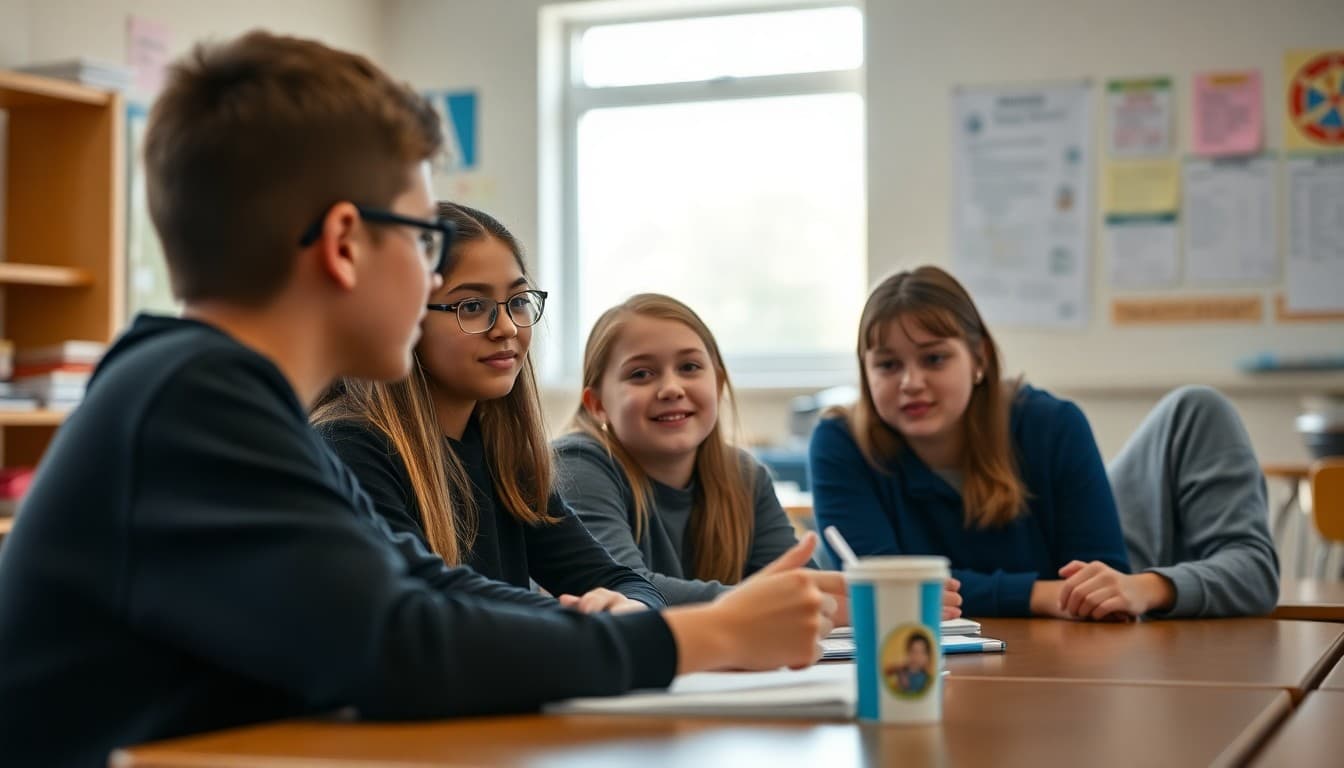
SEL Newsletter for Middle School: Navigating Emotions and Friendships

Middle school is the most socially complex and emotionally intense period in K-12 education. Students are navigating shifting friendships, new social hierarchies, and emerging identity, all while their brains are still developing the regulation capacity they need to manage it. SEL in middle school is not a luxury. It is a developmental necessity. A newsletter that explains this to families builds the home-school alignment that makes SEL work.
Why middle school SEL matters: the developmental context
"Middle school is when peer relationships become primary motivators, when social belonging feels like survival, and when emotional intensity significantly outpaces regulation capacity. The part of the brain that manages impulse control and long-term thinking is still developing well into the mid-twenties. This means middle schoolers are not choosing to be difficult. They are navigating real developmental complexity with tools that are still being built. Our SEL program gives students additional tools for exactly this moment."
Friendship navigation: the hardest middle school skill
"The most common social challenge in middle school is navigating shifting friendships: the friend who pulls away, the group that changes composition, the rumor that spreads. Our SEL program teaches specific skills for these situations: how to respond when you feel left out, how to have a direct conversation when a friendship feels strained, how to maintain identity when peer pressure pushes in a different direction. These skills are genuinely difficult at this age and need explicit instruction."
Social media and middle school social dynamics
Social media is reshaping middle school social dynamics in ways that deserve direct attention in a newsletter. "Many middle schoolers experience social media as an extension of the school social environment, with the added difficulty that it never turns off. Exclusion from a group chat is as painful as exclusion from a lunch table, and it happens at 9 PM on a Wednesday. We address digital social dynamics directly in our SEL program. At home, one useful practice: charge devices outside bedrooms at night. The research on sleep and middle school emotional regulation is clear and the intervention is free."
How families can support middle school SEL
Give families specific, developmentally appropriate guidance. Side-by-side conversations work better than face-to-face ones at this age. Driving together, cooking together, or walking together often produces more honest conversation than sitting across from each other asking direct questions. Stay curious without interrogating. Share your own social struggles from adolescence authentically. Validate the intensity of their experience before offering perspective.
Template: middle school SEL newsletter section
"SEL Update , [Month] | [School] This month our SEL program focuses on [specific topic: friendship navigation, anger management, academic stress, etc.]. Students are learning [specific strategies or skills]. To support at home: [One specific family practice]. If your student is struggling: our school counselors are available at [location] from [hours]. Contact [name] at [email]. Teen support line: [Specific resource]."
Daystage makes it easy to send middle school SEL newsletters with embedded resources and counselor contacts so families have what they need to support their students at home.
Get one newsletter idea every week.
Free. For teachers. No spam.
Frequently asked questions
Why is SEL particularly important for middle schoolers and how should a newsletter address this?
Middle school is the period when social belonging, identity, and peer relationships become primary psychological motivators. The prefrontal cortex, which manages impulse control and decision-making, is still developing. Emotional intensity increases while regulation capacity lags behind. SEL gives middle schoolers specific tools for this developmental moment: how to navigate peer conflict, how to manage the intensified emotions of early adolescence, and how to make decisions under social pressure. A newsletter can explain this developmental context without pathologizing typical adolescent behavior.
What SEL topics are most relevant for middle school newsletters?
Middle school SEL newsletter topics that connect with families: friendship navigation and peer pressure, the impact of social media on middle school social dynamics, handling exclusion and inclusion, anger and frustration management strategies, the connection between sleep and emotional regulation in tweens, academic stress and study skill strategies, and identity exploration and belonging. These connect directly to what families are seeing at home.
How should middle school newsletters address the social dynamics of this age group?
Address the real social dynamics directly. 'Middle school social dynamics are genuinely complex. Students are navigating shifting friendships, increasing peer influence, and new forms of social evaluation that come with middle school's larger and more complex social environment. Our SEL program gives students specific language and strategies for these challenges: how to respond when left out, how to repair a friendship after conflict, and how to maintain identity under peer pressure.'
How can families support middle school SEL at home?
Middle school family SEL practices: stay curious about your student's social life without interrogating ('how is everyone in your friend group doing?' is easier to answer than 'do you have any problems with friends?'). Take driving or walking time seriously , side-by-side conversations where there is no eye contact are often more productive for tweens than face-to-face discussions. Share your own social challenges from middle school selectively and authentically. Validate the intensity of middle school emotions without minimizing them.
How does Daystage support middle school SEL newsletters?
Daystage lets middle schools send SEL newsletters with embedded links to school counselor contact, teen mental health resources, and family conversation guides specific to the middle school developmental stage. A newsletter that normalizes seeking help and provides a direct counselor contact in every SEL communication reduces the stigma of reaching out. Daystage also maintains newsletter consistency across the school year so SEL communication feels ongoing rather than reactive.

Adi Ackerman
Author
Adi Ackerman is a former classroom teacher and curriculum writer with 8 years in K-8 schools. She writes about school communication, parent engagement, and what actually works in real classrooms.
More for Professional Development
SEL Newsletter for High School: Emotional Intelligence and Teen Well-Being
Professional Development · 6 min read
School Newsletter Self-Regulation: Building Student Emotional Control
Professional Development · 6 min read
School Newsletter Emotional Intelligence: Why EQ Matters for Students
Professional Development · 6 min read
Ready to send your first newsletter?
3 newsletters free. No credit card. First one ready in under 5 minutes.
Get started free