

How to Write a School Newsletter That Actually Gets Parents to Show Up
There is a gap between a parent reading an event announcement in a newsletter and that parent actually showing up. Most school newsletters sit entirely on one side of that gap. They announce. They inform. But they rarely do the specific work that moves a parent from aware to committed.
School events with low turnout are almost always a communication problem before they are an interest problem. The parents were not indifferent. They just did not receive a compelling enough reason, in the right format, at the right time, to actually put the event on their calendar and protect that time.
Make it personal, not institutional
"Students will present their work" is an institutional announcement. "Your child will be standing at their project table waiting for you to see what they built" is a personal invitation. The difference in turnout between these two framings is measurable.
When a parent understands that their specific child's experience is connected to whether they show up, the stakes are personal rather than general. School events typically cannot be individually personalized at scale, but newsletter language can get close: use "your student," reference what the class has been working on leading up to the event, and describe what the parent will see and experience in the room.
Announce early and remind consistently
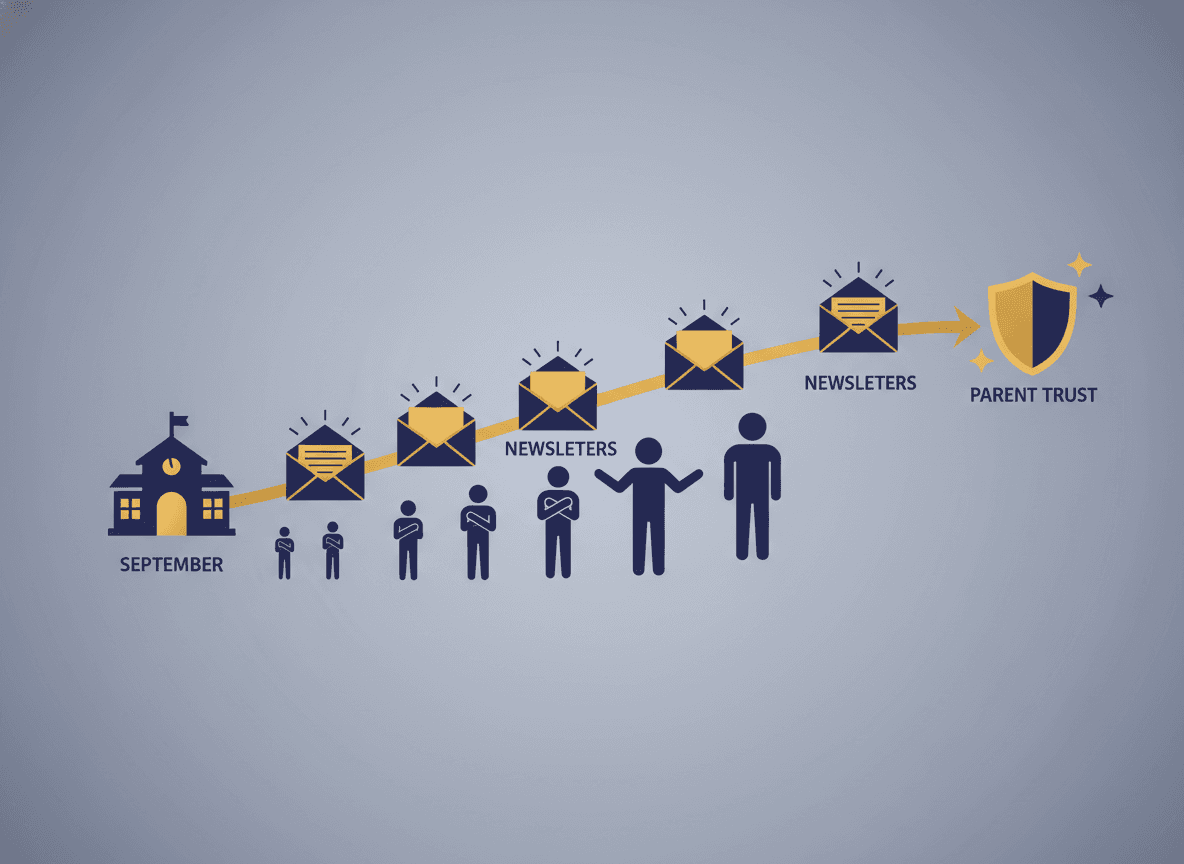
One announcement in the newsletter one week before an event is going to get a fraction of the turnout that three announcements over four weeks can achieve. The first mention, placed four weeks before the event, plants the date. The second mention, two weeks out, fills in logistics and builds context. The final mention, the week before, creates urgency.
This is not repeating yourself. Each mention serves a different function and reaches parents at different stages of their calendar planning. Parents who missed or forgot the first mention are often converted by the second or third. Families who plan ahead are already confirmed from the first mention.
Answer "why does my presence specifically matter?"
This is the question that separates events parents attend from events they skip. If the honest answer is "we want community participation and it would be nice to have you here," that will draw modest turnout. If the honest answer is "your child has been working on something for three weeks and they want you to see it," that will draw full rooms.
Write the event announcement from that honest second answer. Tell families what their student did to prepare. Name what will happen in the room. Make it clear that the parent's physical presence contributes something that watching a recording later will not.
Remove every friction point you can
Parking, childcare, timing, and length are the silent killers of event attendance. A newsletter that announces an event but does not address these concerns leaves families with unanswered logistical questions that become reasons not to come.
"The event runs 45 minutes, parking is available in the east lot, and there is no childcare provided but the gym will have activity tables for younger siblings" answers four questions families would otherwise have to ask. Fewer questions means fewer moments of friction between intention and action.
Include one clear action step
Every event announcement should end with a specific thing the family can do right now: add it to your calendar, click to RSVP, text a confirmation, or fill out an attendance form. "We hope to see you there" is not an action step. "RSVP here so we can set up enough chairs" is.
The action step serves two purposes. It gives families a concrete next step that moves them from intention to commitment. And it gives you useful data about who is planning to come so you can follow up personally with families you especially want in the room.
Get one newsletter idea every week.
Free. For teachers. No spam.
Frequently asked questions
Why do parents read school newsletters but still not show up to events?
Reading and attending are two different levels of commitment, and most newsletters treat them as equivalent. Parents see an event announcement, think 'I should go to that,' and then life happens. The newsletter that drives attendance is not just informational. It creates a specific, personal reason for the parent to be in that room.
How many times should an event appear in newsletters before it happens?
Three is a practical minimum for any event you want strong attendance at: a first mention four weeks out to put it on the calendar, a second mention two weeks out with logistics, and a reminder the week before. One mention, even a detailed one, will not move enough parents from aware to committed.
What information should the event section of a newsletter include?
Date, time, location, what will happen there, why the parent's presence specifically matters, and a clear action step like adding it to their calendar or RSVP link. Remove anything that does not answer one of those questions. Vague event descriptions with no specifics about what the parent will experience get low turnout.
Does personalizing the event invitation in the newsletter make a difference?
Significantly. 'Your student will be presenting their science project' converts at a much higher rate than 'students will be presenting their science projects.' When families feel that their specific child's participation is at stake, the pull to show up is far stronger.
How can Daystage help teachers build newsletter content that improves event attendance?
Daystage makes it easy to maintain a consistent newsletter cadence, which means you always have a scheduled send to place your three-touch event promotion into. Rather than scrambling to send a last-minute event reminder, you build the event into your regular communication rhythm naturally.

Adi Ackerman
Author
Adi Ackerman is a former classroom teacher and curriculum writer with 8 years in K-8 schools. She writes about school communication, parent engagement, and what actually works in real classrooms.
More for Parent Engagement
Ready to send your first newsletter?
3 newsletters free. No credit card. First one ready in under 5 minutes.
Get started free