

School Newsletter Communication for Divorced and Separated Families
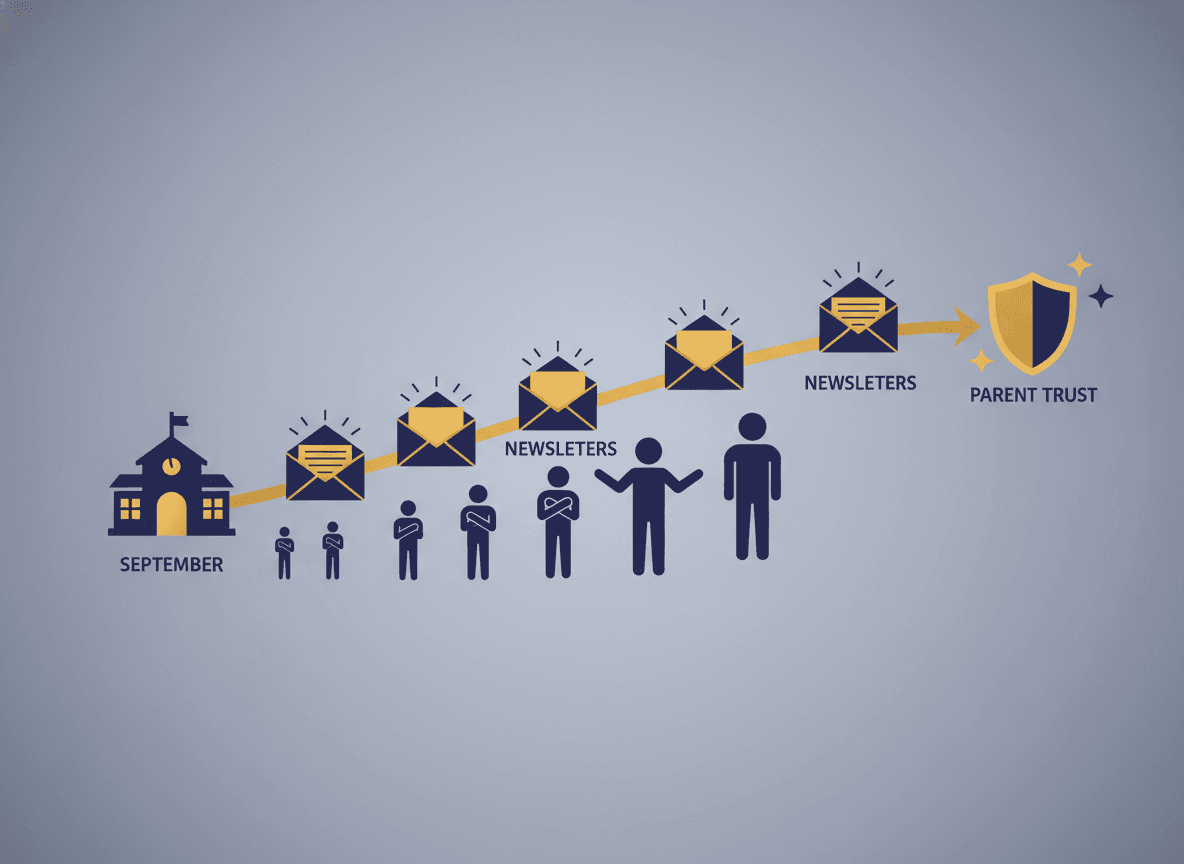
Many classrooms have students whose parents are separated or divorced and living in different households. In many of those households, school communication reaches only one parent, leaving the other parent less informed, less engaged, and occasionally in conflict with the school about information they feel they should have received.
The newsletter is one of the simplest places to solve this. Two subscriptions instead of one.
Collect Both Email Addresses at Enrollment
The enrollment form is the right moment to collect a second contact for families with two households. A simple additional field, "Second parent or guardian email for school communications," catches most separated families without requiring teachers to investigate family situations.
Some families will leave the second field blank because they share a household. Some will add a second parent's address. Some will ask that certain communications not go to the second address for privacy reasons. Capture the information and handle exceptions as they arise.
Default to More Communication, Not Less
When uncertain about a family's structure, more communication is generally safer than less. A newsletter that goes to both parents in a separated household creates more coordination opportunities between co-parents and the school. A newsletter that goes to only one parent and that parent does not share it with the other creates information asymmetry that can lead to conflict.
The exception is when a custody or legal order restricts access. Follow court orders. Do not make independent determinations about what a restricted parent is entitled to receive.
Handle Newsletter Disagreements Between Parents Carefully
Occasionally, one parent will contact you upset about something in the newsletter that the other parent responded to differently. "My ex RSVP'd for the field trip without telling me" or "My child's father replied to your email and I need to know what he said."
These situations are family dynamics, not newsletter issues. The teacher's responsibility is to communicate accurately and equitably with both parents. How two parents coordinate with each other is between them. Do not position yourself as a mediator or information broker between parents.
When One Parent Requests Exclusion of the Other
Occasionally, a parent will request that their former partner not receive the newsletter or school communications. Unless a court order supports that request, you generally cannot honor it. Explain that directly and compassionately.
"I understand this situation is difficult. Both parents have the right to school communications under federal law unless there is a court order that changes that. If you have a court order that affects this, please bring it to the main office. I need to follow the guidance from the school office on how to handle this."
Review Family Contact Information Periodically
Family contact information changes. Separated families that were on good terms in September may have different needs by January. A mid-year check-in request to update emergency contacts and newsletter recipients catches changes that would otherwise go unmanaged.
Get one newsletter idea every week.
Free. For teachers. No spam.
Frequently asked questions
Are both divorced parents entitled to receive school newsletters?
Under FERPA, both parents in a divorce retain the right to access their child's educational records and communications unless a court order specifies otherwise. In practice, this means both parents have the right to be on the school newsletter list unless a custody or legal order restricts one parent's access. If you are unsure about a specific family, your school administrator or district legal team can clarify.
How should schools handle custody situations where only one parent has legal custody?
Schools must follow any court orders on file regarding which parent receives communications and who has legal access to student information. If a custody order restricts one parent's access to school information, the school must honor it. Teachers should not independently decide how to handle these situations. Escalate to the school office and follow the guidance on file.
What is the easiest way to ensure both divorced parents receive the newsletter?
Collect a second email address during enrollment specifically for co-parent communication. Add both addresses to the newsletter list from the start. Some schools send the newsletter to a primary contact and rely on that person to forward it to the other parent, which works until the relationship is adversarial. Two direct newsletter subscriptions, one per parent, are more reliable.
What should teachers do if one parent asks to be removed from the newsletter or asks that the other parent not receive it?
A request to be removed from the newsletter should be honored immediately. A request to block the other parent from receiving newsletters requires review: unless a court order supports it, you generally cannot restrict a legally recognized parent's access to school communications. Escalate these requests to the school administration rather than making the determination yourself.
How does Daystage support communication to both parents in a separated household?
Daystage allows multiple email addresses per student household, so both parents can be added as newsletter subscribers without requiring any workaround. Each parent receives the newsletter directly rather than relying on the other parent to forward it.

Adi Ackerman
Author
Adi Ackerman is a former classroom teacher and curriculum writer with 8 years in K-8 schools. She writes about school communication, parent engagement, and what actually works in real classrooms.
More for Parent Engagement
School Newsletter Automation: What You Can Set and Forget (And What You Shouldn't)
Guides · 7 min read
Video in School Newsletters: How to Use It Without Creating More Work
Parent Engagement · 5 min read
How to Communicate School Schedule Changes to Families Without Confusion
Parent Engagement · 5 min read
Ready to send your first newsletter?
3 newsletters free. No credit card. First one ready in under 5 minutes.
Get started free