
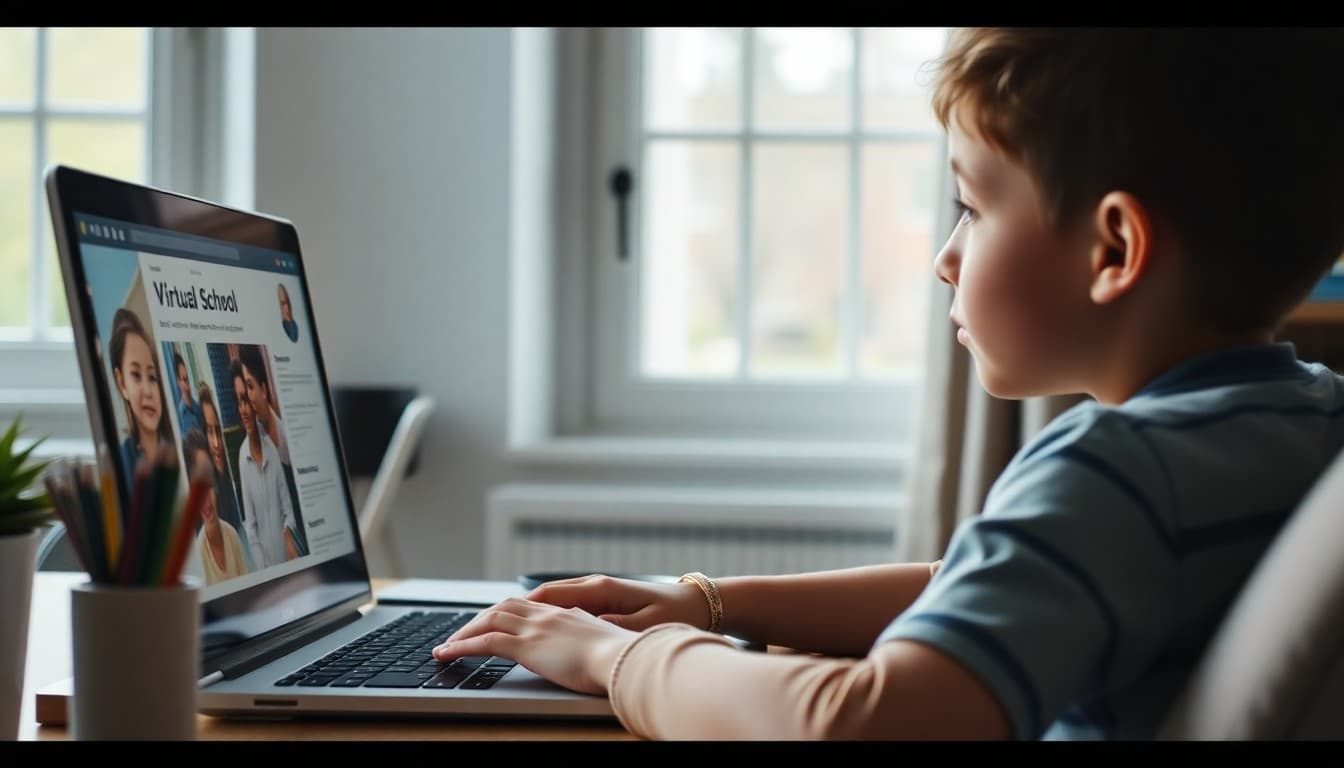
Online School Newsletter: Keeping Remote and Virtual School Families Engaged
Online schools face a community-building challenge that no other school model does: the families and students are geographically distributed, the hallways and pickup lines where school culture is transmitted in traditional schools do not exist, and the newsletter is one of the only consistent touchpoints between the school and its community. This makes the online school newsletter not a nice-to-have, but a genuine institutional necessity.
Community First
Traditional school newsletters can assume that families already feel connected to the school community through daily drop-off, school events, and hallway conversations. Online school newsletters cannot make that assumption. The first priority of every online school newsletter is community: naming students, featuring families, celebrating achievements, and creating the sense of collective identity that spontaneously emerges in physical schools but must be intentionally built in virtual ones.
Student Spotlights
A recurring student spotlight section, featuring one or two students per issue with a brief profile and an accomplishment, is one of the highest-engagement features an online school newsletter can have. Students and families who are featured feel seen and valued. Students and families who read about their peers develop a sense of knowing the people they are learning alongside, even if they have never met them in person.
Virtual Community Events Calendar
Online schools often organize virtual social events, book clubs, game nights, and community celebrations that are not required for academic participation but enormously important for building community. The newsletter is the primary promotion vehicle for these events. Include a consistent events calendar section in every issue, and promote specific events starting three to four weeks in advance. Families who are aware of virtual community events and choose to attend build the connections that make online learning feel less isolating.
Academic Deadlines and Calendar
Online families manage their own scheduling in ways that traditional school families do not have to. The newsletter's academic calendar section is genuinely useful and regularly referenced: upcoming assignment deadlines, live session schedules, standardized testing windows, and grade reporting dates. Keep this section clean and scannable. Families who use the newsletter as a reference document for scheduling are getting real value from every issue.
Technical Support Resources
Online school families encounter technical issues regularly, and knowing where to go for help quickly matters. A consistent technical support section in the newsletter with current contact information, how to submit a support ticket, and any known platform issues or upcoming maintenance prevents the anxiety that comes with technical problems that families do not know how to address.
Faculty and Staff Introductions
Online families often have no visual or personal connection to the people teaching their children. A recurring faculty spotlight, featuring one teacher or staff member per issue with a photo and a brief personal note, builds the human connection that is harder to develop without in-person contact. Teachers who are featured in newsletters feel more personally invested in the school community as well, which reinforces a positive culture even in a distributed environment.
Making the Newsletter the Community Hub
The most effective online school newsletters become the place families go first when they want to know what is happening in the school community. Achieving that requires consistent delivery, consistent format, and content that is reliably useful and interesting. Daystage makes it practical for online schools to produce biweekly newsletters that maintain this standard without requiring significant staff time. In a school where the newsletter is the community, that investment is not optional.
Get one newsletter idea every week.
Free. For teachers. No spam.
Frequently asked questions
What should an online school newsletter include?
Virtual community events, academic calendar and deadline reminders, technical support resources, student spotlights, faculty introductions, and regular reminders about how to access school services. Online families need more explicit community-building through the newsletter because they do not get it from hallways and pickup lines.
How do online schools build community through newsletters?
Feature students and families by name (with permission), announce virtual social events, create ongoing newsletter features that students can submit to (art, writing, photos), and invite families to share their child's accomplishments. Community is built through visibility and acknowledgment, which newsletters can provide even for geographically distributed families.
How often should virtual schools send newsletters?
Biweekly is ideal for online schools, more frequently than traditional schools, because families who are not physically present need more consistent touchpoints to feel connected to the school community. Monthly is the minimum.
What technical information belongs in an online school newsletter?
Platform updates and any changes to how systems work, technical support contact information, reminders about upcoming live sessions or synchronous events, and any device or internet requirements for upcoming projects. Families who do not receive this information through hallway conversations need it explicitly through the newsletter.
What tool works best for online school newsletters?
Daystage is well-suited for online schools because it handles digital-first distribution, tracks engagement, and produces mobile-friendly newsletters that reach families wherever they are. For schools with geographically distributed families, digital distribution is the only practical channel.

Adi Ackerman
Author
Adi Ackerman is a former classroom teacher and curriculum writer with 8 years in K-8 schools. She writes about school communication, parent engagement, and what actually works in real classrooms.
More for Magnet & IB
Ready to send your first newsletter?
3 newsletters free. No credit card. First one ready in under 5 minutes.
Get started free