

Competency-Based School Newsletter: Explaining Mastery Learning to Families
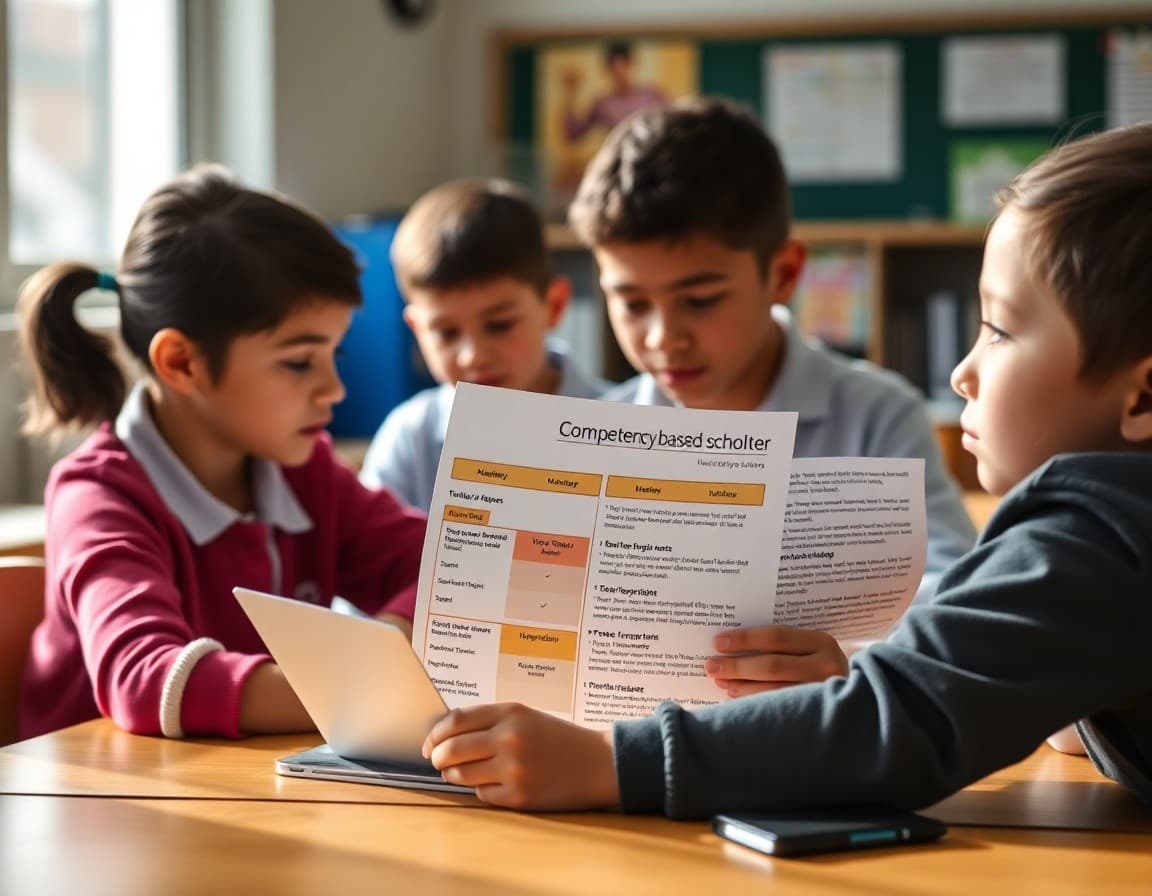
Competency-based education schools face a communication challenge that is almost entirely about model explanation. Most families attended traditional schools where A-F grades, time-based advancement, and Carnegie units were the norm. CBE replaces all of these with proficiency levels, mastery demonstrations, and personalized pacing. Unless families understand what has changed and why, they will find the system confusing and potentially alarming. The newsletter is where that understanding gets built, month by month.
The Core Idea in Plain Terms
Every CBE newsletter should be able to answer, somewhere, the question families are most likely to have: "Does this mean my child can stay in third grade forever?" No. It means students demonstrate mastery before advancing to the next level rather than advancing because the calendar says it is time. The analogy of a driving test helps: it does not matter how many hours you sat in a car. What matters is whether you can pass the test. CBE applies the same logic to academic learning. State this clearly, more than once a year.
What Proficiency Levels Mean
CBE schools use proficiency descriptors instead of letter grades. Whether your school uses Beginning, Developing, Proficient, and Advanced, or a 1-4 scale, or some other system, families need to understand what each level means in practical terms. What can a student at each level do independently? What does the transition from Developing to Proficient look like? What comes after Advanced? The newsletter is the right place to address these questions with specific, concrete examples from the current curriculum.
How Students Demonstrate Mastery
Traditional schools assess mastery primarily through tests. CBE schools use a wider range of demonstrations: performance tasks, oral examinations, project presentations, portfolio reviews, and written products. When the newsletter describes how students will demonstrate mastery for a specific competency, families understand what their child is working toward and can support the preparation appropriately. "Students will demonstrate their mastery of persuasive argument by writing and presenting a position paper to a community panel" is immediately understandable.
Progress Reporting in CBE
CBE progress reports look different from traditional report cards, and families often need help reading them. The newsletter can include a brief guide to reading the progress report, what each competency area represents, and what the combination of proficiency levels across competency areas means for a student's overall development. Sending this guide before the first progress report is sent home prevents the phone calls and anxious parent emails that follow when families receive an unfamiliar document without context.
When Students Are Not Yet Proficient
The "Not Yet" designation in CBE is one of the most important communication opportunities the newsletter has. Not Yet means the student has not demonstrated mastery at this time, which is different from failing. It means the learning is continuing, the support is available, and the door remains open. The newsletter should describe specifically what the school does for students who are Not Yet proficient: additional instructional time, alternative approaches, small group support, or retake opportunities. Families who understand the support system are far less alarmed by Not Yet than those who have no context for it.
Pacing and Individual Timelines
CBE's most significant departure from traditional school is pacing. Students move through content when they have demonstrated mastery, not when the semester ends. This creates situations where students in the same grade level are working on different competencies, which families may find puzzling or concerning. The newsletter should address this directly and regularly: different pacing is a feature, not a bug. A student who advances slowly through foundational concepts with genuine mastery is better prepared than a student who advanced quickly without it.
Family Support for CBE Learning
Families can support CBE learning at home most effectively by asking about what their child is working toward rather than what grade they received. "What do you need to show you can do to move to the next level?" is a more productive question than "what did you get on the test?" The newsletter can provide families with these conversation reframes explicitly, helping them become partners in the mastery-oriented culture the school is building. Daystage makes consistent, structured CBE newsletters practical without requiring significant production time each month.
Get one newsletter idea every week.
Free. For teachers. No spam.
Frequently asked questions
What should a competency-based school newsletter include?
An accessible explanation of how competency-based learning differs from traditional schooling, how progress is reported and what the levels mean, current competency focus areas for each grade level, how students demonstrate mastery, and guidance for families on supporting their child's progress at home.
How do you explain competency-based grading to families in a newsletter?
Use a concrete analogy: would you want a surgeon to be evaluated on attendance and turning in assignments, or on their actual ability to perform surgery? CBE measures what students actually know and can do, not their compliance with school procedures. The newsletter can use this kind of analogy to reframe the system.
How do CBE schools communicate when a student has not yet demonstrated mastery?
'Not yet' is more informative and growth-oriented than a failing grade. The newsletter can explain this framing, describe what support students who have not yet demonstrated mastery receive, and communicate the school's belief that all students can reach mastery given time and appropriate support.
What do families need to understand about time and pacing in CBE schools?
Students progress at different rates, and CBE allows for this rather than forcing all students through the same content at the same pace. Families may be anxious if their child moves slower than expected. The newsletter can address this directly: slower pacing with mastery is better than faster pacing without it.
What tool works best for competency-based school newsletters?
Daystage handles the structured, informational newsletter format that CBE schools need to explain their model clearly. Consistent sections that address progress reporting and mastery expectations in every issue build family understanding over time.

Adi Ackerman
Author
Adi Ackerman is a former classroom teacher and curriculum writer with 8 years in K-8 schools. She writes about school communication, parent engagement, and what actually works in real classrooms.
More for Magnet & IB
Project-Based Learning School Newsletter: Communicating PBL to Families
Magnet & IB · 6 min read
Magnet School Newsletter Guide: How to Communicate with Families in Specialized Programs
Magnet & IB · 6 min read
Expeditionary Learning School Newsletter: Communicating EL Education to Families
Magnet & IB · 6 min read
Ready to send your first newsletter?
3 newsletters free. No credit card. First one ready in under 5 minutes.
Get started free