
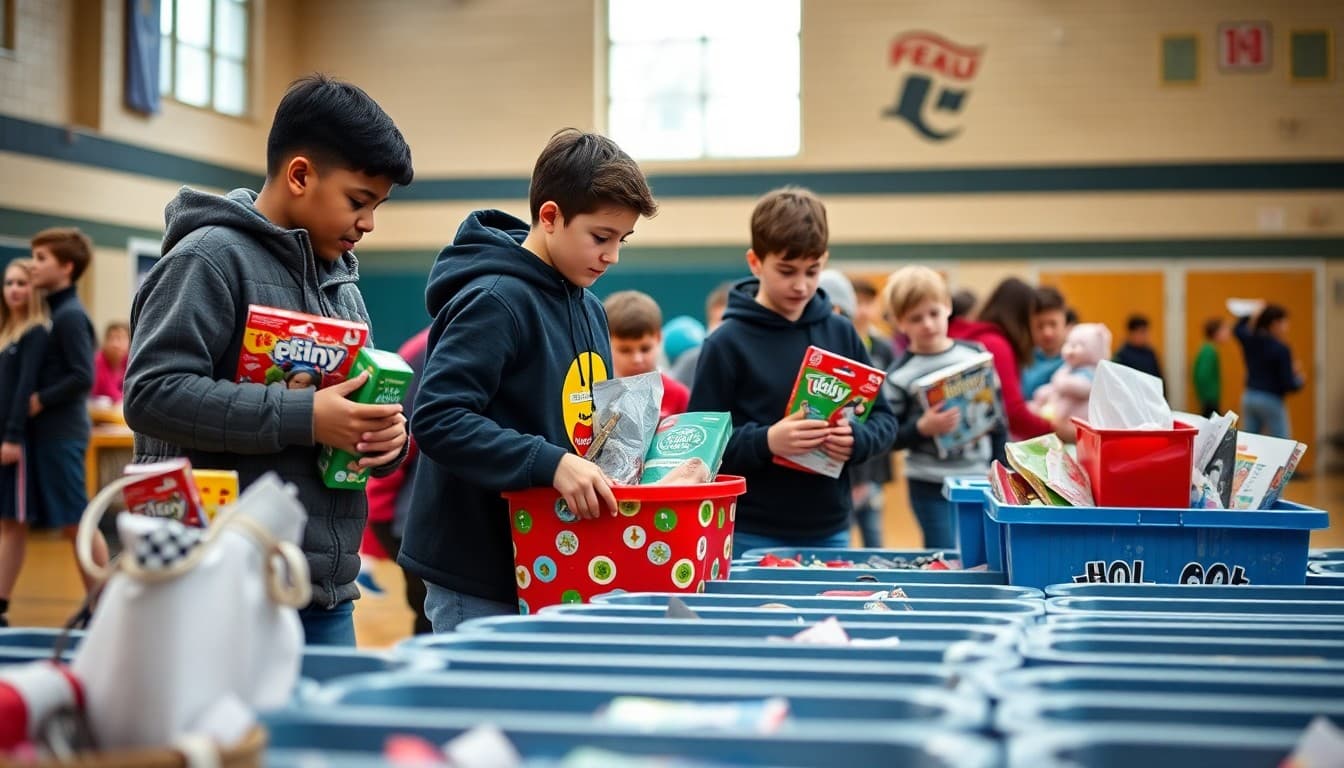
School Toy Drive Newsletter: Holiday Gift Collection
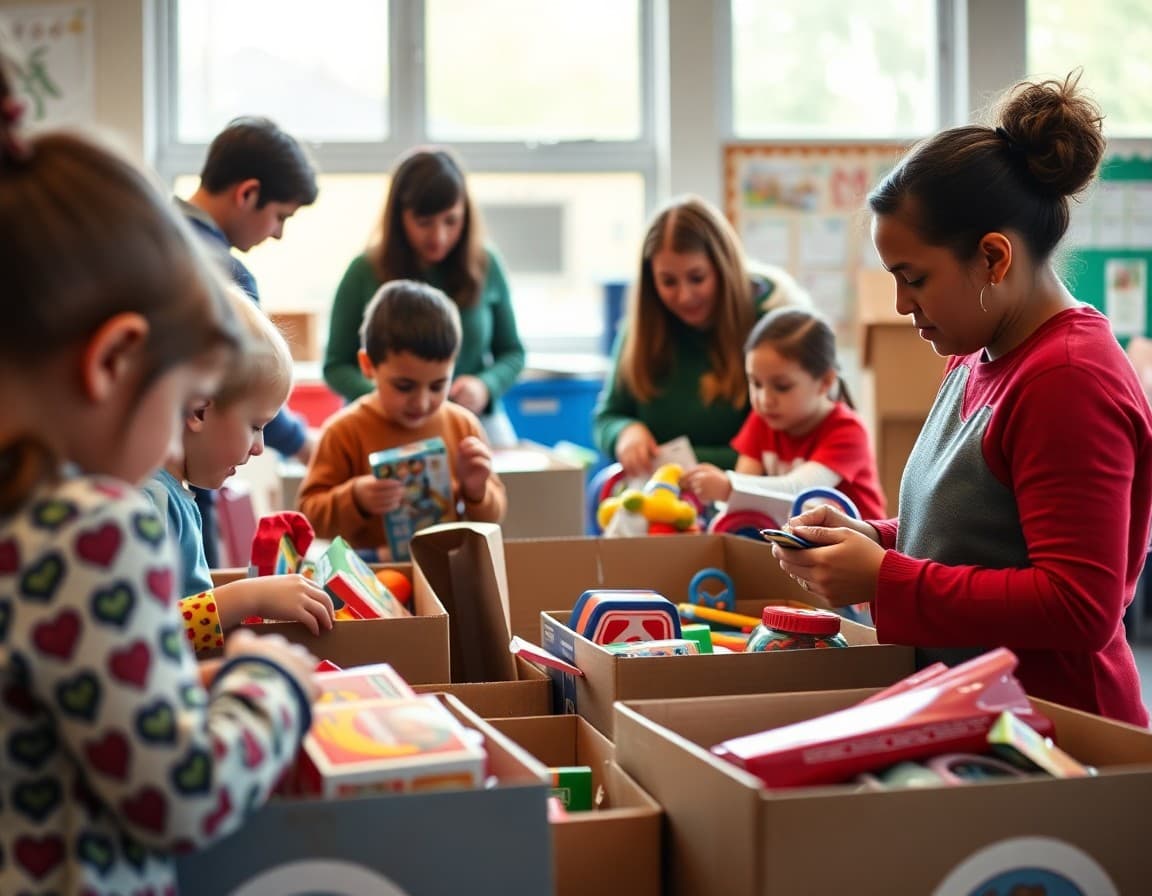
A school toy drive is one of the few service projects that students at every age can connect to emotionally. The idea that their donated toy will go to a child who would otherwise not receive a gift during the holiday season is concrete, understandable, and motivating. The newsletter that communicates this clearly generates stronger participation than one that treats the drive as just another collection event.
Name the children who will receive the toys
Do not run a toy drive for a generic "local charity." Tell families specifically who benefits: "Donations go to the County Children's Hospital toy program, which distributes gifts to 240 patients who will spend the holiday season in the hospital" or "Donated toys go to the Riverside Family Shelter, where 60 families with children are currently living while working toward housing stability."
Specific recipients create specific motivation. A student who knows their toy is going to a child in the hospital has a different relationship to the donation than one who drops something in a bin without knowing where it goes.
State the acceptance policy exactly
"New or gently used toys" is ambiguous in a way that creates problems. State the policy precisely:
- New, unwrapped toys only
- New and gently used toys in working condition, cleaned
- No stuffed animals, no toys with missing pieces, no batteries-required toys
- All donations must be unwrapped so organizers can sort by age
Families who try to do the right thing by donating a beloved but well-worn toy are not doing anything wrong. A clear newsletter policy helps them understand what actually helps.
Specify the age gap in your drive
Most toy drives have an abundance of infant and toddler donations and a shortage of items for children ages 10-17. If your receiving organization has a specific gap, name it in the newsletter: "We have the most need for gifts for children ages 10-17, which is the hardest age to find donations for. Gift cards in small amounts are accepted for teens."
Families who know where the gap is will fill it. Families who only know there is a drive will default to what is easiest, which is usually infant and toddler toys.
Connect students to the giving experience
When students choose the toy themselves, rather than parents buying and donating without involving the child, the experience is more meaningful. A suggestion in the newsletter: "We encourage families to involve their children in choosing the donation. Asking a child to pick a toy they think another child would love is a meaningful holiday lesson."
Template: toy drive announcement paragraph
"Jefferson Elementary's Holiday Toy Drive runs December 1-12. All donations go to the Riverside Family Center for distribution to children in need across our community. We are collecting new, unwrapped toys for children ages 2-17. Most needed: gifts for ages 10-17 including gift cards and sports equipment. Drop donations in the collection bins at the front entrance. The class with the most donations wins a holiday movie morning. Thank you for making the holidays brighter for a child in need."
Update progress mid-drive
A mid-drive newsletter showing current totals maintains momentum in the second week: "We have collected 94 toys so far. Our goal is 200. Nine more school days and every donation counts. The current leaders are Ms. Henderson's class with 18 donations and Mr. Park's class with 14." That visibility drives action in a way that a single launch newsletter cannot.
Close with the impact number
The post-drive recap should lead with the total and translate it into human terms: "We collected 218 toys, which the Riverside Family Center will distribute to 140 children during the holiday season." Name the winning class, thank the student council and staff coordinators, and close with a line that acknowledges the school community's generosity specifically. "This school shows up for this community year after year. Thank you."
Get one newsletter idea every week.
Free. For teachers. No spam.
Frequently asked questions
What should a school toy drive newsletter include?
Name the receiving organization and the children they serve, with age range and approximate number of children who will benefit. Specify which types of toys are accepted (new only versus new and gently used), the age range the drive is targeting, and whether certain items are not accepted (batteries-only toys, toys with many small parts for safety reasons, used stuffed animals). State the collection period and drop-off location clearly.
Should a toy drive accept used toys?
Policies vary by receiving organization. Many toy drives through Toys for Tots, local charities, and children's hospitals accept new toys only, while community toy banks sometimes accept gently used items. The newsletter should state the policy clearly: 'This drive accepts new, unwrapped toys only' or 'We accept both new and gently used toys in good condition.' Vague acceptance policies lead to unusable donations and volunteer sorting headaches.
What age range guidance should the toy drive newsletter include?
If the receiving organization serves a specific age range, the newsletter should say so: 'We are collecting toys for children ages 2-12' or 'We have a particular gap for teens ages 13-17, which is the hardest age to find donations for.' Many toy drives have an age gap at the teen end, and naming it specifically helps fill it.
How do you run a classroom competition in a toy drive without creating pressure?
Frame the competition as an incentive, not an obligation: 'The class that brings the most donations wins a holiday movie afternoon. There is no minimum per student.' Make clear that families who cannot afford to donate are not expected to. The competition is between classes, not between individual students, which distributes any pressure across the group.
How does Daystage support holiday donation campaign newsletters?
Daystage lets you send the toy drive launch newsletter with collection details, a mid-drive progress update, and a results recap. The event block can include a countdown to the collection deadline so families who plan to donate do not forget before the cutoff. The recap newsletter with photos of the donation collection has strong engagement rates during the holiday season.

Adi Ackerman
Author
Adi Ackerman is a former classroom teacher and curriculum writer with 8 years in K-8 schools. She writes about school communication, parent engagement, and what actually works in real classrooms.
More for School Events
Ready to send your first newsletter?
3 newsletters free. No credit card. First one ready in under 5 minutes.
Get started free