
School Canned Food Drive Newsletter: Community Service Event
A school food drive is an opportunity for students to connect their daily lives to a real community need. The newsletter is what makes that connection explicit. Done well, it moves families from passive bystanders to active contributors, and it gives students a concrete experience of community responsibility that lasts longer than the drive itself.
Name the recipient and the community need
Do not run a food drive for an anonymous "local food bank." Tell families exactly who will receive the food: "Donations go to the River Valley Food Pantry on Oak Street, which serves 340 families per week in our county. One in six families in our district experiences food insecurity at some point during the year."
Specificity creates connection. Families who know the food bank's name and the number of families it serves feel they are doing something real, not just dropping cans into a box.
Tell families what to bring specifically
Generic requests for "non-perishable food items" fill collection bins with items the food bank has too many of. Contact the receiving food bank before the drive and ask what they need most. Then list those items in the newsletter:
- Canned protein: tuna, chicken, beans, lentils
- Cooking oil
- Peanut butter and nut butters
- Whole grain pasta and rice
- Canned fruits and vegetables (low sodium)
- Baby food and formula
- Hygiene items: toothbrushes, soap, shampoo
Also note what not to bring: expired items, opened packages, items in damaged cans. Food bank volunteers spend real time sorting out unusable donations.
Set a goal families can visualize
"Collect as much as possible" gives families no frame of reference. "Our goal is 1,000 items, which is enough to provide one week of food for 50 families" gives them something to work toward and a way to understand what their contribution means.
If the school ran a drive last year, give last year's total and frame this year's goal against it: "Last year we collected 847 items. This year we are aiming for 1,000."
Run the classroom competition with clear rules
Classroom competitions within food drives reliably increase total donations. The newsletter should state the rules clearly: which classes are competing, what the prize is, how items are counted, and what the deadline is. If high-need items count as double entries, say so.
Update the standings in the mid-drive newsletter. Seeing that their class is in second place motivates students to bring more. Seeing that they are in the lead motivates them to hold it.
Template: food drive launch newsletter paragraph
"Lincoln Elementary's Annual Canned Food Drive runs November 3-14. All donations go to the River Valley Food Pantry, which serves 340 families in our community each week. Our goal is 1,000 items. Drop off donations in the collection boxes in each classroom or at the main office. Most-needed items: canned tuna, beans, peanut butter, and cooking oil. The class with the most donations per student wins an extra recess. Last year we collected 847 items. Let's beat it."
Connect students to the sorting and delivery experience
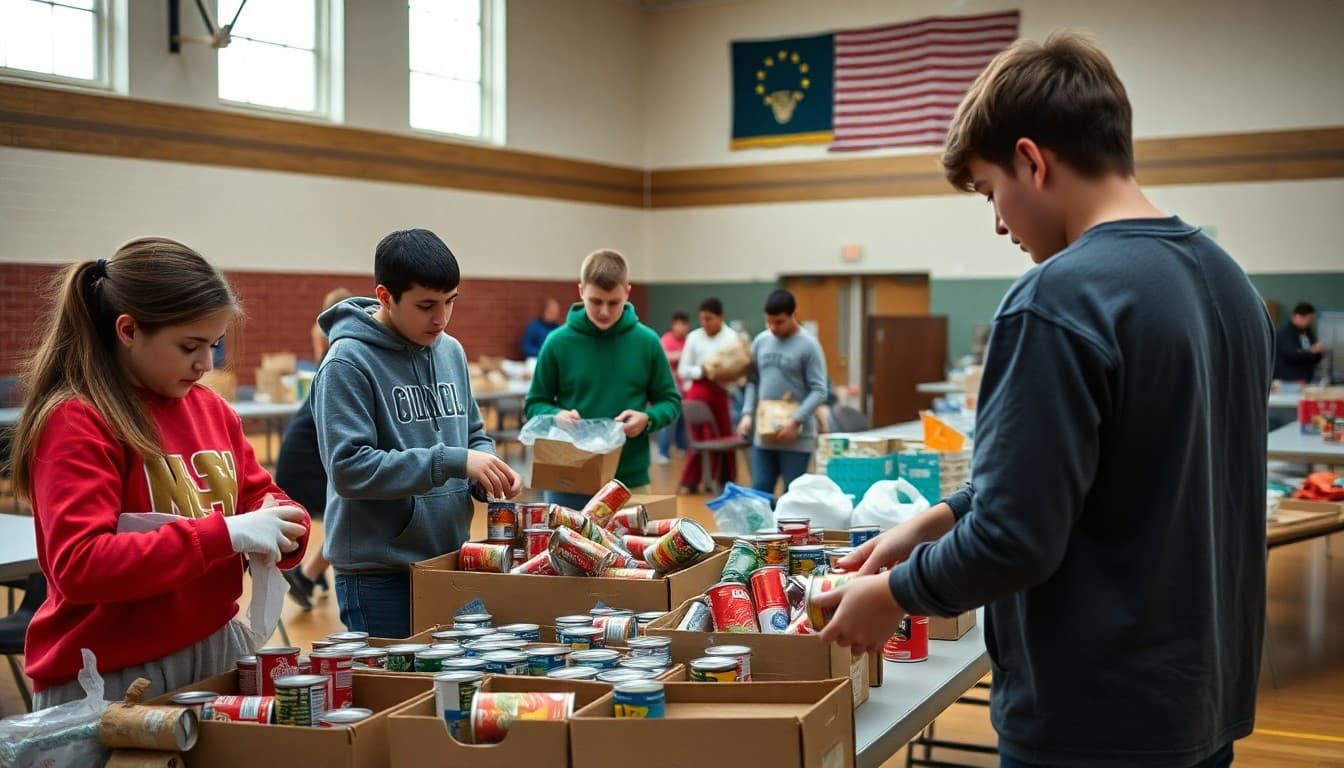
If any students participate in sorting or delivering the collected food, the newsletter should mention this. Students who see their school community's donations sorted into boxes and loaded onto a truck for the food pantry have a different experience of the drive than students who simply drop items in a box.
Report the result with community impact
The post-drive newsletter should report the total in a way that connects to the need: "We collected 1,247 items, which the River Valley Food Pantry estimates will provide approximately three days of food for 60 families." That translation from items collected to families helped is the most powerful sentence in the recap newsletter.
Name the winning classroom, thank the student council or organizing committee, and invite families to consider continuing their support of the food bank beyond the school drive.
Get one newsletter idea every week.
Free. For teachers. No spam.
Frequently asked questions
What should a school canned food drive newsletter include?
Explain which food bank or pantry will receive the donations and who they serve. List which items are most needed (specific items like canned protein, cooking oil, and baby food are more useful than generic requests). State the collection dates and drop-off locations. Give families a goal in pounds or items so they know what success looks like. If there is a classroom competition element, describe the rules.
How do you connect students to the community need without creating discomfort?
Frame food insecurity with honesty and dignity. Saying 'one in six families in our county experiences food insecurity' is accurate and builds empathy without singling out any student or family. Avoid language that frames recipients as 'unfortunate' or 'less fortunate.' Most effective is describing the food bank as a community resource that supports neighbors, not a charity for strangers.
What items should the food drive newsletter specifically request?
Food banks have specific needs that differ from what families typically donate. Most needed items often include canned protein (tuna, beans, chicken), cooking oil, peanut butter, whole grain pasta and rice, canned fruits and vegetables, and baby food and formula. Toilet paper and hygiene items are also in high demand at most food banks. Noting what items are least useful (expired foods, items in damaged cans) prevents well-intentioned but unusable donations.
How do you run a classroom competition through the food drive newsletter?
State the rules simply: the class that collects the most items per student by the deadline wins a specific prize (extra recess, a class breakfast, a pizza party). Note whether all items count equally or whether certain high-need items count double. Update the standings in a mid-drive newsletter to maintain momentum. Clear rules and visible progress drive more donations than a general community appeal.
How does Daystage support multi-week community service campaign newsletters?
Daystage lets you build a newsletter series for the food drive: a launch newsletter with the goal and collection details, a mid-drive update showing progress toward the goal, and a results newsletter with total collected and the community impact. You can schedule all three in advance once you have the drive dates confirmed.

Adi Ackerman
Author
Adi Ackerman is a former classroom teacher and curriculum writer with 8 years in K-8 schools. She writes about school communication, parent engagement, and what actually works in real classrooms.
More for School Events
Ready to send your first newsletter?
3 newsletters free. No credit card. First one ready in under 5 minutes.
Get started free