
School Coat Drive Newsletter: Winter Donation Drive
A coat drive is a straightforward act of community care: families who have extra donate to families who need more. The newsletter is what makes the connection between the coats sitting in a family's closet and the child who will wear it to school in January. Getting specific about the need and making the donation process easy are the two jobs the newsletter needs to do.
Connect the donation to a specific child or family
Abstract need does not motivate action as well as specific images do. "When temperatures drop below 20 degrees in January, children who walk to school or wait at a bus stop without a warm coat are dealing with more than discomfort. They arrive cold, they struggle to concentrate, and they miss out on recess. Our coat drive helps change that for kids in [name of city or region]."
Name the organization receiving the coats and describe who they serve. Families who know their donation goes to a specific program serving children in the same city donate more readily than families responding to a generic winter appeal.
Be specific about sizes and items needed
Coat drives that request "all sizes" end up with bins full of infant sizes and adult extra-small, which may not match the actual need. Contact the receiving organization before the drive and ask what their gaps are. Then state that in the newsletter:
- Children's sizes 4T through 14 are most needed
- Adult medium through 2XL
- Winter hats and gloves for all ages
- Snow pants and boots (sizes 6 toddler through adult small)
- New or gently used, clean, and with working buttons and zippers
This specificity means families look through their closets differently. They are looking for something specific rather than thinking vaguely about whether they have anything to donate.
Make the donation process simple
Drop-off location in the school (front office, main hallway bin, classroom collection box), dates the drive is open, and what happens to items after collection. Families who do not know where to put the donation will bring it to school and put it somewhere random, which creates chaos.
A single, visible collection point is better than multiple bins in separate rooms unless you have staff to check all of them. State the drop-off location specifically: "Leave donations in the green bin at the main entrance, Monday through Friday, between 7:30 a.m. and 4:00 p.m."
Give students a role
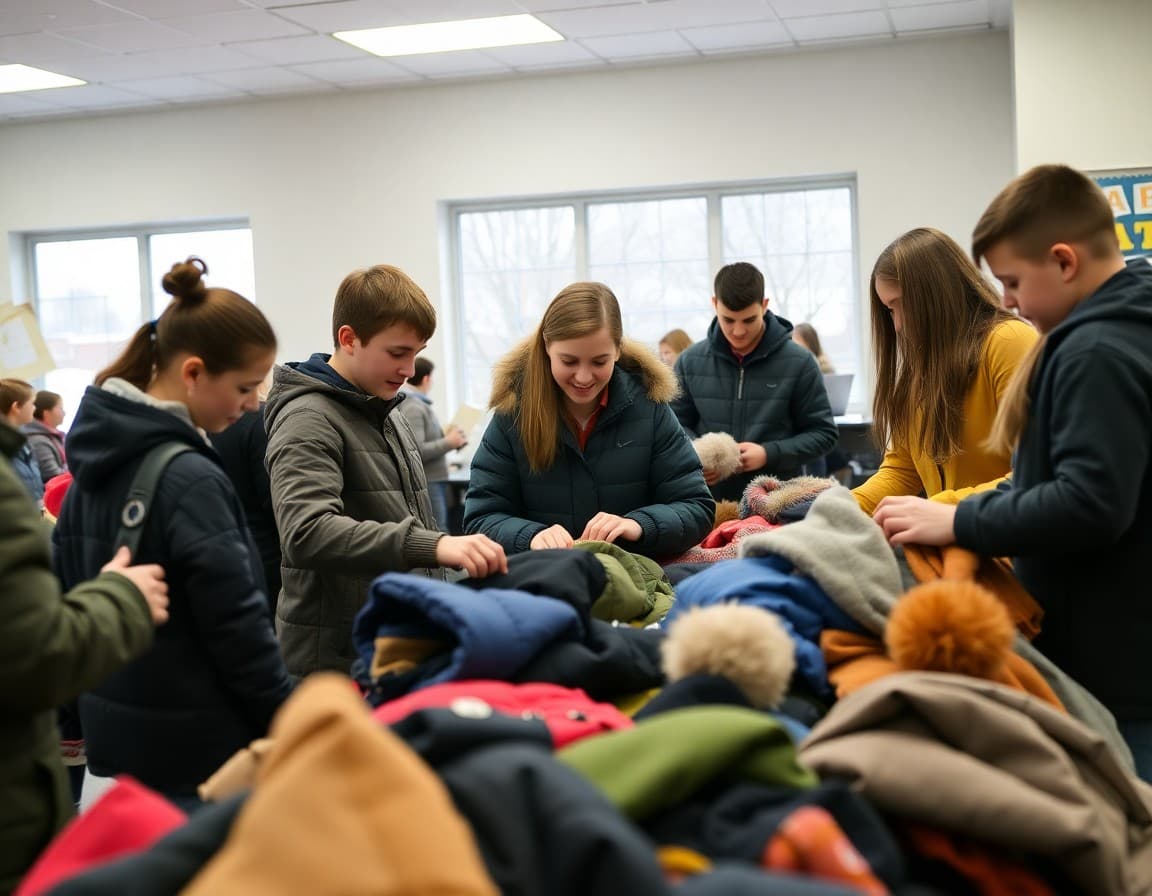
When students collect at the classroom level or participate in sorting and packing, the drive becomes theirs rather than a background school initiative. The newsletter should explain any student-facing element: "Students may bring donations to their classroom teacher through November 20. The student council will sort and pack all donations on November 21 before the River Valley Family Center pickup on November 22."
Template: coat drive announcement paragraph
"Jefferson Elementary's Winter Coat Drive runs November 4-20. All donations go to the River Valley Family Center, which serves 450 families in our area. Most needed: children's coats in sizes 4T-14 and adult sizes M-2XL, plus winter hats and gloves. Gently used and new accepted. Check that zippers work and items are clean. Drop donations in the blue bin near the main office. Thank you for helping a neighbor stay warm this winter."
Report the results with translation into impact
The post-drive recap should convert the donation count into human terms: "We collected 183 coats and 97 pairs of gloves and hats. The River Valley Family Center estimates these donations will serve approximately 160 children and adults this winter."
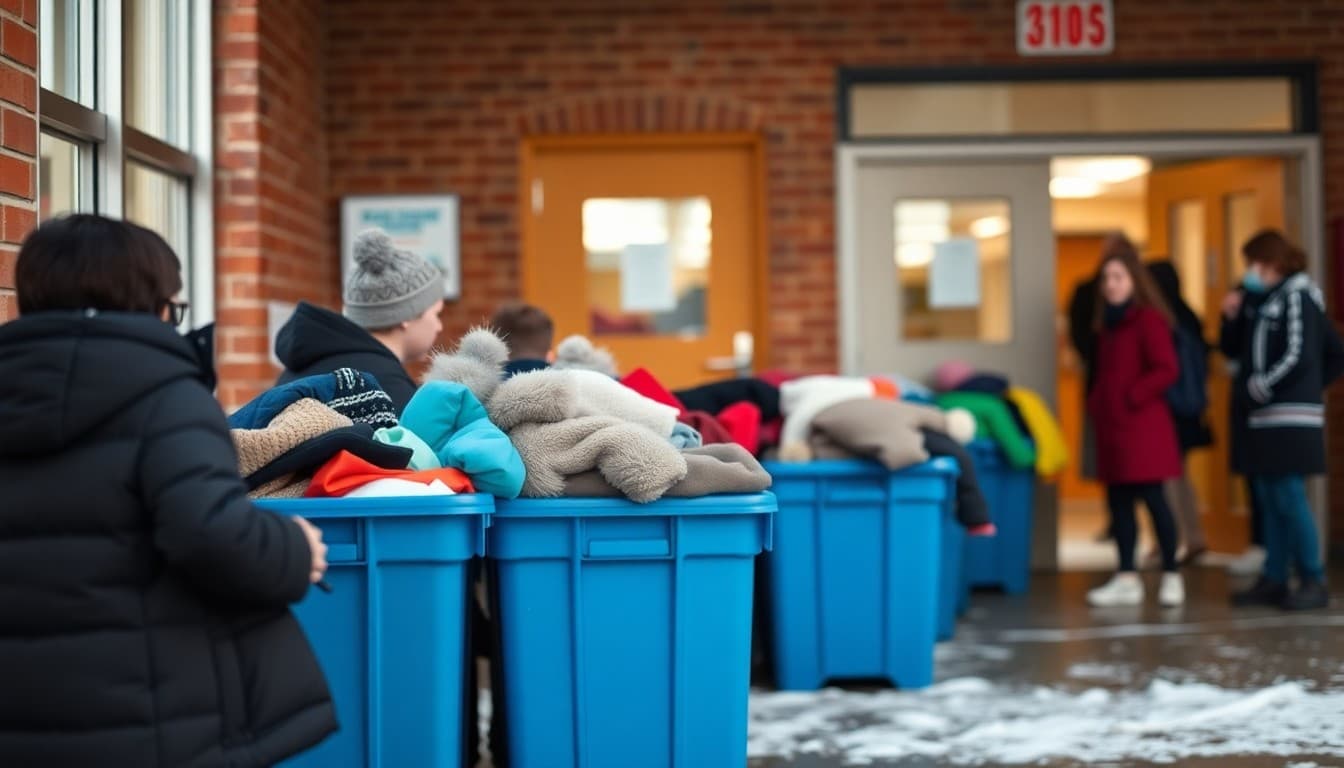
Name the organizing teacher or student council members who coordinated the collection and delivery. A photo of the donation bins before pickup is a simple visual that makes the scale of the community's generosity tangible.
Get one newsletter idea every week.
Free. For teachers. No spam.
Frequently asked questions
What should a school coat drive newsletter include?
Name the receiving organization and who they serve. Specify which sizes are most needed, which items are accepted beyond coats (hats, gloves, snow pants, boots), condition requirements (clean, wearable, no missing buttons or broken zippers), and drop-off location and deadline. A specific size breakdown helps families sort through what they have at home more effectively than a generic donation request.
What sizes and items are most needed in coat drives?
Most coat drive organizers report the highest gap in children's sizes 4T through size 14 and adult sizes medium through extra large. Hats and gloves for all ages are frequently needed and often overlooked. Snow pants and boots are high-need items that families often forget to donate. In the newsletter, specify the receiving organization's current inventory gaps if you can get that information before sending.
How do you explain coat drive condition requirements without discouraging donations?
State the requirements positively: 'We accept gently used and new coats. Please check that buttons and zippers work and that items are clean and in wearable condition.' Avoid framing that implies families might donate items in poor condition intentionally. Clear quality guidance helps families self-sort before donating, which saves volunteer time at the collection site.
How do you connect the coat drive to students' own experiences in the newsletter?
Age-appropriate empathy is effective for building student investment in the drive. For younger grades: 'Think about being cold when you are going to school in November. Some kids in our community do not have a warm coat for that walk.' That concrete image drives action better than statistics alone. For older students, pair a statistic with a specific organization story.
How does Daystage support coat drive and seasonal donation campaign communication?
Daystage lets you send the drive launch newsletter, a mid-drive reminder showing progress, and a results recap with photos of the collected donations ready for delivery. The event block makes it easy to include the collection deadline with a countdown so families who mean to donate do not forget.

Adi Ackerman
Author
Adi Ackerman is a former classroom teacher and curriculum writer with 8 years in K-8 schools. She writes about school communication, parent engagement, and what actually works in real classrooms.
More for School Events
Ready to send your first newsletter?
3 newsletters free. No credit card. First one ready in under 5 minutes.
Get started free