
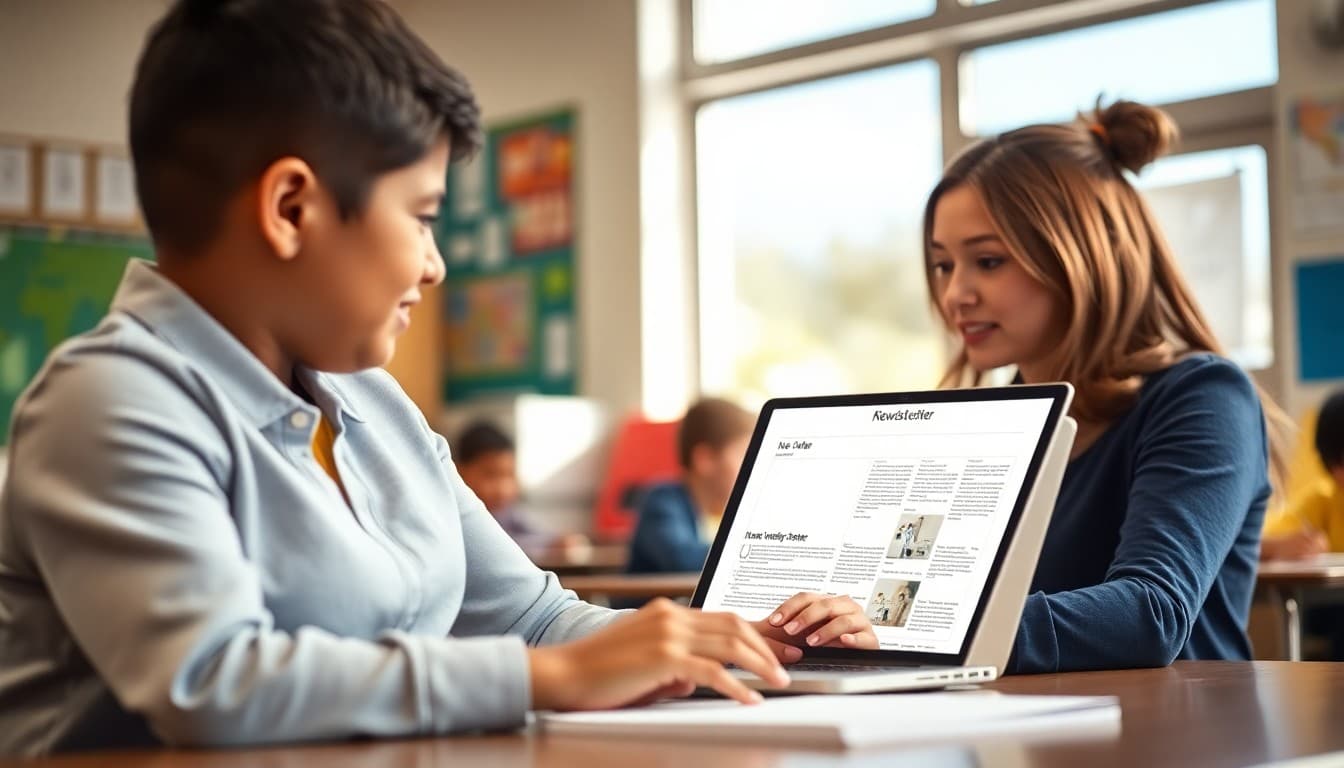
ELL Teacher Monthly Newsletter Template and Communication Guide

A monthly newsletter is one of the most consistent things an ELL teacher can do to keep families connected to their child's language development. It does not need to be long. It does not need to be elaborate. It needs to show up every month, answer the questions families have but often do not know how to ask, and give families one thing they can do at home. That is it.
Why Monthly Works Better Than Quarterly or Weekly
Quarterly newsletters are too infrequent. Families can go eight or ten weeks without hearing anything specific about their child's ELL program, and by the time the newsletter arrives, it covers so much ground that it loses focus. Weekly newsletters are too demanding for most ELL teachers who are managing 20 to 40 students across multiple grade levels and classrooms.
Monthly is the sustainable middle. It creates a predictable rhythm families start to expect, and it forces you to identify what the most important update for the month actually is. That constraint is useful.
A Monthly Template That Works
Here is a section structure you can reuse every month with updated content:
What we are working on: This month, ELL students in [grade level] are focusing on [skill]. We are practicing [specific activity]. Ask your child about [one topic].
Upcoming dates: [Date] -- ELL progress reports sent home. [Date] -- Family conference sign-ups open. [Date] -- Last day to submit [form].
Try this at home: [One specific, actionable activity in plain language].
Questions? Contact me at [email] or call [phone] and ask for an interpreter in [languages available].
That structure fills about one page in each language. It is enough to keep families informed without overwhelming them.
Describing Language Goals Without Jargon
The language goals section is where many ELL newsletters lose families. Terms like WIDA Can-Do Descriptors, receptive vocabulary, or academic language registers mean something to educators and nothing to most parents. Translate every technical term into a plain description of what students are actually doing in class.
This month we are working on reading comprehension strategies is vague. This month students are learning to find the main idea in a nonfiction paragraph and explain it in their own words -- this skill helps them with science and social studies reading is specific and gives families something to look for at home.
The Home Support Section
Every monthly newsletter should have exactly one actionable home suggestion. Not a list of five things, not a general encouragement to read. One specific activity the family can do this month. This month's suggestion should connect to what you are working on in class so families see the school-to-home connection.
If students are working on academic vocabulary in science this month, the home suggestion might be: look at images of ecosystems together online and name the plants and animals in both your home language and in English. That is a 15-minute activity any family can do, regardless of English level. Activities that require English fluency from the parent are not accessible to most ELL families.
Upcoming Dates and Events
The dates section should include anything that requires family action in the coming month: assessment notifications, conference sign-up deadlines, field trips that need permission slips, or any ELL-specific events. Families who receive these dates in a language they read are far less likely to miss deadlines that require their participation.
If your school uses an online parent portal for conference scheduling, include the link and a brief explanation of how to use it. Do not assume families know the portal exists or how to navigate it.
Sending the Newsletter to the Right Families
Your ELL newsletter should go to the families of the students on your current caseload, not the general school population. Maintaining a current list by language group lets you send translated versions to the right families without confusion. Review your list at the start of each semester as students enter or exit ELL services.
Building a Reusable Template With Daystage
Daystage lets you build a monthly ELL newsletter template with your standard sections already in place. Each month you update the content, add any translated versions, and send to your family groups. The structure stays consistent so families know what to expect when they open it. ELL teachers who set up a Daystage template in September report that each subsequent monthly newsletter takes a fraction of the time the first one did, because the format is already done.
Get one newsletter idea every week.
Free. For teachers. No spam.
Frequently asked questions
What sections should every monthly ELL newsletter include?
A monthly ELL newsletter works best with five core sections: what language skills students are working on this month, a brief note about what is happening in ELL classes, one or two upcoming dates families need to know, a home support tip families can act on, and your contact information. Each section should be short -- three to five sentences -- so the newsletter stays readable. Families who can scan it in two minutes are more likely to read the whole thing than families who receive a three-page document.
How do you explain language development goals to families without using jargon?
Replace technical terminology with plain descriptions of what students are actually doing. Instead of writing that students are working on academic vocabulary in Tier 2 content areas, write that students are learning the specific words they need to talk about math, science, and social studies -- words like hypothesis, estimate, and compare. That description is more meaningful to most families than a curriculum term, and it gives families something concrete to follow up on at home.
How often should an ELL teacher send a newsletter to families?
Monthly is the most sustainable cadence for most ELL teachers who are managing a full caseload across multiple classrooms. Monthly newsletters keep families informed without creating a communication burden that becomes unsustainable mid-year. If a major event or assessment is coming up, a shorter one-topic update between monthly newsletters handles that without disrupting the regular schedule. Consistency matters more than frequency -- families who receive a reliable monthly newsletter trust the communication channel more than families who receive sporadic updates.
What home support tips work well in an ELL newsletter?
The most effective home support tips are specific and immediately actionable. Instead of writing encourage reading at home, write try reading the same picture book in your home language and then in English together -- point to the pictures and talk about what you see. Instead of practice English conversation, write ask your child to teach you three English words they learned this week and use them at dinner. Tips that give families a clear activity to do together are far more useful than general encouragement.
How does Daystage help ELL teachers send monthly newsletters efficiently?
Daystage gives ELL teachers a reusable newsletter template with consistent sections they can update each month rather than rebuilding from scratch. You add your monthly content, upload translated versions for each language group, and send to families in one workflow. Teachers who use Daystage for monthly ELL newsletters report cutting their newsletter production time from 90 minutes down to 30 minutes or less once the template is set up, because the structure stays the same and only the content changes each month.

Adi Ackerman
Author
Adi Ackerman is a former classroom teacher and curriculum writer with 8 years in K-8 schools. She writes about school communication, parent engagement, and what actually works in real classrooms.
More for ELL & ESL
Ready to send your first newsletter?
3 newsletters free. No credit card. First one ready in under 5 minutes.
Get started free