

How to Write an ELL Newsletter to Parents
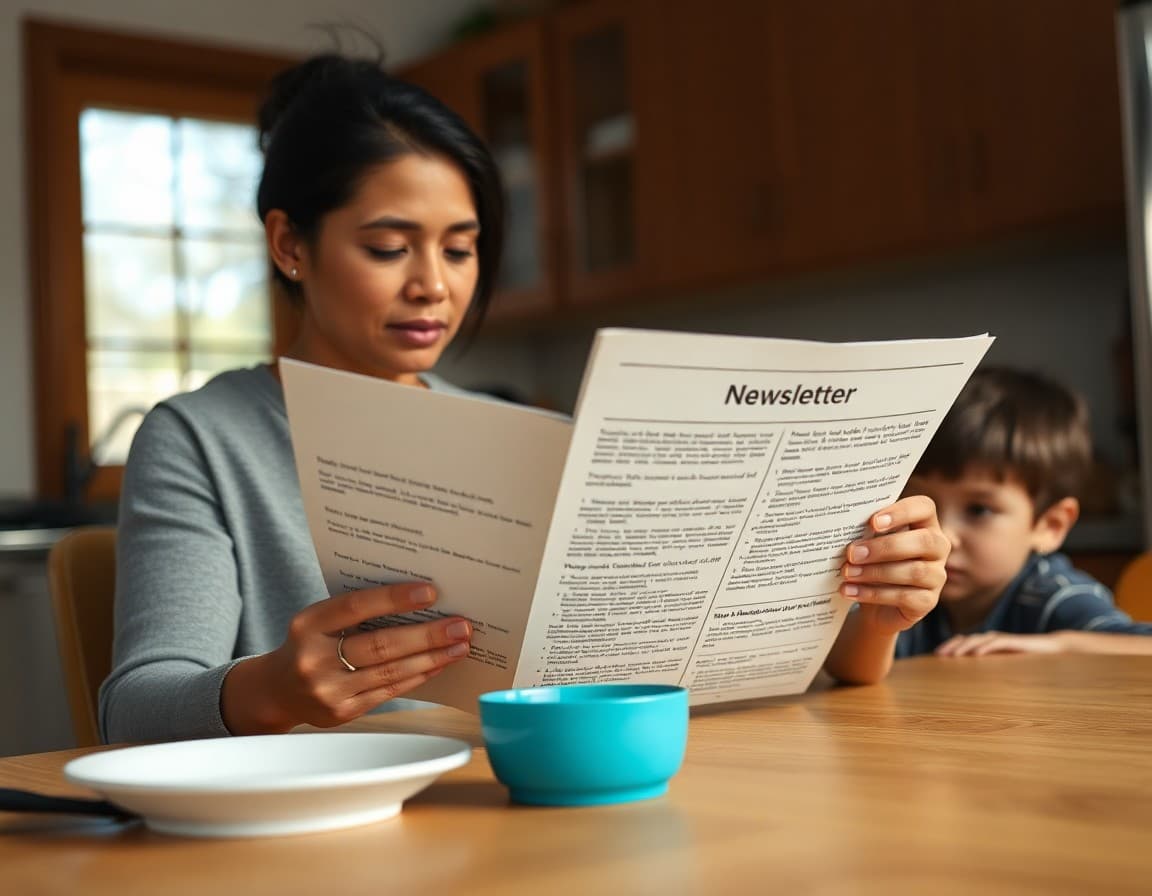
Writing a newsletter to ELL parents is not complicated, but it is specific. There are a handful of decisions that determine whether the newsletter actually reaches families and serves its purpose -- or sits unread in a folder. Get those decisions right and the rest follows.
Start With What Families Are Actually Trying to Understand
Before writing anything, think about the questions ELL parents ask most often. What does the ELL program do? Will my child fall behind in other subjects while learning English? When will they test out? Who do I call if I have a question? Can I get an interpreter for the parent meeting? What can I do at home to help?
Those questions are your newsletter structure. Write to answer them, not to report on what you have been doing. Parents who receive a newsletter that answers their actual questions read it and remember it. Parents who receive a newsletter that describes curriculum frameworks and professional development initiatives set it aside.
Choose a Structure and Keep It
A newsletter that has the same structure every time is easier for families to use than one that changes format each month. Once a family knows that the first section is always about what skills students are working on, the second section is always upcoming dates, and the third section is always a home activity, they can navigate it in seconds even if their reading is slow.
A four-section structure that works: (1) what we are working on this month, (2) dates to know, (3) one thing to try at home, (4) contact information. That is a complete monthly newsletter in one page per language version.
Write in Plain Language
ELL newsletters to parents should be written in the simplest clear English before translation. Short sentences. Common words. No acronyms without explanation. No educational jargon. If you write the English version in plain language, the translated versions will be clearer and more natural too. Translators rendering complex academic English into plain Spanish or Somali have to work harder and make more interpretive choices -- which increases the chance of awkward phrasing or errors.
A test: read the newsletter aloud. If any sentence requires you to pause or re-read to understand it, rewrite it. The parent reading a translated version deserves the same clarity.
Include a Template Welcome Section
For back to school newsletters specifically, a template introduction works well:
"Welcome to [your child's name]'s ELL class. My name is [your name] and I am your child's English Language Development teacher. I will be working with your child to develop their English skills in [subject areas and formats]. I am available by phone at [number] and by email at [email]. If you need an interpreter to communicate with me, please call [school number] and ask for interpretation services in [languages available]. I look forward to partnering with you this year."
That introduction does five things in six sentences. Use it, adapt it, and translate it.
Translation Strategy That Works
Identify the top three languages in your current ELL caseload and translate consistently for those families throughout the year. For families whose language is not one of your top three, a phone call through an interpreter reaches them more effectively than a translated document you cannot reliably produce. Review language priorities each August as your caseload changes.
Use professional translators for family-facing documents. If professional translation is not available for a specific language, WIDA and many state education departments publish family guides in dozens of languages that you can adapt rather than translating from scratch.
Timing and Delivery
Send your ELL newsletter at the same time each month. The second Friday of the month. The last Thursday before report cards go home. Pick a schedule and stick to it. Families who receive consistent communication develop expectations and trust. Families who receive sporadic communication do not know when or whether to expect news from you.
Send digitally and through paper. Digital delivery reaches families who check email. Paper in backpacks reaches families who do not. Both matter for ELL families whose communication patterns vary widely by household.
End With One Clear Call to Action
Every newsletter should end with one specific thing you want families to do: attend the upcoming conference, return the signed form, try the home activity, or simply know who to call with questions. One call to action is followed. A list of five things to do is ignored. Decide what is most important for this month and ask for that one thing.
How Daystage Simplifies ELL Parent Newsletters
Daystage lets you build your ELL newsletter template once with your standard sections, translate your content into the home languages you serve, and deliver to family groups by language in a single workflow. The template structure stays the same each month -- only the content changes. ELL teachers who set up their Daystage template report that the initial build takes about two hours, and each monthly update takes 30 minutes or less after that.
Get one newsletter idea every week.
Free. For teachers. No spam.
Frequently asked questions
What makes an ELL newsletter to parents different from a regular classroom newsletter?
An ELL newsletter to parents has three requirements that regular classroom newsletters do not: it must be available in the family's home language, not just English; it must explain what the ELL program is and how it works, since many ELL families are unfamiliar with how English language development programs function in US schools; and it should include information about language access rights and services like interpretation so families know how to communicate with the school even if they do not speak English. A regular classroom newsletter can assume the parent reads English. An ELL newsletter cannot.
How long should an ELL newsletter to parents be?
One to two pages per language version is ideal. Families receiving a newsletter in a language that is not their first language for reading -- or a language they read less fluently than they speak -- will read shorter documents more reliably than longer ones. Three to four clear sections with a short paragraph each, plus contact information, covers everything a family needs. If you find yourself writing more than two pages, you are probably including information that could be saved for a future newsletter or communicated through a different channel.
Should the ELL newsletter be in English and the home language side by side, or separate documents?
Both approaches work, and each has tradeoffs. Side-by-side bilingual format in one document signals language equality and lets family members who read both languages compare versions easily. Separate language versions are easier to read without formatting clutter and reduce document length. For digital delivery, separate language versions allow you to send the right language to each family group without anyone receiving content in a language they cannot read. For paper distribution, side-by-side can work when you cannot be certain which parent will receive the document.
How do you handle translation for ELL newsletters?
Professional human translation is the highest standard. If your district has a translation department, submit the newsletter at least one week before your desired send date. Community translators -- vetted bilingual community members who are not students -- can work for less common languages. Machine translation (Google Translate, DeepL) produces adequate results for Spanish and major languages but makes tone and vocabulary errors that can undermine professionalism. Never use a student to translate family-facing school communication. For languages with limited translation resources, telephone interpretation for meetings is more important than written translation of every document.
How does Daystage help ELL teachers send newsletters to parents in multiple languages?
Daystage lets ELL teachers build a newsletter template with sections for each language, deliver to family groups segmented by home language, and include links to forms, assessments, and resources. Once you have your translated content, the production and delivery workflow in Daystage takes a fraction of the time of managing separate Word documents, email lists, and paper distribution. ELL teachers who send monthly newsletters through Daystage consistently report better family attendance at meetings and fewer calls asking basic questions that the newsletter already answered.

Adi Ackerman
Author
Adi Ackerman is a former classroom teacher and curriculum writer with 8 years in K-8 schools. She writes about school communication, parent engagement, and what actually works in real classrooms.
More for ELL & ESL
Ready to send your first newsletter?
3 newsletters free. No credit card. First one ready in under 5 minutes.
Get started free