

ELL Teacher Back to School Newsletter: A Communication Guide
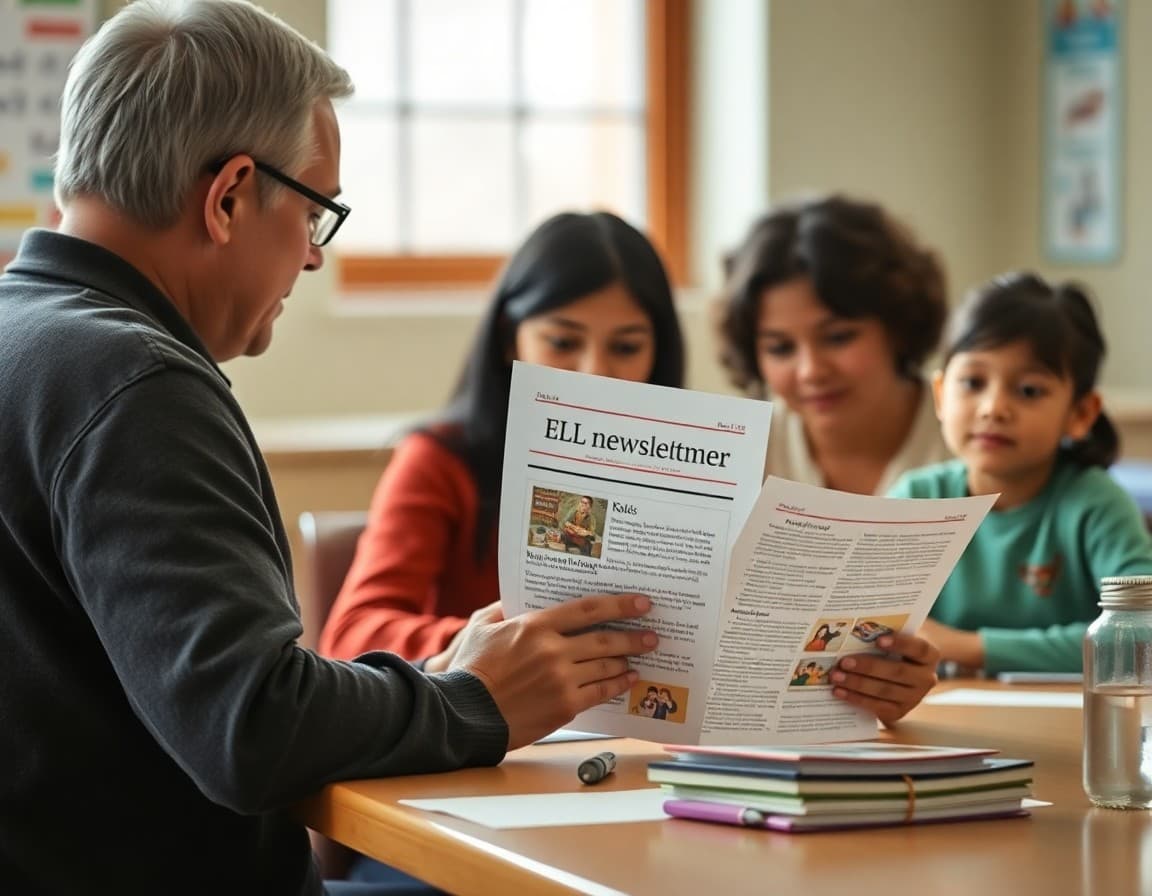
The back to school newsletter is the first real communication most ELL families receive from their child's language teacher. It sets the tone for the entire year. A well-written one builds trust before you have ever met in person. A poorly written one or no newsletter at all leaves families navigating the first weeks with more uncertainty than they need to carry.
Start With Who You Are
Begin the newsletter with a brief introduction. Your name, your professional background, how long you have been teaching ELL students, and one sentence about what drives your work. Families of English learners are often uncertain about who is involved in their child's education and what role each person plays. Making yourself a real person with a name and a face removes some of that uncertainty immediately.
Include a photo. It does not need to be professional. A clear, warm photo of you at your desk or in your classroom is enough. Families who see your face in the newsletter recognize you on the first day. That small recognition matters.
Explain What the ELL Program Actually Is
Many families -- especially those new to the US school system -- do not know what ELL services look like. They may have heard the term ELL or ESL without understanding what it means in practice. Describe the program in plain terms: how many times per week their child will meet with you, whether it is pull-out or push-in, what kinds of activities they will do, and how long students typically stay in the program.
Frame the program as specialized support, not remediation. Your child is learning grade-level content while also learning a new language. That is a demanding task. Our program gives them extra support to do both well. That framing is both accurate and respectful.
Cover the First-Week Schedule in Detail
The first week of school for ELL students often differs from the standard schedule. Intake assessments, placement meetings, and orientation sessions all happen in the first few days. Families need to know exactly when these events occur, where to go, and what to bring.
A concrete template works well here: "Your child's ELL intake assessment will take place on [date] at [time] in Room [number]. You are welcome to attend. The assessment takes about 30 minutes and helps us understand your child's current English skills so we can plan the right support. Please bring your child's home language survey if you have not already returned it." Specificity removes guesswork.
Set Communication Expectations
Tell families how you prefer to communicate and how quickly they can expect a response. If you check email daily, say that. If families can leave a voicemail and you will return calls within 24 hours, say that too. If your school has interpreter services available by phone, include that number and how to ask for it.
Families who know the rules of communication are far more likely to reach out when they have a question. The families who never contact you are often not disengaged -- they are uncertain about whether it is appropriate to contact you and how to do it without an English barrier becoming an obstacle.
Share One Thing Families Can Do at Home
Research consistently shows that home language maintenance supports English acquisition, not the opposite. Include a short section encouraging families to keep reading with their children in the home language, discussing their day in their home language, and sharing stories from their cultural background. This positions you as an educator who values what families already bring, not just what the school will add.
Point to one or two concrete resources: a free multilingual reading app, a local library program in their language, or a home literacy activity that does not require English. One actionable suggestion is more useful than a long list that feels overwhelming.
Give Your Contact Information Prominently
Contact information should not be buried at the bottom. Put it near the top after your introduction and repeat it at the end. Include your email, your classroom phone extension, and the best time to reach you. If your district has a language line, include that number and the name families should ask for when they call.
Translate Before Sending
Write the newsletter in English first, then have it translated by a qualified translator or a vetted community member. Machine translation alone is not sufficient for family-facing communication -- errors in tone or meaning are common enough to undermine trust. If your district has a translation department, submit your newsletter at least one week before school starts to allow turnaround time.
How Daystage Simplifies ELL Back to School Newsletters
Daystage lets you build a formatted newsletter with photos, separate sections per language, and email delivery to family groups in one place. You can upload translated text for each language version, include links to intake forms and school resources, and send everything on a scheduled date. ELL teachers who use Daystage typically save several hours of back-to-school preparation compared to managing word documents and email lists separately.
Get one newsletter idea every week.
Free. For teachers. No spam.
Frequently asked questions
What should an ELL teacher include in a back to school newsletter?
An ELL teacher back to school newsletter should introduce you by name with a brief professional background, explain what the ELL program provides and what it looks like day-to-day, outline the first-week schedule including any intake assessments, give clear contact information including how families can reach you through an interpreter, and share one or two things families can do at home to support language development. Keep it to one or two pages per language version so families actually read it.
How early should an ELL teacher send the back to school newsletter?
Three to five days before the first day of school is ideal. Families of English learners often have more logistical uncertainty than other families because they cannot as easily ask a neighbor or read a school website in English. Sending the newsletter before school starts means they arrive knowing who their child's ELL teacher is, what the program involves, and what the first week will look like. That preparation reduces anxiety for both families and students.
What languages should the back to school newsletter be in?
Translate into the top home languages represented in your current ELL caseload. Pull this data from your current home language surveys. If you have twelve Spanish-speaking families, six Somali-speaking families, and three Vietnamese-speaking families, those three languages are your priority. For families whose language is not covered, a brief phone call through a district interpreter covers the gap. Revisit the language mix each August as your caseload changes.
How do you explain ELL services clearly to families who are new to the US school system?
Avoid acronyms and school jargon. Instead of writing that your student will receive Tier 2 pull-out ELD support, write that your child will meet with me in a small group every day to practice reading and speaking English together. Describe the physical experience: what room, what time, whether they leave the classroom or stay. Families who understand what happens are far more likely to talk positively about the program with their children at home, which reinforces the work you are doing at school.
What tool helps ELL teachers send professional multilingual back to school newsletters?
Daystage lets you build a back to school newsletter with photos, formatted sections for each language, links to forms, and delivery to family email addresses in one workflow. You can create separate versions for each language group and send them simultaneously. ELL teachers who use Daystage report that families arrive for intake assessments more prepared and that the volume of first-week phone calls asking basic questions drops significantly.

Adi Ackerman
Author
Adi Ackerman is a former classroom teacher and curriculum writer with 8 years in K-8 schools. She writes about school communication, parent engagement, and what actually works in real classrooms.
More for ELL & ESL
Ready to send your first newsletter?
3 newsletters free. No credit card. First one ready in under 5 minutes.
Get started free