

How to Include Language Acquisition Goals in Your ELL Newsletter
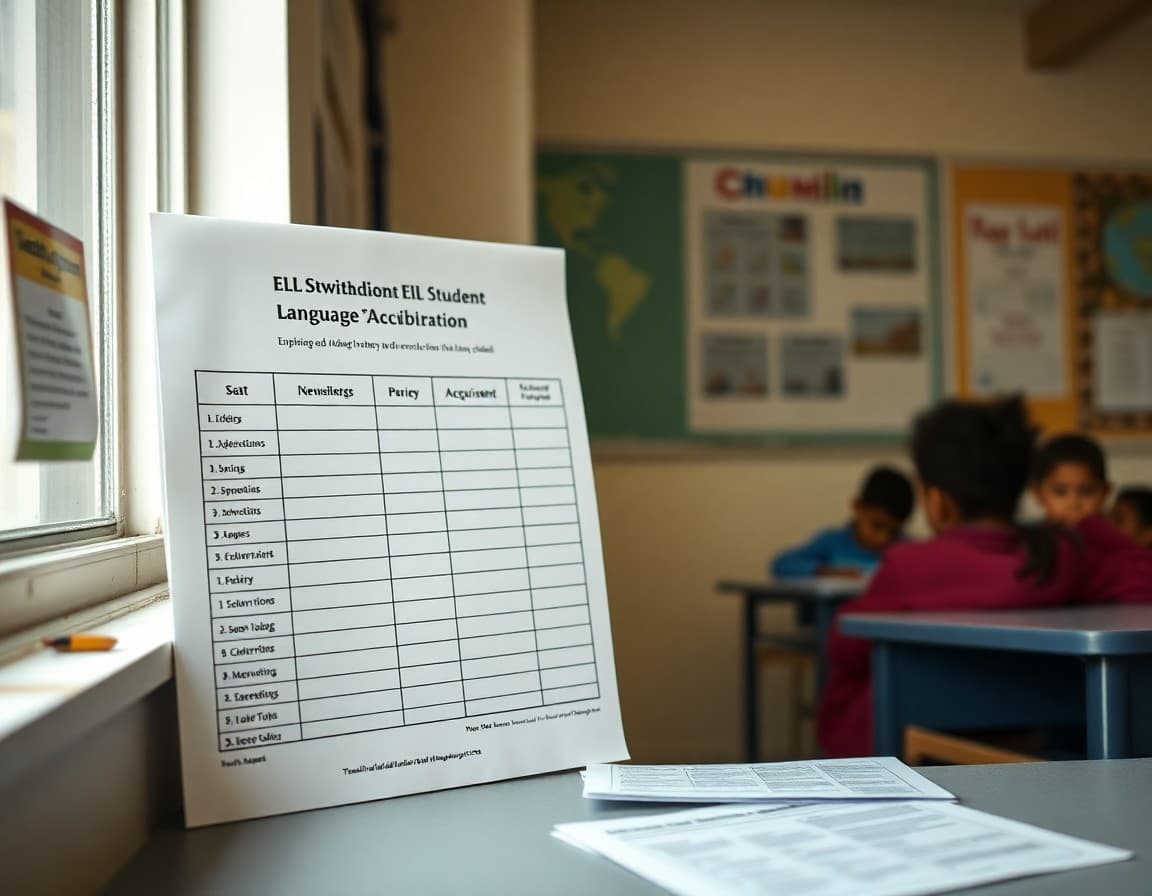
Language acquisition goals belong in ELL newsletters because families who understand what their child is working toward engage with that development differently at home. The challenge is that most language acquisition frameworks -- WIDA Can-Do Descriptors, proficiency levels, language domains -- are written for educators, not for parents. Translating those frameworks into meaningful family communication is the job.
The Problem With Sharing Goals Directly From Curriculum Frameworks
If you copy the language goal directly from your planning documents into your newsletter, it will look something like this: Students will demonstrate productive oral discourse using domain-specific vocabulary at WIDA Level 3 in collaborative conversation structures. A parent reading that sentence in English does not know what it means. A parent reading it in translation is even less likely to understand it. And no parent can do anything at home with that information.
The translation job is not just from English to Spanish or Arabic -- it is from educator language to parent language. That translation is at least as important as the linguistic one.
A Framework for Describing Goals in Plain Language
Every language goal can be described in three sentences: what skill, what students are doing to develop it, and why it matters for school. Here is the template: This month students are working on [specific language skill]. In class, we are practicing by [specific activity]. This skill will help students [specific school application -- e.g., participate in science discussions, write their first full paragraphs, read chapter books independently].
Applied to an actual goal: This month students are working on explaining their thinking in writing. In class, we are practicing by writing three-sentence responses to questions about what we read. This skill will help students answer questions on tests and in written assignments across all their classes. That is 45 words. Any parent can read it and understand it.
Connecting Goals to Proficiency Levels
Many ELL programs track progress against proficiency levels -- WIDA has six, ELPAC in California has four, and so on. When you share where a student is and where they are going, use plain level descriptions rather than numbers. Not your child is at Level 2 -- which means nothing to most parents -- but your child is at the stage where they can understand and use English in everyday classroom situations and are now working on the more advanced academic language that textbooks and tests use. That description is both more informative and more motivating than a number.
If you are sharing individual ACCESS scores in a newsletter section, pair each score with a sentence describing what it means in practical terms. Parents who receive a score without context feel uncertain. Parents who receive a score with a plain description feel informed.
Seasonal and Unit-Based Goal Framing
Connecting language goals to the academic content students are studying makes them more concrete. This month in ELL class we are working on the vocabulary students need to fully participate in the third-grade science unit on weather. We are practicing words like evaporation, condensation, and precipitation -- and learning to use them in sentences and explanations, not just to recognize them. This framing connects the language goal to something the parent already knows their child is studying, which makes the goal feel relevant rather than abstract.
Using Progress Data Without Jargon
Share progress updates two to three times per year in your newsletter: at the start of the year, at mid-year when ACCESS or ELPAC scores come back, and at the end of the year. Use comparative language that shows movement: in September your child was using mostly single words and short phrases in English. By January they are using full sentences and short paragraphs in writing. By June our goal is for them to be reading and writing at a level that matches their classmates with some support. That narrative of progress is far more motivating to families than a static score.
Home Activities Tied to Language Goals
Connect every language goal section to one home activity. This month's goal is academic vocabulary for science. The home activity: when you watch television or videos together, pause once and ask your child to describe what just happened in two or three English sentences. That daily or weekly low-pressure practice reinforces exactly what you are working on in class. Activities that connect directly to the newsletter goal are more likely to happen than generic reading encouragement.
Making Language Goals a Regular Newsletter Feature
Putting language goals in the same section every month trains families to look for them. By November, families who have been receiving your newsletter since September know to check the goals section first. That expectation is built through consistency. When the section is sometimes there and sometimes not, families stop developing the reading habit around it.
Building the Goals Section in Daystage
Daystage lets you create a dedicated language goals section in your monthly newsletter template with consistent placement. Each month you update the goal description, the home activity, and any brief assessment note. The translated versions follow the same structure so families who read the Spanish, Arabic, or other language version see the same goals in their language. A monthly goals section in Daystage takes about 10 minutes to update once you have your plain language description written.
Get one newsletter idea every week.
Free. For teachers. No spam.
Frequently asked questions
Why should ELL newsletters include language acquisition goals?
Including language acquisition goals in your ELL newsletter does three things: it keeps families informed about what their child is working toward, which makes conversations at home more meaningful; it demystifies the ELL program by showing families the specific learning targets their child is working on; and it gives families something concrete to look for when they interact with their child about school. Families who understand what language skills their child is developing engage with that development differently than families who simply know their child is in ELL class.
How do you translate WIDA proficiency levels into plain language for families?
Replace level numbers and descriptors with plain descriptions of what a student at that level can do. Level 1 (Entering) means your child is just beginning to use English and can understand and use a small number of words and phrases. Level 3 (Developing) means your child can participate in many classroom conversations and understands most everyday English, but needs support with the more advanced academic language used in textbooks and tests. Level 5 (Bridging) means your child uses English very similarly to their classmates and is close to exiting ELL services. These descriptions are what families actually want to know.
How specific should language goals be in a newsletter?
Specific enough to be meaningful but not so specific that the newsletter becomes a curriculum report. A goal that families can act on is better than a goal that sounds technical. This month students are learning to ask and answer questions about cause and effect in their science reading is meaningful and actionable. Students are working on academic language in the productive discourse domain is not. The goal should describe what the student is doing and what they are working toward in terms that a parent who did not study education can understand.
How do you connect assessment results to language goals in a newsletter?
Present assessment results in context: here is what the assessment measured, here is where your child currently is, here is what we are working toward next. For WIDA ACCESS results, say something like: your child scored at Level 3 in reading, which means they read grade-level stories and articles with some support. We are working toward Level 4, which means reading independently with minimal support. That framing turns a score into a trajectory that families can understand and follow over time.
How does Daystage help ELL teachers share language goals with families?
Daystage lets ELL teachers include a dedicated language goals section in their monthly newsletter template with consistent placement so families know where to look for it. You can describe monthly goals in plain language, include a brief assessment update when relevant, and suggest a home activity connected to the goal. The consistent structure means families learn to look for the goals section each month -- which builds the kind of ongoing engagement with language development that supports student progress.

Adi Ackerman
Author
Adi Ackerman is a former classroom teacher and curriculum writer with 8 years in K-8 schools. She writes about school communication, parent engagement, and what actually works in real classrooms.
More for ELL & ESL
Ready to send your first newsletter?
3 newsletters free. No credit card. First one ready in under 5 minutes.
Get started free