

ELL Back to School Newsletter: Welcome Back in Every Language
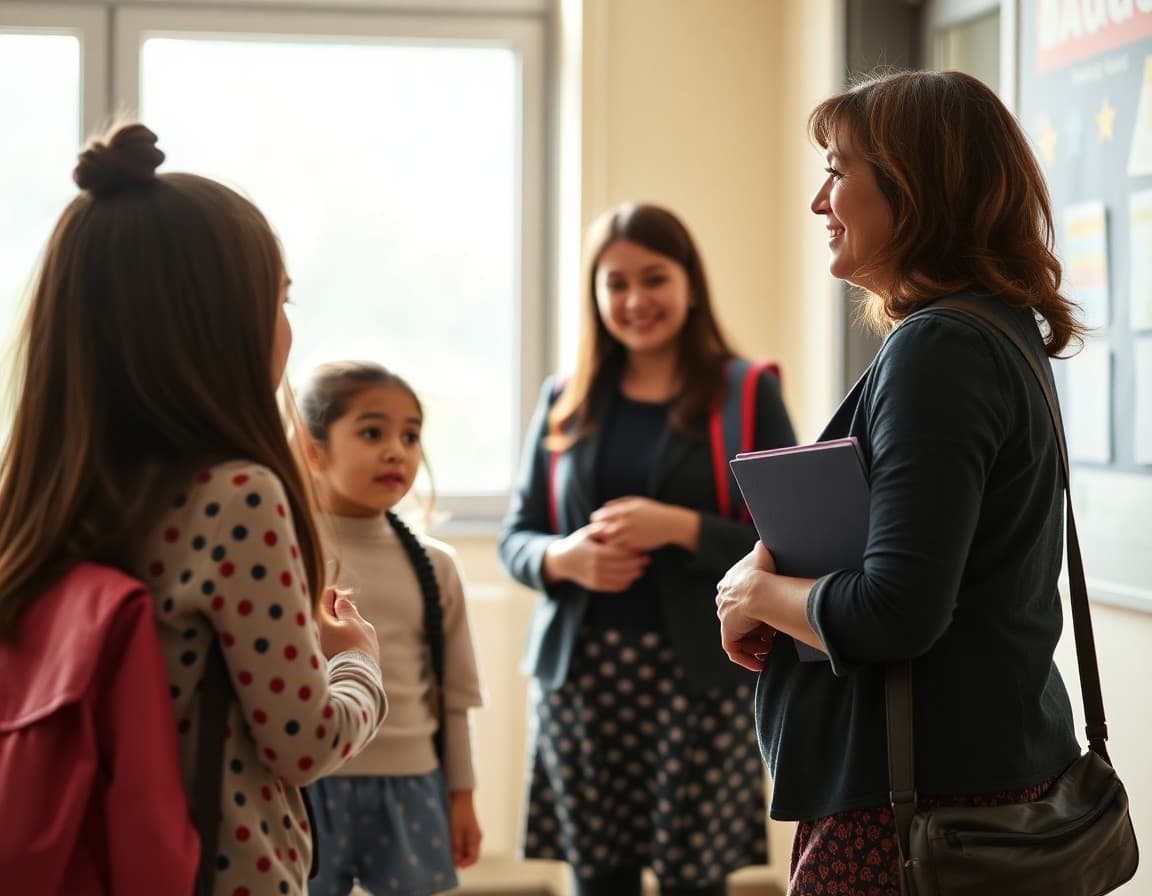
The back to school newsletter for ELL families has one job: answer the questions families are already asking before they have to pick up the phone. If you do that job well, the first week of school runs smoother for families, for students, and for your front desk staff. If you do not, those questions all arrive at once on the first Monday in September.
Before You Write: Know What Families Need First
Before writing a single word, think through the questions an ELL family asks at the start of school. Where does my child go on the first day? When will they be tested? What is an ELL class and will my child be with other students their age? Will they have a regular teacher and an ELL teacher? What happens if my child does not understand something in class? Who do I call if I have a question and I do not speak English well?
These are not hypothetical questions. They are the questions that arrive at school front desks in the first two weeks of school, often from families who did not receive clear information in advance. Your newsletter is the answer to every one of them.
Structure That Works for a Back to School ELL Newsletter
A back to school ELL newsletter that works has a clear structure: welcome, program overview, first-week logistics, contacts and language support, and home language resources. Each section should be short -- two to four sentences maximum -- and followed by the same content in translated form. Families should be able to skim to the section they need rather than reading from top to bottom.
Include a photo of the ELL teacher or coordinator near the top. Families who have a face to put with the name of the person supporting their child feel a connection before they ever meet that person. It is a small production choice that does real relationship-building work.
A Template Welcome Section
Here is a welcome section that works across cultural contexts:
"Welcome back to [School Name]. We are so glad your family is part of our community this year. Your child is enrolled in our English Language Development program, which means they will receive specialized language support while learning the same grade-level content as all students. Our ELL staff are here to support both you and your child. This newsletter will answer your most important first-week questions. If you have more questions after reading it, call us at [phone number] -- we have staff who speak [languages available]."
That opening does five things in six sentences: it welcomes warmly, it names what program the child is in, it explains what ELL means without jargon, it positions staff as accessible, and it gives a specific next step with a phone number. That is a complete opening for a back to school ELL newsletter.
What to Cover About the First Week
First-week logistics for ELL students often differ from the general school schedule. Many ELL programs conduct intake assessments in the first few days to determine appropriate placement. Students new to the school may need an orientation meeting before their regular schedule begins. Families need to know exactly when these things happen, where to go, and what to bring.
Be specific: "Your child's ELL intake assessment will take place on [date] from [time] to [time] in Room 14. You are welcome to attend. Please bring [any required documents]. After the assessment, your child's ELL teacher will contact you to discuss the results and your child's placement." That level of specificity removes uncertainty and prevents no-shows.
Explaining the ELL Program Without Jargon
Many families do not understand what ELL services look like in practice. Does their child leave the classroom for a separate class? Do they stay in the classroom with a push-in teacher? Do they have both options depending on the subject? Explaining this clearly prevents the confusion some families experience when their child comes home and describes their day differently than expected.
A simple explanation works well: "Your child will receive English language support in two ways. For [subject], they will be in a smaller group with the ELL teacher. For other classes, they will be with all students in their grade, with support available as needed. As your child's English develops, more time will be spent with the full class group." Clear, sequential, and honest about what the experience will look like.
Contact Information That Actually Reaches Help
The contact section of a back to school ELL newsletter should include: the ELL teacher's name, direct phone number, and email; the school's main number and how to ask for interpreter services; and the name and language(s) of any bilingual staff who can help. If your district has a language hotline or translation service, include that number too.
Families who know exactly who to call and can reach someone in their language are far less likely to disengage when they have a concern. The contact section is not a formality -- it is the functional bridge between the newsletter and the school relationship you are trying to build.
Home Language Resources Section
Include at least one concrete take-home resource in the back to school newsletter: a list of bilingual books available through the school library, a link to a free multilingual reading app, or a one-page guide to supporting literacy in the home language. This section signals two things: the school values home language maintenance, and the school views parents as educational partners rather than passive recipients of school communication.
Sending the Newsletter Before School Starts
Everything works better when the newsletter arrives before the first day. Families who have already read the ELL program overview arrive for intake meetings with questions rather than blank confusion. Students whose parents have read the newsletter are more likely to arrive knowing where to go. Send it three to five days before school starts, in email and as a paper copy through summer mailings if your school does those. Families who are prepared feel welcomed. Families who feel welcomed engage.
Get one newsletter idea every week.
Free. For teachers. No spam.
Frequently asked questions
What should an ELL back to school newsletter include?
An ELL back to school newsletter should cover five core areas: a warm welcome in multiple languages, a brief explanation of the ELL program and what services the child will receive, key contacts including the ELL teacher and an interpreter contact, the first-week schedule including any ELL intake meetings or testing, and what families can do at home to support language development. Keep the length manageable -- one to two pages in each language. Dense packets rarely get read in full.
How do you decide which languages to include in a back to school newsletter?
Prioritize the top three to five home languages in your school based on enrollment data. If your ELL population is 60 percent Spanish, 20 percent Arabic, 10 percent Somali, and 10 percent Vietnamese, those four languages should have full newsletter versions. For smaller language communities of one or two families, a phone call from a bilingual community liaison often reaches families more effectively than a translated newsletter. Annual review of home language survey data keeps your translation priorities current as community demographics shift.
When should the ELL back to school newsletter go out?
Send it before or on the first day of school, not after. Families of English learners often have urgent logistical questions in the first week -- where to go for testing, who to call if there is a schedule question, whether their child will be in a regular class from day one. Getting the newsletter out before school starts reduces the volume of those questions at the front desk. If you cannot send it before school starts, the first week is still far better than the second or third week.
How do you write a back to school welcome that is culturally appropriate for multiple communities?
Use a warm but not overly casual tone that translates well across cultures. Avoid American idioms and cultural references that may not translate. Lead with something universal: families' hopes for their child's education, the school's commitment to every student's success. Avoid framing ELL services as remediation -- frame them as specialized support for students who are learning a new language while also learning grade-level content. That framing is more accurate and more respectful across all cultural backgrounds.
How does Daystage support multilingual back to school newsletters for ELL programs?
Daystage lets you build a professional back to school newsletter with photos of your ELL staff, section headers in multiple languages, and links to key forms or documents all in one newsletter. You can send translated versions to different language segments from the same platform at the same time. ELL coordinators who use Daystage for back to school communication report spending less time fielding phone calls from confused families in the first two weeks of school because the newsletter answered the questions before they were asked.

Adi Ackerman
Author
Adi Ackerman is a former classroom teacher and curriculum writer with 8 years in K-8 schools. She writes about school communication, parent engagement, and what actually works in real classrooms.
More for ELL & ESL
Ready to send your first newsletter?
3 newsletters free. No credit card. First one ready in under 5 minutes.
Get started free