
ELL Teacher Newsletter Examples: Reaching Families in Multiple Languages
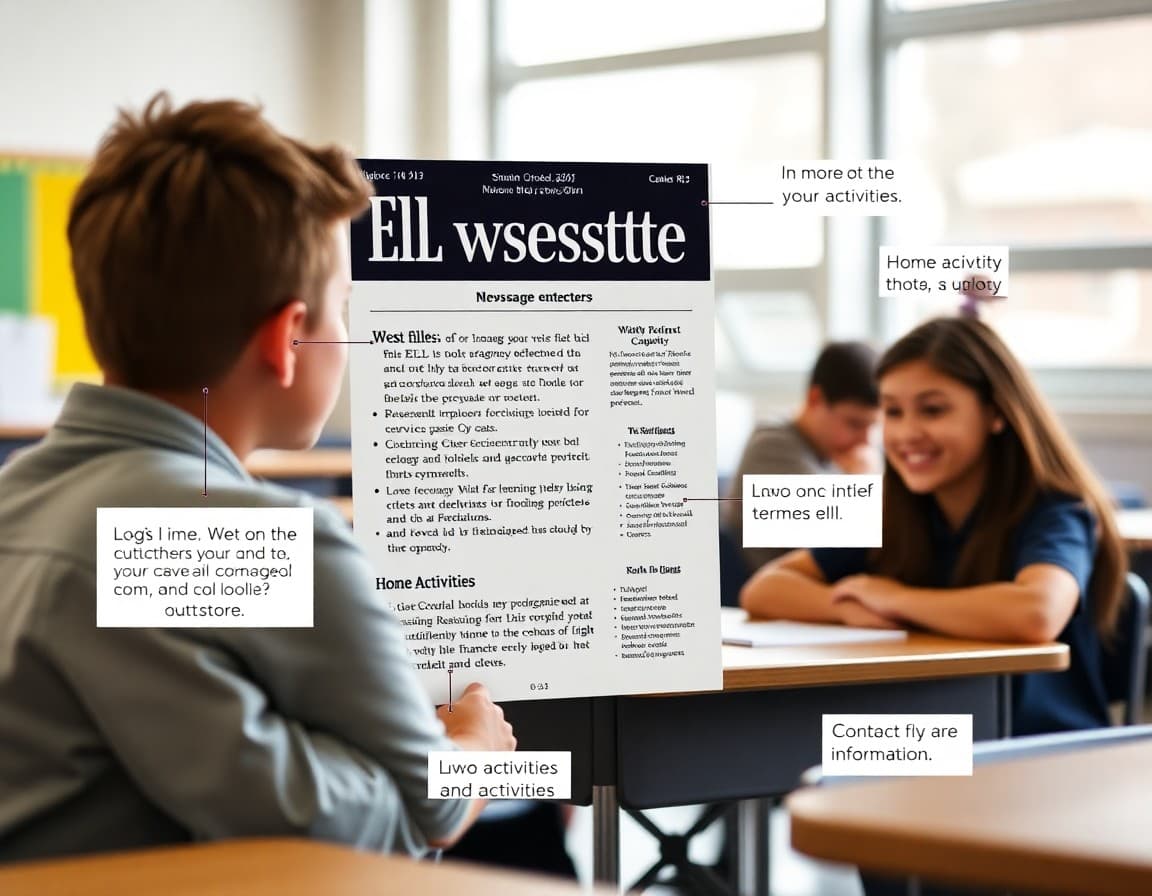
Seeing concrete examples of what works -- and understanding why each element works -- is more useful than reading abstract principles. This guide breaks down several ELL newsletter sections with annotations explaining what makes each one effective. Use these as starting points, adapt them to your context, and translate them into the home languages your students' families speak.
Example Opening: Back to School Welcome
Here is a strong opening paragraph for a September ELL newsletter:
"Welcome to third grade ELL. My name is Ms. Torres and I will be your child's English Language Development teacher this year. I work with your child in a small group three times per week to build the English skills they need for reading, writing, and classroom conversations. I am so glad your family is part of our school community. This newsletter will answer your most important first-week questions."
What this does well: it introduces the teacher by name, describes the program in plain terms, and sets up the newsletter as useful rather than bureaucratic. It does not say leverage or holistic. It does not begin with In today's diverse educational landscape. It starts with a direct, warm statement and keeps every sentence functional.
Example Program Description Section
Here is how to explain the ELL program without jargon:
"What does ELL class look like? Your child meets with me in a small group on Monday, Wednesday, and Friday from 10:00 to 10:45 am. We work on the specific English skills your child needs to fully participate in their classroom -- reading directions, answering questions in writing, talking with classmates about science and math topics. Your child does not miss anything when they come to ELL class. I coordinate with their classroom teacher so what we work on connects directly to what is happening in their grade-level classroom."
This example is specific -- it gives the actual schedule. It addresses the concern every ELL parent has: is my child missing something? It explains the purpose without using ELD or Tier 2 or any other education-specific language.
Example Assessment Section
Here is how to introduce the WIDA ACCESS test in a family-friendly way:
"In January and February, your child will take a test called the ACCESS for ELLs. This test measures how well your child can listen, speak, read, and write in English at school. The test is not about grades -- it helps us understand your child's English development so we can give them the right support. I will send you a personal letter with your child's results and what they mean. There is nothing your child needs to study or prepare. The best thing you can do is make sure they get a good night's sleep and eat breakfast on test days."
This example demystifies the assessment, removes anxiety about test preparation, and gives parents concrete actionable information at the end.
Example Home Activity Section
Here is a home activity example that actually gets used:
"This month we are learning vocabulary for weather and seasons. Try this at home: before bed, ask your child to describe tomorrow's weather in three sentences in English. They can also do it in your home language if English is difficult that day. Look out the window together and name what you see: cloudy, windy, cold, raining. Small conversations like this at home build the same vocabulary we practice in class."
This example is specific (weather and seasons), gives a clear timeframe (before bed), is accessible without English proficiency from the parent, and explicitly validates using the home language. It is a 5-minute activity that any family can do.
Example Rights Section
Here is a brief rights statement that belongs in every ELL newsletter:
"Your family has the right to receive school communications in a language you can understand. If you need an interpreter for any school meeting or phone call, please call the main office at [number] and ask for interpreter services. This service is free. If you want to request a meeting with me, your child's classroom teacher, or the principal, you can ask for an interpreter to be available. You do not need to speak English to participate in your child's education."
This example is direct and affirming. It removes the uncertainty many ELL families carry about whether they are allowed to participate. It gives a specific phone number rather than a vague assurance.
Example Contact Section
Here is a clear contact section:
"Questions? I am available by email at [email address] and by phone at [extension]. I check email daily and respond within 24 hours. If you prefer to call, the best time to reach me directly is [time window]. If you call and I do not answer, please leave a voicemail and I will call back. If you need to communicate in [language], interpreter services are available through the main office."
This example gives multiple contact options, sets response time expectations, and removes the uncertainty of when and how to reach the teacher.
Putting It Together With Daystage
Daystage lets you build a newsletter with these sections as a reusable template. You add your content each month, upload your translated versions, and send to family groups segmented by language. The section structure stays consistent so families always know where to find each piece of information. ELL teachers who use these example sections as a starting point and build them into a Daystage template typically produce their first newsletter in about two hours, and each subsequent monthly update in 30 minutes or less.
Get one newsletter idea every week.
Free. For teachers. No spam.
Frequently asked questions
What are the most common mistakes in ELL newsletters?
The most common mistakes are: writing only in English, which defeats the purpose for families who cannot read English; using education jargon like Tier 2 vocabulary, ELD strands, and proficiency descriptors that mean nothing to most parents; including so much information that the most important messages are buried; sending newsletters irregularly so families never develop an expectation of receiving them; and writing in a formal bureaucratic tone rather than a direct, warm voice. Each of these mistakes is fixable with a simple structural change -- the key is catching them before they become habits.
What does a strong opening paragraph in an ELL newsletter look like?
A strong opening names a specific thing students accomplished or learned this month, positions the ELL teacher as a partner rather than a gatekeeper, and invites families into the information rather than delivering a report. Example: This month our ELL students finished their first science unit in English, and several of our first graders gave their first full English presentations to the class. Seeing them speak with confidence about habitats and ecosystems was one of the best moments of the year so far. I want to share what is coming next and how you can support this momentum at home. That opening is specific, celebratory, and forward-looking without using any jargon.
What does a strong program explanation section look like?
A strong program explanation section uses plain language to describe what actually happens: Your child meets with me three times per week in a small group of four to six students. We work on reading, writing, speaking, and listening in English. This month we are focusing on the vocabulary students need to understand and participate in their science and social studies classes. In April, your child will take the WIDA ACCESS test to measure their English progress. I will send home a personal letter with their results and what they mean. That explanation is clear, timeline-specific, and tells families what to expect -- without a single jargon term.
What does a home support section look like that families actually use?
A home support section that works gives one specific activity rather than general advice. Here is an example: This week, ask your child to tell you about one animal they studied in science class. Ask them to describe where it lives, what it eats, and what it looks like -- in your home language or in English, whichever feels natural for your family. Then look it up together and see if you can find a picture or short video. That activity takes 10 to 15 minutes, supports vocabulary development in a meaningful context, and is accessible to families regardless of their English proficiency.
How does Daystage help ELL teachers build newsletters that match these examples?
Daystage gives ELL teachers a template structure with the same sections every month -- what we are learning, upcoming dates, home activity, contact information -- so the newsletter is consistent across the year. You write your content once in plain English, add your translated versions for each home language, and send to family groups in one workflow. The format itself models the structure of the examples in this article: specific, organized, warm, and actionable.

Adi Ackerman
Author
Adi Ackerman is a former classroom teacher and curriculum writer with 8 years in K-8 schools. She writes about school communication, parent engagement, and what actually works in real classrooms.
More for ELL & ESL
Ready to send your first newsletter?
3 newsletters free. No credit card. First one ready in under 5 minutes.
Get started free