
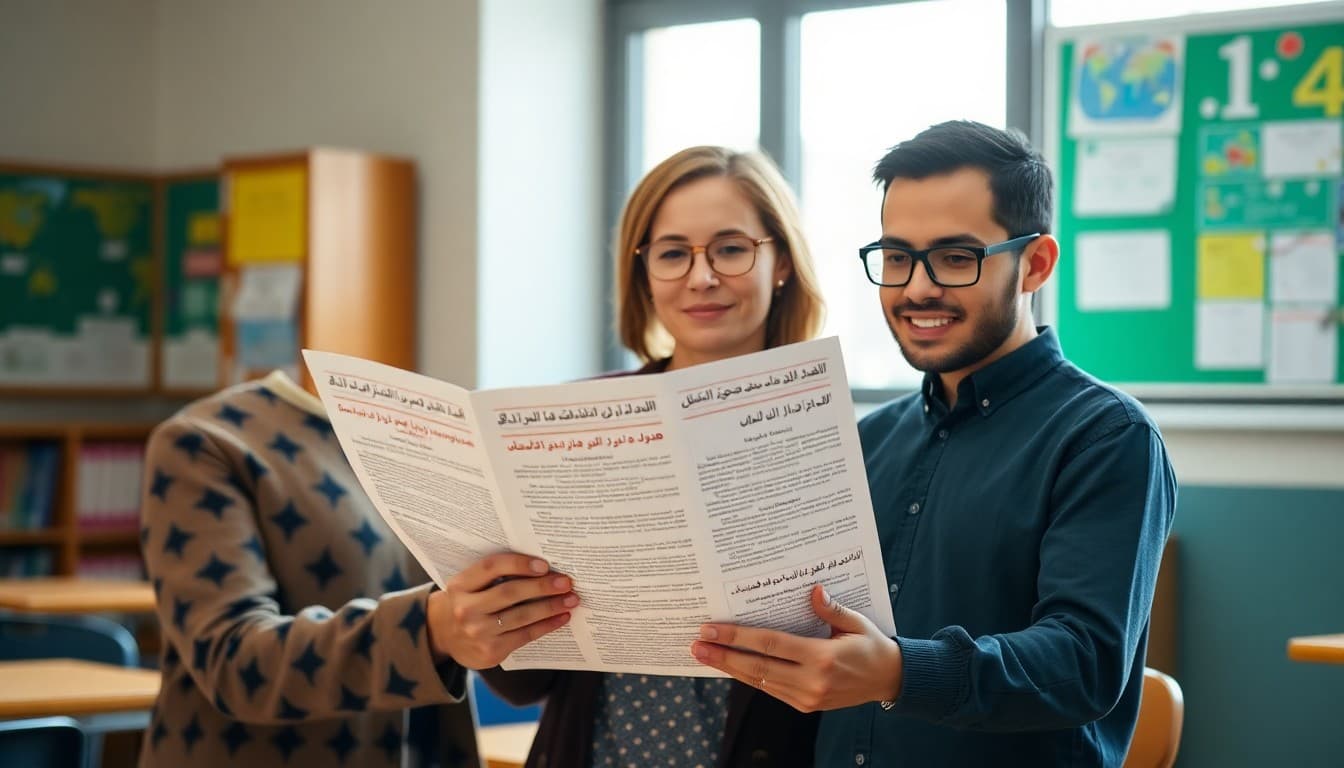
How to Write a Multilingual Newsletter for ELL Families
A multilingual ELL newsletter is not simply an English newsletter with a translation attached. It is a communication document designed from the start to serve families who do not read English as their primary language. That design difference -- starting from the family's need rather than from the English document -- determines whether the newsletter actually reaches people or merely exists.
Start With the Home Language Survey Data
Your home language survey data tells you which languages to prioritize. Pull the current year data in September before you write your first newsletter. Sort by number of families per language. Translate consistently for any language spoken by five or more families. For languages with fewer families, plan to use telephone interpretation for direct communication rather than investing in written translation that may be produced inconsistently.
Review this data every August. A language that was third on your list last year may have moved up as new students enrolled and others exited ELL services. Languages that are no longer represented in your caseload do not need ongoing translation resources.
Write the English Version in Plain Language First
Before translation, write the English version in the clearest, simplest language you can manage. Short sentences. Common words. No acronyms without explanation on the first use. No passive voice constructions that are difficult to render naturally in other languages.
A plain English source document produces better translations. When your English source uses complex sentence structures or educational jargon, translators must make interpretive choices about meaning and register -- which increases both translation time and the risk of errors. Clear English translates into clearer Spanish, Arabic, and Somali.
Format Decisions for Multilingual Newsletters
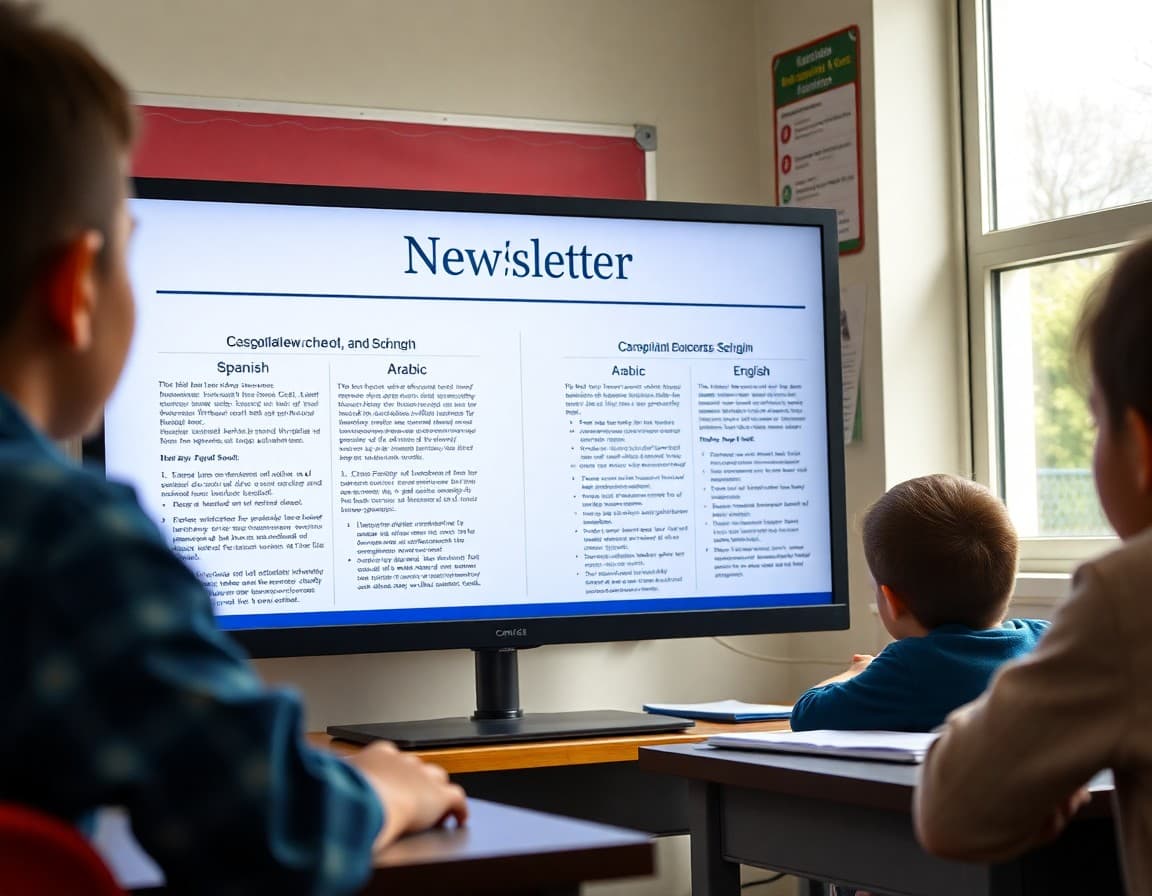
You have three format options: parallel bilingual (both languages in one document side by side), sequential (all sections in English first, then all sections in the home language), or separate documents per language. Each has its place.
Parallel bilingual works well for print distribution when you cannot control which version reaches which parent. It visually communicates that both languages have equal standing. Sequential bilingual in one document is compact but hard to navigate. Separate documents per language are cleanest for digital delivery where you can segment by family language group.
For most digital ELL newsletter programs serving three to five languages, separate documents with segmented delivery is the most readable and most sustainable approach.
Right-to-Left Language Considerations
Arabic, Farsi, Urdu, and Hebrew all read right-to-left. Creating a newsletter that includes these languages alongside English requires RTL text rendering. For digital newsletters, most professional platforms support RTL text direction when configured correctly. For print, a separate right-to-left version is typically cleaner than trying to combine RTL and LTR text in one layout. Always test RTL newsletters before sending -- rendering errors in Arabic text are easy to produce and undermine the professional quality of the communication.
Translation Sources and Quality Control
Professional translators produce the highest quality result. District translation departments, contracted professional services, and university language departments are reliable professional sources. Community translators -- vetted bilingual community members -- are useful for less common languages. Machine translation (Google Translate, DeepL) produces acceptable results for Spanish and is improving for Arabic and other major languages, but still introduces tone and vocabulary errors that reduce professionalism.
For any translated newsletter, have a bilingual speaker who is not the translator do a quick read-through before sending. This catches errors that translators miss because they are too close to the work, and it catches cultural tone issues that technically accurate translations sometimes create.
Delivery Strategy
Send digitally to families who have email addresses on file, and distribute paper through school backpacks for families without reliable email access. For digital delivery, segment your email list by language group so each family receives the right language version rather than receiving all versions. This requires maintaining a current list of family home languages alongside contact information.
Send on a consistent schedule. Monthly is sustainable for most ELL programs. Families who receive reliable, regular communication from the ELL program build trust in that communication channel over time.
Accessibility for Families With Limited Literacy in Any Language
Some ELL families have limited literacy in their home language as well as in English, particularly families from communities with disrupted schooling due to conflict or poverty. For these families, written newsletters are less effective than phone calls, in-person meetings, or voice messages. Identifying families with limited home language literacy early and adjusting communication strategies for them is part of effective multilingual outreach -- not all communication challenges are solved by translation.
Building Multilingual Newsletters With Daystage
Daystage supports building a newsletter with separate language sections and delivering each version to the right family group. Once you have your translated content, you add it to the corresponding section of your Daystage template and the delivery system handles language segmentation automatically. ELL coordinators who manage newsletters in three to five languages report that Daystage cuts their newsletter production and delivery time significantly compared to managing separate files and email campaigns for each language.
Get one newsletter idea every week.
Free. For teachers. No spam.
Frequently asked questions
How many languages should an ELL newsletter be translated into?
Translate consistently into the top three to five languages in your current ELL enrollment, ranked by number of families who speak each language as a home language. Pull this data from your current year home language surveys, not last year's data -- family language profiles change as students enroll and exit. For languages with fewer than three or four families, a phone call through a district interpreter often serves those families more effectively than a translated newsletter you cannot reliably produce with quality. Review your language priorities each August.
What is the difference between translating an ELL newsletter and localizing it?
Translation converts the words from one language to another. Localization adapts the content for the cultural context of the receiving community. A translated newsletter that uses idioms that do not exist in the target language, references US school concepts that are unfamiliar to recent immigrants, or uses a register that is too formal or too casual for the community is technically translated but not localized. For ELL newsletters, basic localization -- using clear explanations instead of assumed knowledge, and a warm but respectful tone that crosses cultural contexts -- improves effectiveness significantly without requiring specialized expertise.
Should ELL newsletters use parallel text (both languages in one document) or separate documents per language?
Parallel text works well when both languages are known by at least some household members and when you cannot control which version reaches which family. Separate documents work better when you can segment delivery by language group and when you want each version to be designed for readability rather than bilingual layout. For digital delivery where you can send the right language to the right family group, separate documents are cleaner and easier to read. For paper distribution where all parents receive the same document, parallel text ensures every family can find something in their language.
How do you handle languages that read right-to-left, like Arabic and Hebrew, in a newsletter layout?
Right-to-left languages require a layout that reverses the reading direction. In digital newsletters, this means using right-to-left text direction CSS or RTL-compatible templates. In print layouts, it typically means a separate document rather than a parallel text format. Most professional translation software and digital newsletter platforms handle RTL text rendering when configured correctly. Test your newsletter in the target language before sending to verify that text displays correctly, especially for Arabic and Farsi-speaking ELL families.
How does Daystage support multilingual ELL newsletters?
Daystage supports building newsletters with separate language sections and delivering each version to the right family group by email. You can add translated content for Spanish, Arabic, Somali, and other languages, and Daystage delivers the correct version to families based on their language group assignment. This eliminates the need to manage separate email lists and separate newsletter files for each language -- the workflow is unified, and the delivery is segmented automatically.

Adi Ackerman
Author
Adi Ackerman is a former classroom teacher and curriculum writer with 8 years in K-8 schools. She writes about school communication, parent engagement, and what actually works in real classrooms.
More for ELL & ESL
Ready to send your first newsletter?
3 newsletters free. No credit card. First one ready in under 5 minutes.
Get started free