
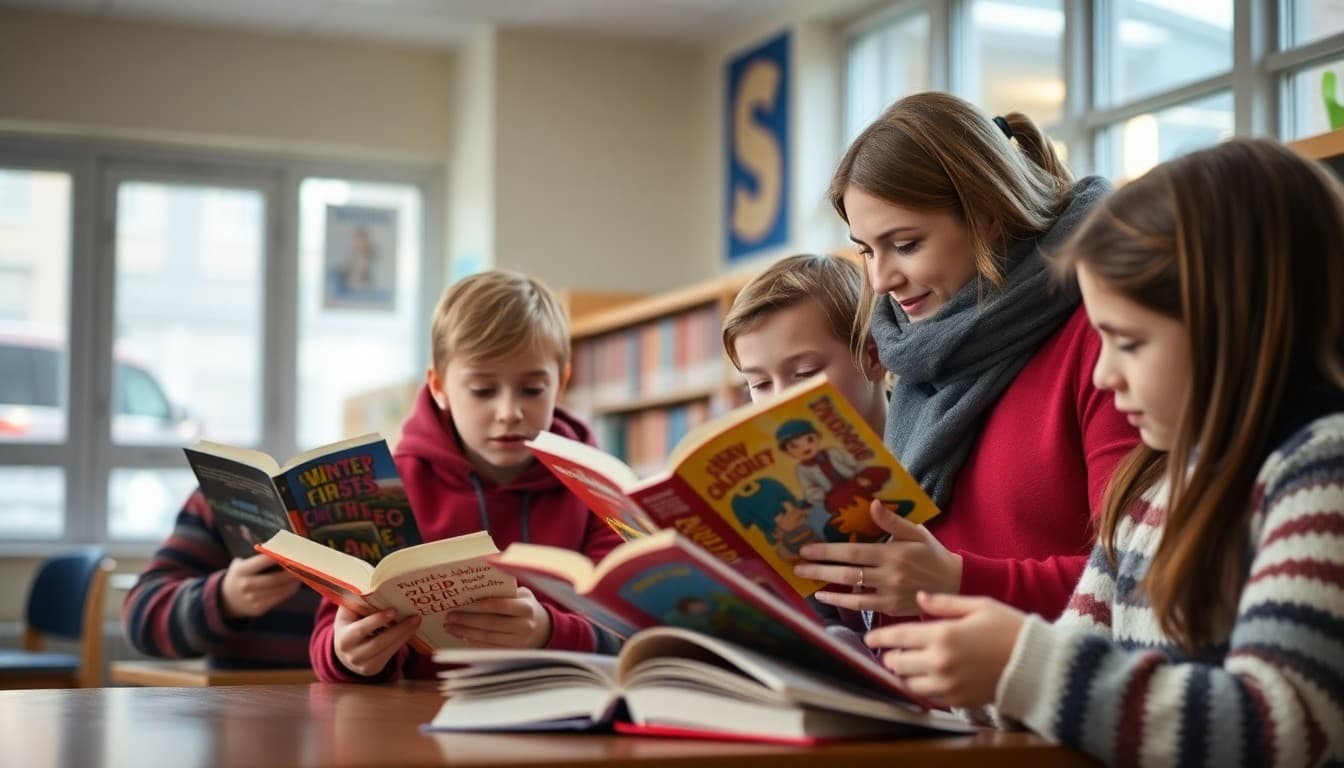
School Newsletter: Launch Your Winter Reading Challenge

A winter reading challenge is one of the most accessible community-building programs a school can run. It asks every family to do something simple: read together. The newsletter is how you make that ask clear, exciting, and achievable for every family regardless of their reading level or home language.
Make the Challenge Specific and Achievable
Name exactly what the challenge asks of participants: read 20 minutes per night for the month of January, complete a reading log of 10 books before February break, or collectively reach a school-wide page count goal. Vague challenges produce vague participation. A specific, achievable goal tells families exactly what success looks like and makes the decision to participate an easy yes.
Provide the Participation Materials in the Newsletter
Include a downloadable or printable reading log with the newsletter. List the challenge categories if you are using a bingo or activity format. Note where families can pick up printed materials if they do not have a printer. Families who receive everything they need to participate in the newsletter are more likely to start. Families who need to go to the school website and find the forms often do not get that far.
Recommend Books at Multiple Reading Levels
Include a brief recommended reading list organized by age range. Note which books are available at the school library and which are available at the public library. Include at least a few books available in languages other than English if your school serves multilingual families. Families who do not know what to read first do not start. A concrete list removes that barrier.
Create a School-Wide Milestone Goal
A school-wide collective goal -- 10,000 pages read, 500 books completed, 1,000 reading log entries turned in -- creates community around the challenge and makes individual participation feel like it contributes to something larger. Update the school community on the progress midway through the challenge in a follow-up newsletter or school-wide announcement. The shared goal is what turns a reading program into a community event.
Recognize Participants at the End
Announce how participants will be recognized at the end of the challenge: classroom certificates, a school-wide celebration, names posted in the newsletter or on the school website. Students who know their participation will be acknowledged are more likely to complete the challenge. Recognition does not need to be elaborate -- a class that collectively read the most books posted on the school website is enough to motivate many students.
Make It Accessible for Every Family
Note in the newsletter that audiobooks count, that reading to a younger sibling counts, and that reading in any language counts. Families who do not own books should know that library cards are free and library apps like Libby allow unlimited free digital borrowing. Removing the access barriers that keep lower-income families from participating is both the right thing to do and what distinguishes a school-wide challenge from a program that only serves families with resources.
Connect Reading to Community
Frame the winter reading challenge as something the whole community is doing together, not just a classroom exercise. Feature a book being read by the principal. Invite families to post their reading selfies on the school social media page. Ask the PTA to host a mid-challenge reading night. When reading becomes a visible community activity, not just homework, participation rates increase and the school's culture shifts in a meaningful direction.
Get one newsletter idea every week.
Free. For teachers. No spam.
Frequently asked questions
What should a Launch Your Winter Reading Challenge newsletter cover?
The most effective newsletters for this observance cover three things: what the school is doing to recognize or celebrate the month or week, how families can participate or reinforce the themes at home, and who at school to contact for more information or to get involved. Lead with the specific activities happening at school, not with a generic description of the observance. Families respond to what is real and local, not to national awareness month statistics.
When should the school send this newsletter?
The week before or the first week of the observance month or week. Families need enough lead time to participate in any events, volunteer for relevant activities, or have informed conversations with their children about the topics being raised at school. A newsletter that arrives after the week has already started is useful for context but misses the participation window.
How do you keep this kind of observance newsletter from feeling generic?
Connect every awareness month or week to something specific happening in your school building. A student who shared their experience. A classroom project in progress. A community organization the school is partnering with. A specific action families can take this week. Generic awareness newsletters list facts about the month. Specific newsletters tell families what their community is actually doing about it.
Should the newsletter include community resources?
Yes, briefly. Include one or two community organizations or helplines relevant to the observance if appropriate. For mental health awareness months, crisis lines. For financial literacy month, free local resources. For heritage months, community cultural organizations. This section takes one minute to add and significantly increases the newsletter's value as a community resource beyond school walls.
How does Daystage help schools send observance newsletters?
Daystage lets school staff create a clean, formatted newsletter for any observance month or week and send it to all families in a few minutes. You can include event details, resource links, and family action steps in a mobile-friendly format that arrives directly in every family's inbox. Templates can be reused and adapted each year.

Adi Ackerman
Author
Adi Ackerman is a former classroom teacher and curriculum writer with 8 years in K-8 schools. She writes about school communication, parent engagement, and what actually works in real classrooms.
More for Community Outreach
School Newsletter: Reading Month Celebration and Activities
Community Outreach · 6 min read
School Newsletter: Celebrating Our School Library This Month
Community Outreach · 6 min read
Family Literacy Program Newsletter: Communicating Reading and Literacy Programs for the Whole Family
Community Outreach · 5 min read
Ready to send your first newsletter?
3 newsletters free. No credit card. First one ready in under 5 minutes.
Get started free