

School Newsletter: April is National Poetry Month
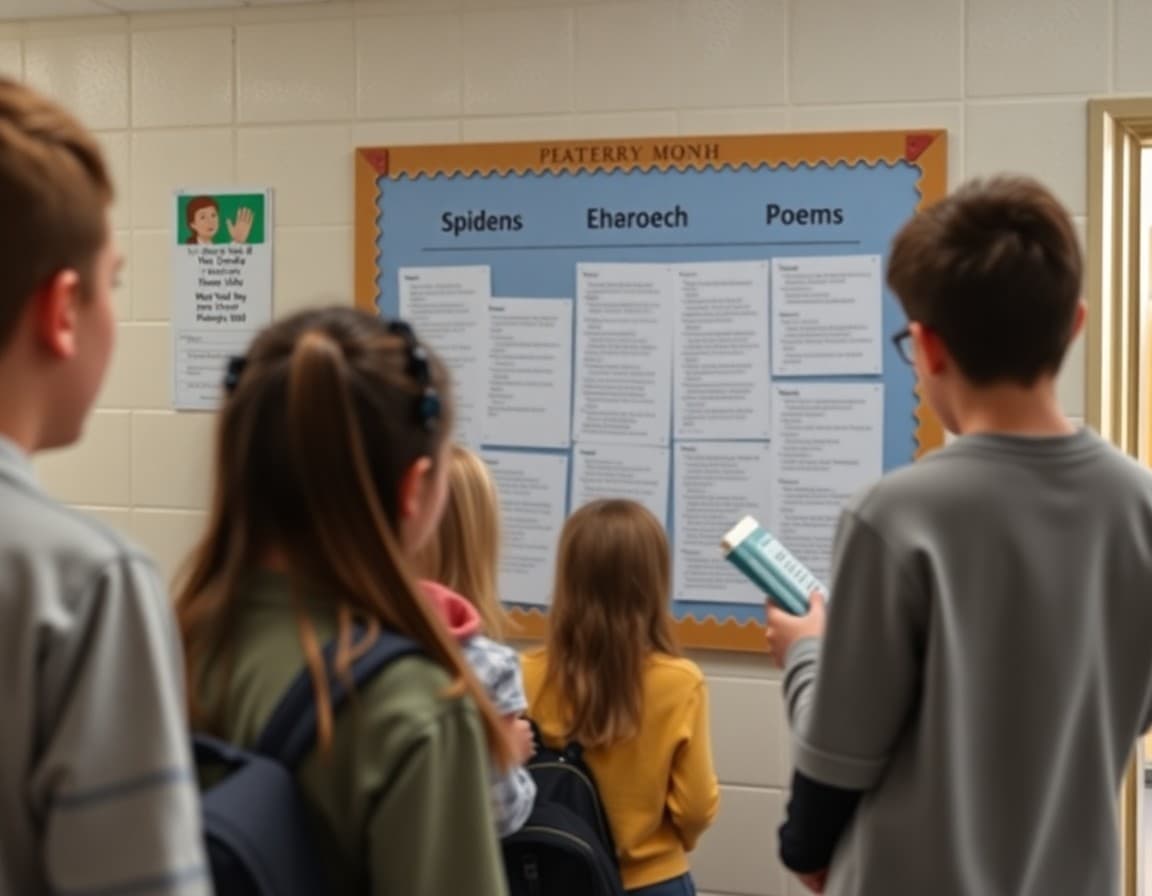
National Poetry Month in April gives schools an opportunity to celebrate language in its most condensed, precise, and emotionally resonant form. A poetry month newsletter that features student work, gives families accessible ways to explore poetry at home, and explains what students are learning makes poetry feel like a living art form rather than a dusty requirement.
Student Poetry in the Spotlight
The most powerful thing a poetry month newsletter can do is publish student poems. Two or three short student poems, with the student's name and grade level, transform the newsletter from an information channel into a showcase. Students whose poems appear in the newsletter feel their creative work is valued. Classmates and families who read the poems engage with the school's literary community in a direct, human way.
What Students Are Doing in Class
Describe the specific poetry activities happening in classrooms during April. A fourth-grade class writing found poems from science texts. A middle school class analyzing spoken word performances. A high school class exploring the relationship between poetry and protest movements. Specific descriptions of classroom activities give families a way to connect with what their children are experiencing and to continue the conversation at home.
Poetry for Every Kind of Reader
Address the common resistance to poetry directly. Poetry does not have to rhyme. It does not have to be long. It does not have to be about nature or love. Poetry is language working at maximum efficiency -- the most meaning in the fewest words. Hip-hop lyrics are poetry. Sports announcer calls are poetry. A grocery list written with attention can be poetry. Broadening the family's understanding of what poetry is makes it more accessible for students who feel excluded from the 'poetry person' identity.
A Poem for Every Appetite
Include one or two specific poems families can read together at home, accessible online for free. A funny poem for younger children. A powerful spoken word piece for teenagers. A classic that is deceptively simple. A poem from a poet from your school community's cultural background. Specific recommendations are far more likely to be followed than generic suggestions to 'read more poetry.'
Poetry as Emotional Language
Many students who struggle to articulate their feelings in conversations find language for those feelings in poetry. A brief paragraph in the newsletter about poetry as an emotional tool -- a way to process grief, anger, joy, and confusion that conventional language sometimes cannot hold -- gives families and students permission to use poetry personally, not just academically.
Community Poetry Event
If the school is hosting a poetry slam, open mic, or poetry reading during April, announce it with all the details. What grades are performing. Whether family attendance is welcome. How students can sign up to participate. Whether the event will be recorded for families who cannot attend. A community poetry event that is well-communicated in the newsletter turns a classroom activity into a community gathering.
Making Poetry a Year-Round Practice
Close with the invitation to make poetry a year-round family practice. A poem a week from a free daily poem newsletter service. A family tradition of reading one poem at dinner each Sunday. A poetry journal for any child who wants a private place to write. The specific practices are less important than the message: poetry is not a school subject that starts in April and ends in May. It is a way of using language that enriches everyday life.
Get one newsletter idea every week.
Free. For teachers. No spam.
Frequently asked questions
What should a April is National Poetry Month newsletter cover?
The most effective newsletters for this observance cover three things: what the school is doing to recognize or celebrate the month or week, how families can participate or reinforce the themes at home, and who at school to contact for more information or to get involved. Lead with the specific activities happening at school, not with a generic description of the observance. Families respond to what is real and local, not to national awareness month statistics.
When should the school send this newsletter?
The week before or the first week of the observance month or week. Families need enough lead time to participate in any events, volunteer for relevant activities, or have informed conversations with their children about the topics being raised at school. A newsletter that arrives after the week has already started is useful for context but misses the participation window.
How do you keep this kind of observance newsletter from feeling generic?
Connect every awareness month or week to something specific happening in your school building. A student who shared their experience. A classroom project in progress. A community organization the school is partnering with. A specific action families can take this week. Generic awareness newsletters list facts about the month. Specific newsletters tell families what their community is actually doing about it.
Should the newsletter include community resources?
Yes, briefly. Include one or two community organizations or helplines relevant to the observance if appropriate. For mental health awareness months, crisis lines. For financial literacy month, free local resources. For heritage months, community cultural organizations. This section takes one minute to add and significantly increases the newsletter's value as a community resource beyond school walls.
How does Daystage help schools send observance newsletters?
Daystage lets school staff create a clean, formatted newsletter for any observance month or week and send it to all families in a few minutes. You can include event details, resource links, and family action steps in a mobile-friendly format that arrives directly in every family's inbox. Templates can be reused and adapted each year.

Adi Ackerman
Author
Adi Ackerman is a former classroom teacher and curriculum writer with 8 years in K-8 schools. She writes about school communication, parent engagement, and what actually works in real classrooms.
More for Community Outreach
Ready to send your first newsletter?
3 newsletters free. No credit card. First one ready in under 5 minutes.
Get started free