

Drama Club Newsletter: Production Season Communication
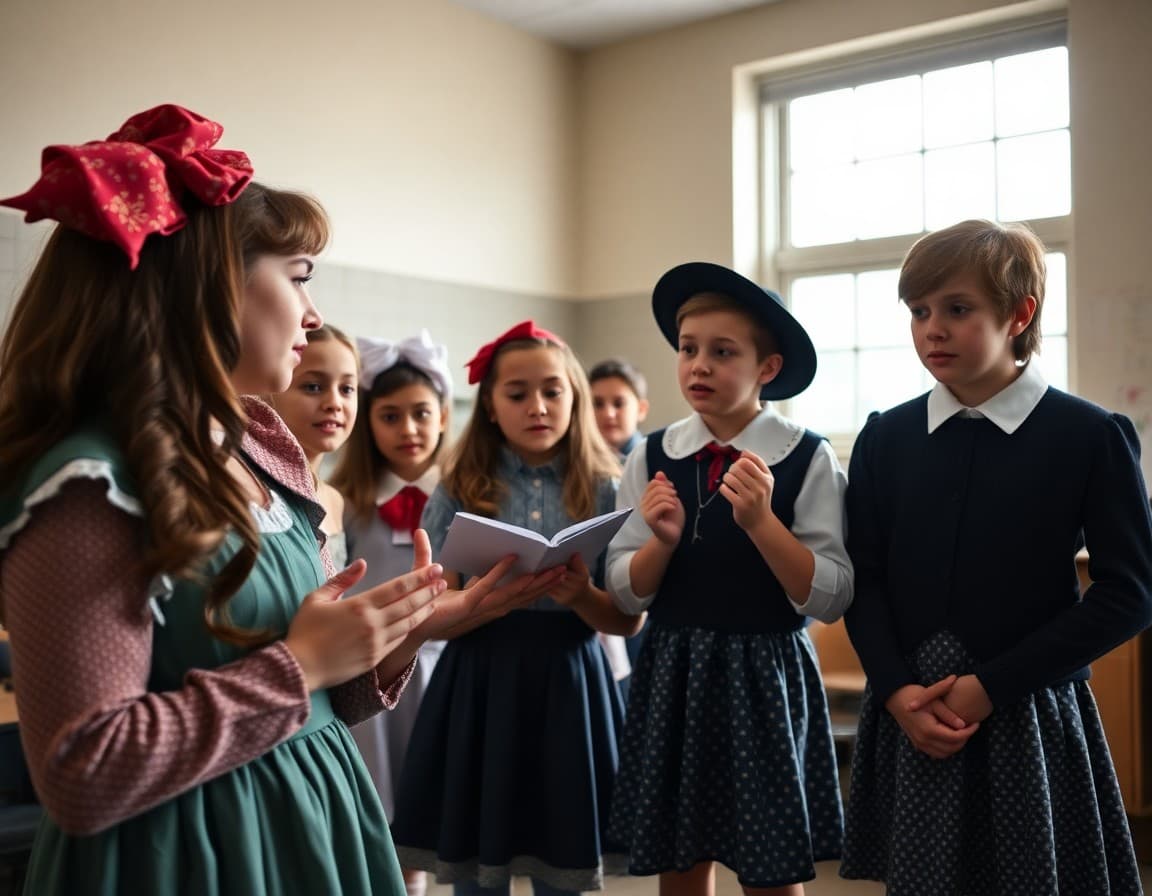
Drama club newsletters cover a longer arc than almost any other school program: from auditions in September to closing night in December is often a full semester. Your newsletter has to sustain family engagement across all of that time, through the boring middle of line memorization and costume hunting, not just opening night.
Introduce the show with the same pitch you would give a friend
Families hear the show title and do not know whether it is a comedy, a drama, a period piece, or a contemporary story. Give them the pitch version, not the academic description.
"This fall's production is The 25th Annual Putnam County Spelling Bee. It is a comedy. Audience members get pulled onto the stage. The main characters are a group of middle schoolers at a spelling competition who are each carrying something complicated at home. It is funny and surprisingly moving. Students in the cast range from 6th to 8th grade and they have been genuinely making each other laugh in rehearsals for three weeks."
Map the full rehearsal calendar with honest time estimates
Families need to understand that drama club time commitment escalates dramatically in the final two weeks before a show. A calendar that shows three rehearsals per week in October becoming five per week in November prepares families to plan ahead rather than react in frustration when the schedule intensifies.
Include which cast members are called for each rehearsal, not just the time. A student who is in one scene needs to know they are called for Tuesday but not Thursday. Families who understand the specific call schedule can plan homework and family commitments around the actual rehearsal time, not around a vague "rehearsal every week" communication.
Set line memorization milestones and hold them publicly
Line memorization is where most student productions stumble. Setting public milestones, "all lead roles should be off-book for Act 1 by October 28th," and reporting on those milestones in the newsletter creates accountability and shows families that the production has a timeline and standards.
"We had our first off-book run of Act 1 on Tuesday. Seven of nine lead roles were fully memorized. Two leads were still using their scripts. Those two students need to reach off-book by next Tuesday or we will not be able to move into staging. Please ask your student which category they were in and how their line work is going."
Describe costume requirements with specificity and lead time
Nothing frustrates drama families more than receiving a costume requirement with 72 hours to find it. Post costume requirements in the newsletter at least three weeks before the costume parade date.
"All students need: plain black dress shoes (not athletic), black dress pants or a black skirt, and a white button-up shirt or blouse. These are the base layer for every character's costume. Character- specific pieces, hats, accessories, period clothing, will be provided by the drama department. The costume parade is November 7th. All base layer items must be at school by November 5th."
Sample newsletter template excerpt
Week 6 of production: here is where we are.
Act 1 is staged and mostly memorized. Act 2 is staged and off-book for two-thirds of the cast. The technical team has completed the set construction for the spelling bee stage layout and is now working on the lighting plot. Sound will join rehearsals starting next week.
Ticket sales open Monday via the school's online ticketing portal. We have 180 seats per night over three performances. Last year's run sold out by the Thursday before opening. If you want specific seats, buy early.
Recognize crew contributions alongside cast
Production season newsletters should celebrate the technical crew, stage managers, and ensemble members with the same visibility as the lead cast. Families of crew students often feel that their child's contribution is less valued than the visible roles.
A specific description of what the stage manager does, or what the lighting team built this week, communicates that the production is genuinely a group effort and that every role matters to the outcome.
Build opening night into a community event
The opening night newsletter should feel like a celebration invitation, not a logistics memo. Acknowledge the months of work, the specific challenges the cast overcame, and why this particular show matters to this particular group of students. Families who arrive at the theater already knowing the backstory of the production are better audience members and more grateful ones.
Get one newsletter idea every week.
Free. For teachers. No spam.
Frequently asked questions
What should a drama club newsletter cover during production season?
A production season newsletter should cover the show title and a brief description of the plot and tone, the rehearsal schedule and which cast members are called for each session, memorization milestones and deadlines, costume requirements and what families need to provide, technical production details like set building or sound if family volunteers are needed, ticket sale information, and opening night logistics. Families who are kept informed at every stage of production are more supportive of the time commitment and more enthusiastic audience members.
How do you communicate rehearsal expectations to families of drama students?
Drama rehearsals have different intensity levels at different points in the production cycle. Early rehearsals focus on line learning and blocking and require less time. Technical rehearsals in the final two weeks before opening are often daily and run long. Families who do not understand this production cycle are unprepared for the sudden increase in time commitment. A newsletter that maps out the full rehearsal calendar with honest estimates of time per week at each phase helps families plan transportation, homework time, and family commitments accordingly.
What skills does drama club develop that families may not recognize?
Drama develops public speaking confidence, which is among the most cited skills gaps in professional settings. It also builds empathy through inhabiting different characters, collaboration skills through producing a group work, memorization and attention skills through line learning, physical awareness through stage movement and blocking, and creative problem-solving through technical production challenges. Students who go through a full production cycle learn to manage a long-term project with a fixed deadline, a skill that transfers directly to academic and professional settings.
How do you handle auditions and casting in a way families can support?
Casting is one of the most emotionally charged parts of drama club leadership. A newsletter that explains the audition criteria in advance, describes how the director makes casting decisions, acknowledges that not everyone who auditions will get the role they wanted, and frames ensemble and crew roles as genuinely valuable contributions helps families prepare their child for any outcome. A post-audition newsletter that thanks every student who auditioned and explains the full range of opportunities available is as important as the casting announcement itself.
How does Daystage help drama club directors communicate with families?
Daystage lets drama directors send production season newsletters with rehearsal schedules, ticket sale links, costume requirement lists, and show descriptions in a format families can reference throughout the production cycle. When a family receives a Daystage newsletter showing photos from the first blocking rehearsal alongside a description of the show's themes, they are already invested before opening night. That early investment translates into full houses and energized performances.

Adi Ackerman
Author
Adi Ackerman is a former classroom teacher and curriculum writer with 8 years in K-8 schools. She writes about school communication, parent engagement, and what actually works in real classrooms.
More for Arts & Music
Ready to send your first newsletter?
3 newsletters free. No credit card. First one ready in under 5 minutes.
Get started free