
Art Teacher Newsletter Guide: Communicating with Families About Visual Arts
Art teachers communicate with families less consistently than almost any other specialist. The reasons are practical: fewer dedicated prep periods, rooms full of materials and projects, and a curriculum that can be hard to describe in words when the work is visual. This guide addresses all of that and gives you a structure you can use every month in under thirty minutes.
Why art newsletters matter
Art is the class families often understand least from the outside. Their child comes home covered in paint and says "we made something." A newsletter that describes what students learned, what technique they practiced, and what concept they were exploring transforms "we made something" into a real conversation.
It also positions your program as educational, not recreational. In schools where art is under pressure from standardized testing priorities, a clear communication about what students are genuinely learning in art class is professional advocacy for the program.
The current project section
Every newsletter should open with a description of the current project that goes beyond the medium and the subject. Include:
- The concept or technique being taught. Not just "students are doing printmaking" but "students are learning to think in reverse, designing an image that will appear mirror-flipped when printed, which requires a different kind of spatial thinking than drawing directly."
- The artist or art movement students are studying. If students are looking at Matisse's collages, Hopper's light and shadow, or folk art traditions from a specific culture, name the reference and give families a one-sentence context.
- Where students are in the process. Beginning, mid-project, or finishing. This helps families ask their child the right question at home.
Connecting art to the wider world
Art newsletters that feel most compelling to families are the ones that connect the current project to something observable outside school. "Students are studying the principles of design, specifically how contrast creates visual emphasis. That is the same principle behind every good poster, book cover, and website layout you have ever noticed."
That sentence does two things: it frames art as a real skill and it gives families something to notice and discuss at home. One observation per newsletter is enough.
Art show section
If your school has an art show, gallery walk, or any public display of student work, give it at least two newsletter mentions: one several weeks out and one the week before. Art shows are often the most emotionally meaningful events of the school year for families, and they deserve the same advance communication as science fairs.
Photos in an art newsletter
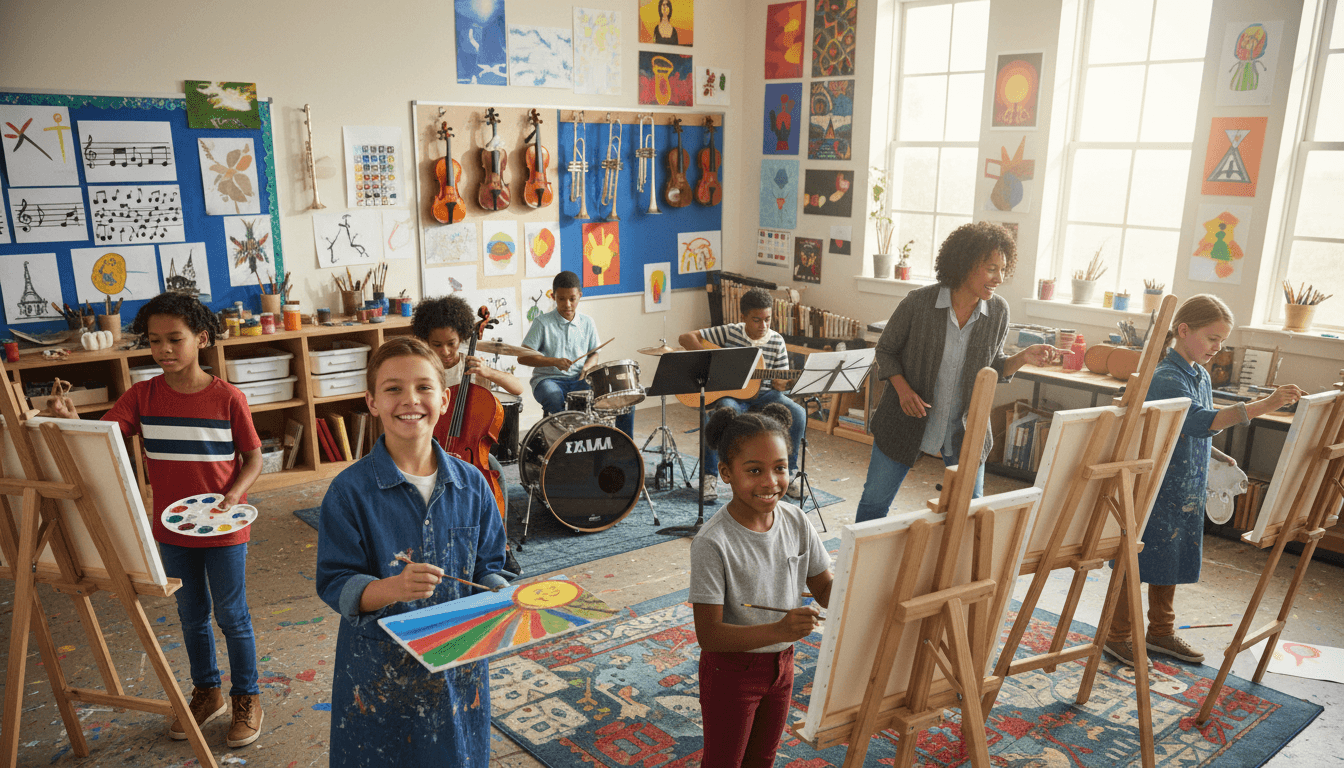
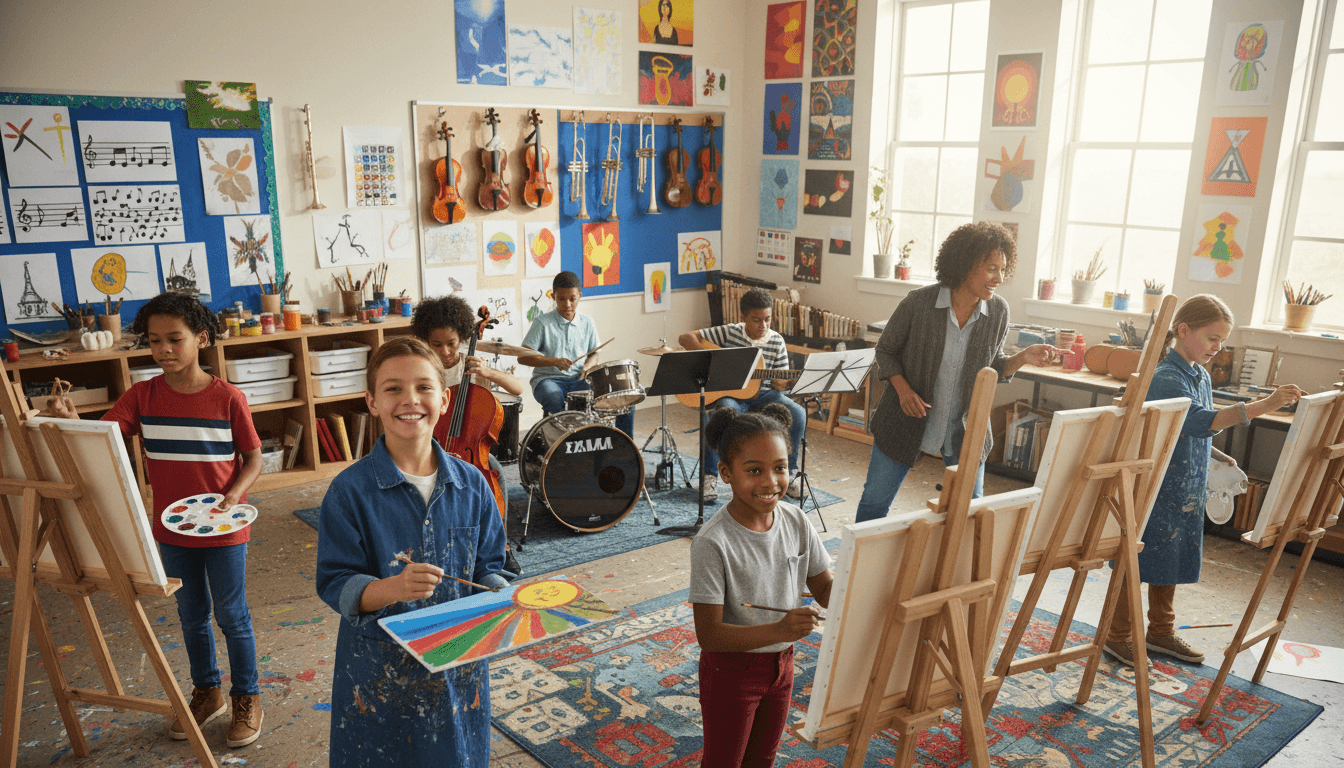
Art is visual. If your school policy permits parent-distributed photos, include one per newsletter. A photo of students mid-process (working on a composition, experimenting with a technique) communicates far more than a description. A photo of finished work builds anticipation for the art show. Both are useful. Use them.
Keeping it short enough to read
Three hundred and fifty to four hundred words. Art families are busy people. A newsletter that respects their time by being genuinely useful rather than exhaustive gets read. A long newsletter about everything that happened in art this semester does not.
Get one newsletter idea every week.
Free. For teachers. No spam.
Frequently asked questions
How often should an art teacher send newsletters to families?
Monthly is the right cadence for most art teachers. If you have an art show, a gallery installation, or a special project culminating in a presentation, add a targeted newsletter two to three weeks before. Art shows in particular benefit from early communication that builds anticipation rather than a single last-minute announcement.
What should an art teacher newsletter include?
The current project or technique students are working on, the concept or artist students are studying, any upcoming events (art shows, gallery walks, display installations), a connection between the project and something families might notice in the world around them, and one way families can support artistic development at home. Keep it under four hundred words.
How do I explain the educational value of art class to families who see it as a non-core subject?
Connect art skills to outcomes families value. Fine motor development, visual problem-solving, persistence through creative difficulty, learning to make decisions about what communicates an idea: these are skills with broad application. Name them explicitly. 'Students are practicing deliberate observation, which means looking carefully before drawing. That skill is foundational for science and writing too.'
What is the biggest mistake art teachers make in parent newsletters?
Describing what students made rather than what they learned. 'Students painted self-portraits' is a report. 'Students studied how light falls on a face and practiced mixing skin tones from a limited palette to understand color theory in context' is a newsletter. Both describe the same project. One communicates educational value.
Can Daystage help an art teacher who does not have dedicated planning time for communication?
Yes. Art teachers often share planning time with other specialists and have fewer preparation periods than classroom teachers. Daystage makes newsletter writing fast enough to fit into a twenty-minute window. The template handles the structure and you fill in the current project, a photo from the studio, and the upcoming event dates.

Adi Ackerman
Author
Adi Ackerman is a former classroom teacher and curriculum writer with 8 years in K-8 schools. She writes about school communication, parent engagement, and what actually works in real classrooms.
More for Arts & Music
Ready to send your first newsletter?
3 newsletters free. No credit card. First one ready in under 5 minutes.
Get started free