

Newsletter Guide for Arts School Families
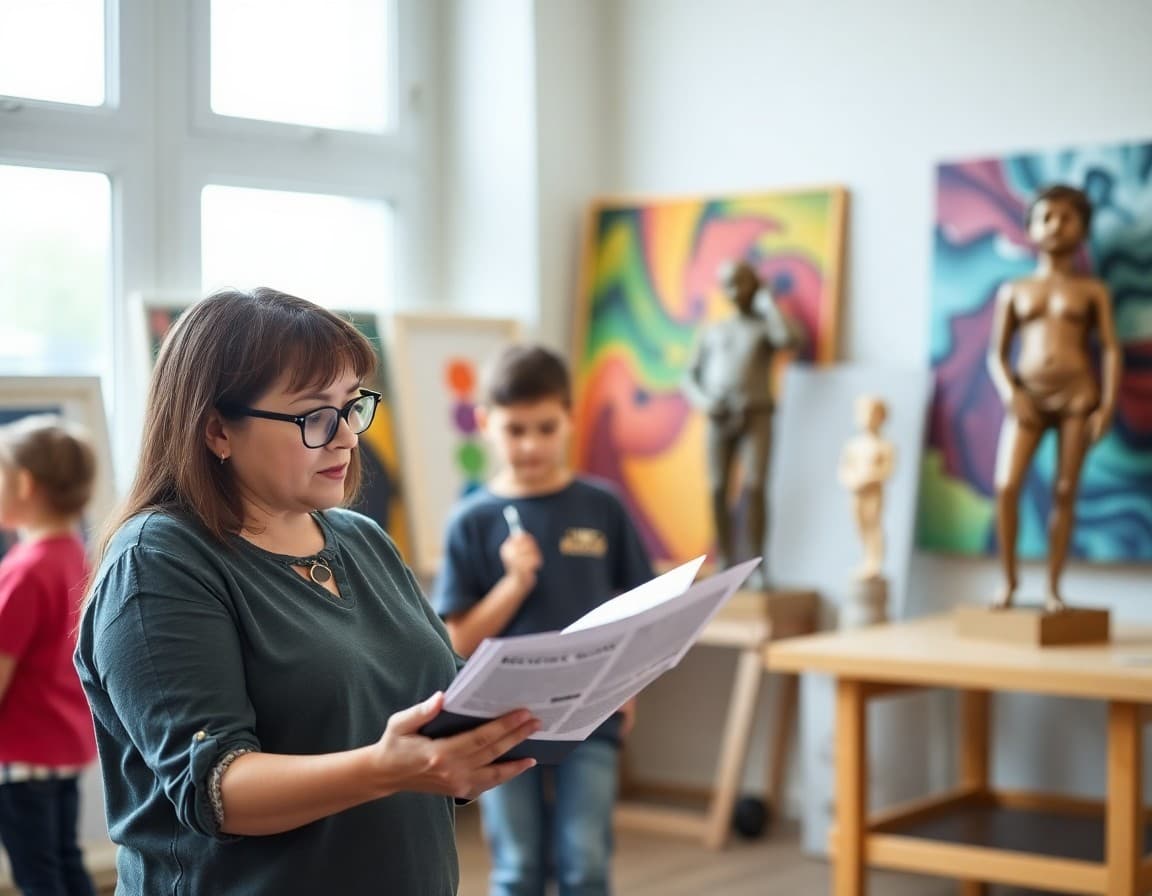
An arts school newsletter is not just a school newsletter with a few photos of the drama club. It is a communication that should reflect the same care for craft and presentation that the school asks of its students. The families who chose an arts school are attentive to aesthetics, interested in creative process, and invested in seeing what their children are making. A newsletter that gives them real access to that work earns consistent readership and builds the community that arts schools need to thrive.
Who Is Reading an Arts School Newsletter
Arts school families tend to be deeply invested in their child's creative development. Many have arts backgrounds themselves or have spent significant effort finding an educational environment that takes creative work seriously. They want to know what their child is actually making, what they are learning about craft and technique, and how the school is connecting studio work to the broader world of art, music, and theater.
This audience reads newsletters with more attention to language and presentation than most school communities. They notice when communication feels generic or templated. They respond to newsletters that sound like they were written by a person who understands and values the work being described.
Describing Student Work in Ways That Make Families Want to See It
The most valuable thing an arts school newsletter can do is make families genuinely curious about what their child is creating. That requires description that goes beyond labels. Not "students are working on their spring portfolio" but "students in the advanced drawing course are producing charcoal studies of figure and drapery, drawing from observation and from photographic reference. The semester's work will culminate in a 10-piece portfolio presented to a faculty and guest review panel in May."
That description names the medium, the approach, the scale, and the outcome. A parent reading it knows what their child is doing and wants to see the work when it is done.
Covering the Performance and Exhibition Calendar
Arts school performance schedules are often complex and require more lead time than general school events. A musical production involves weeks of rehearsal and may have multiple performance dates. A gallery exhibition requires invitation to the opening, viewing hours across several days, and context about the work. A newsletter that covers these events with full detail, including dates, times, ticketing information, and a description of the work families will see, treats families as the primary audience for the school's creative output.
Include a recurring section in each newsletter that lists upcoming performances, exhibitions, and auditions with full logistics. Families who plan their calendars around their child's school events need this information early enough to act on it.
A Template Excerpt for an Arts School Monthly Newsletter
Here is a section from a performing arts high school in Boston:
"The spring production this year is 'The Laramie Project,' directed by Ms. Okonkwo and featuring 34 students across the acting, technical theater, and design programs. Performances are March 14, 15, 21, and 22 at 7:30 PM in the main theater. A Saturday matinee runs March 15 at 2:00 PM. Tickets are $12 for adults and $8 for students and seniors, available online at newenglandartsacademy.org/tickets or at the box office starting February 28. This production involves extensive community research and discussion of a real historical event. A community talkback will follow the March 15 evening performance."
Full logistics, a description of what families will see, ticket pricing, and the community component. This is a production announcement that treats families as an audience, not just chaperones.
Connecting Studio Work to Artistic Traditions
Arts school newsletters that connect current student work to broader artistic traditions do something general school newsletters cannot: they educate the family as well as inform them. A brief mention that the 9th grade painting class is studying Giorgio Morandi's still life approach before beginning their own still life series, or that the jazz ensemble is learning from Thelonious Monk's compositional approach before workshopping original pieces, adds context that makes studio assignments meaningful rather than arbitrary.
This kind of context also gives families something to talk about with their child. A parent who knows their student is studying Morandi can ask about it. That conversation is part of what makes an arts education stick.
Faculty Artist Profiles and Ongoing Creative Work
Arts school faculty are often practicing artists themselves. A newsletter that periodically features faculty members' own creative work, an exhibition they are in, a recording they released, or a piece they are developing, builds the professional culture of the school and demonstrates to students and families that teaching is not a departure from artistic practice but an extension of it. These profiles are interesting content that distinguishes an arts school newsletter from every other school newsletter in a family's inbox.
Alumni Outcomes and Career Pathways
Arts school families often wonder whether the school's focus on creative development translates into viable adult outcomes. A newsletter that periodically covers alumni, whether they are working artists, pursuing graduate conservatory programs, or using arts training in adjacent careers, directly addresses this concern with evidence rather than aspiration.
Even brief profiles serve this purpose: a sentence about a graduate who is performing in regional theater, a note about a former student who is now designing costumes for a television production, or a mention of an alumna whose paintings are being shown at a gallery, all contribute to the school's identity as a place that prepares students for real artistic lives.
Making the Newsletter Itself a Reflection of the School's Values
An arts school newsletter should be visually considered. Student artwork belongs in it. Performance photos should be high quality. The writing should be specific, precise, and alive. A newsletter that looks like it was produced in five minutes signals something about how the school values presentation. A newsletter that reflects care and craft, even in its format and photography choices, signals that the school's commitment to artistic quality extends to its own communication.
Get one newsletter idea every week.
Free. For teachers. No spam.
Frequently asked questions
What makes an arts school newsletter different from a general school newsletter?
Arts school newsletters need to convey the creative energy of the school in ways that standard academic updates cannot. They should include performance schedules with clear ticketing information, previews of exhibitions and productions, descriptions of current projects across disciplines, and connections between studio work and broader artistic traditions. The newsletter is itself a communication artifact that should reflect the school's commitment to craft and presentation.
How often should an arts school send newsletters?
Monthly school-wide newsletters plus production and exhibition-specific communications work well for most arts schools. Performance seasons create natural communication rhythms, and a newsletter that maps to those rhythms, with more frequent updates during heavy production months and brief monthly updates during quieter periods, matches the school's actual schedule rather than an arbitrary calendar.
How do I describe student artwork and performances in newsletter copy?
Be specific and avoid generic praise. 'Students in the 10th grade visual arts seminar are working on large-format oil paintings exploring personal memory. Each student chose a significant childhood object as their starting point and is developing their own color vocabulary for the series' is more interesting than 'students are doing amazing work in art class.' Specific descriptions make the school's work feel real and worth seeing.
Should arts school newsletters include information about college and career pathways in the arts?
Yes, particularly for high schools. Arts school families often wrestle with questions about practical outcomes for arts education. A newsletter that periodically highlights alumni who are working artists, designers, musicians, or theater professionals, or that covers dual enrollment and pre-college programs, directly addresses the value question that families and students both carry.
What platform works well for arts school newsletters?
Daystage is a strong choice for arts schools because it supports visual layouts with photos of student artwork and performances. A newsletter that includes images of studio work, rehearsal moments, and exhibition previews communicates in the same register as the school itself and gives families something visually engaging to share with their networks.

Adi Ackerman
Author
Adi Ackerman is a former classroom teacher and curriculum writer with 8 years in K-8 schools. She writes about school communication, parent engagement, and what actually works in real classrooms.
More for Arts & Music
Ready to send your first newsletter?
3 newsletters free. No credit card. First one ready in under 5 minutes.
Get started free