
Superintendent Newsletter: Facilities Update Across Our District
School buildings communicate something to families before any newsletter is read. A well-maintained campus with functioning systems and modern learning spaces sends a message about how the district values its students. A campus with aging infrastructure, broken equipment, and deferred maintenance sends a different message. The facilities update newsletter connects the work the district is doing to improve its buildings to the families who notice those buildings every day when they drop off and pick up their children.
Open With What Changed Over the Summer
The most natural time for a facilities update is the start of the school year, when families are seeing campus changes for the first time. Open by naming the major improvements completed over the summer at each school. Be specific: "Jefferson Elementary received new roofing, an updated main entrance with a single point of entry, and re-striped parking for safer drop-off and pick-up" tells a parent exactly what is different when they arrive. Generic language about "campus improvements" tells them nothing.
Explain What Is Still in Progress
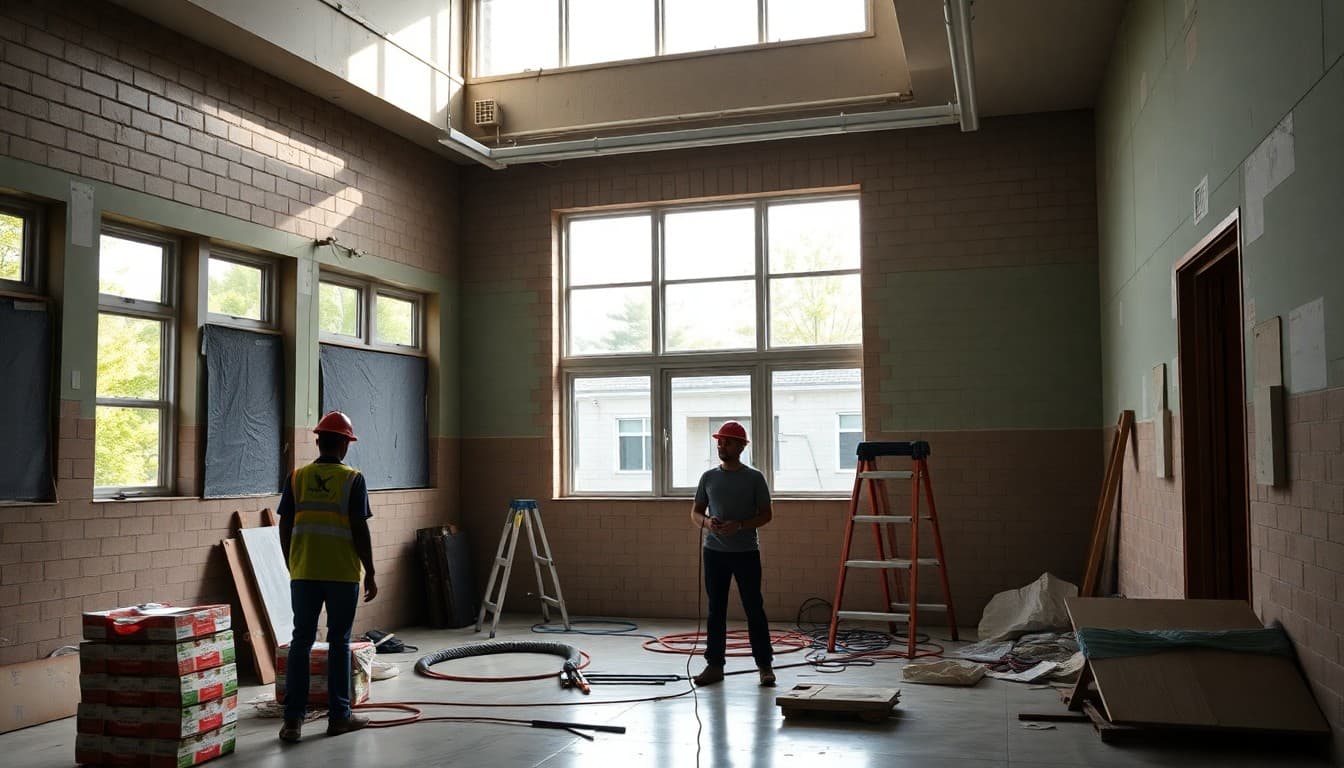
Families notice construction and renovation work happening at their school building during the school year. Getting ahead of that with a newsletter that explains what is happening, why, how long it will take, and what disruptions to expect gives families context instead of concern. If construction noise will affect certain parts of the day, say so. If access to certain areas of the building will be limited, explain the alternative arrangements. Families who are prepared for disruption are far more patient than those who are surprised by it.
Tell Families What Is Coming in Future Years
Share the multi-year facilities plan. What projects are funded for next year and the year after? Families who can see that their school is in the queue for a specific improvement, even if it is two years out, are more patient with waiting than families who have no idea whether the aging gymnasium or the outdated science lab will ever be addressed. A visible plan builds confidence in district stewardship even when the resources to do everything immediately are not available.
Name the Funding Source for Each Project
Tell families whether a project was funded by bond proceeds, operating budget maintenance funds, a state facilities grant, or federal ESSER dollars. This transparency shows that the district is managing multiple funding streams for facilities and using each appropriately. Families who understand the funding picture are more likely to support future bond measures and more confident that existing funds are being used as intended.
A Sample Facilities Update Paragraph
Here is language that covers summer improvements with appropriate specificity:
This summer, the district completed 14 facilities projects across 11 campuses. At Roosevelt Middle School, new HVAC units were installed in all 24 classrooms, funded through the 2022 bond measure. At Washington Elementary, the original 1968-era electrical panels were fully replaced, along with LED lighting throughout the building. Lincoln High School's science wing renovation is now 60 percent complete and will be ready for second-semester use in January. Our facilities team also addressed 47 deferred maintenance items identified in last year's state inspection, including drainage, flooring, and exterior door replacements at seven campuses. A full project log is available on the district facilities page.
Address Deferred Maintenance Honestly
Every district has a backlog of deferred maintenance. If your district has a significant deferred maintenance list, acknowledge it. Tell families the total estimated value, how it is being prioritized, and what the annual investment rate is for addressing it. Families who understand that facilities investment is a multi-year process rather than a one-time fix are more realistic in their expectations and more supportive of the funding decisions required to address the backlog over time.
Connect Facilities to Safety
Many facilities projects are directly connected to student and staff safety. Single-point-of-entry modifications, updated camera systems, fire suppression upgrades, and hazardous material abatement are all facilities investments with safety implications. Connecting these projects to the district's safety commitment turns a maintenance update into a statement about how seriously the district takes its responsibility to protect students. Families who understand the safety dimension of facilities investment support that investment differently than those who see it only as a building maintenance cost.
Give Families a Way to Report Concerns
Close by telling families how to report a facilities concern at their school. Whether that is through the school main office, a district facilities department contact, or an online submission form, making the channel visible encourages timely reporting. Families who know there is a system for reporting concerns are more likely to use it than to post about it on a parent group where the information reaches the wrong audience. The earlier the district hears about a facilities issue, the smaller it typically is when it gets addressed.
Get one newsletter idea every week.
Free. For teachers. No spam.
Frequently asked questions
How often should a superintendent send a facilities update newsletter?
At least once a year, ideally at the start of the school year to report on summer improvements and again in the spring to update families on the coming summer's planned work. If a major project is in progress during the school year, such as a wing renovation or a new building, more frequent updates aligned with project milestones are appropriate.
What should a district facilities newsletter include?
Projects completed since the last update, projects in progress with expected completion dates, projects planned for the next cycle, any projects that were delayed and why, the funding source for each major project, and how families can report facilities concerns. Facilities communication that is only celebratory misses the credibility that honest reporting about delays and challenges would build.
How do you communicate a significant facilities problem to families, such as a mold issue or HVAC failure?
Immediately and specifically. Families whose children are in a building with a health-related facilities issue need to know the nature of the problem, the health assessment that has been done, the timeline for resolution, and what accommodations the district is making in the interim. Delayed or minimized facilities communication on a health issue erodes trust in ways that are very difficult to recover.
How do you connect facilities investments to educational quality in a newsletter?
Name the specific educational benefit of each improvement. A new science lab is not just a facility update: it enables hands-on experiments that the previous lab could not support. A gym renovation is not just an aesthetic improvement: it provides a safe practice space for athletes and a comfortable assembly space for the whole school community. Connect the physical to the educational at every opportunity.
What communication tool works well for a visual facilities update with project photos?
Daystage is ideal for a visually rich facilities newsletter. You can include before-and-after photos, a project status table by school, and links to the full bond program or facilities plan, all in a formatted newsletter sent to every family in the district at once.

Adi Ackerman
Author
Adi Ackerman is a former classroom teacher and curriculum writer with 8 years in K-8 schools. She writes about school communication, parent engagement, and what actually works in real classrooms.
More for Superintendent
Ready to send your first newsletter?
3 newsletters free. No credit card. First one ready in under 5 minutes.
Get started free