
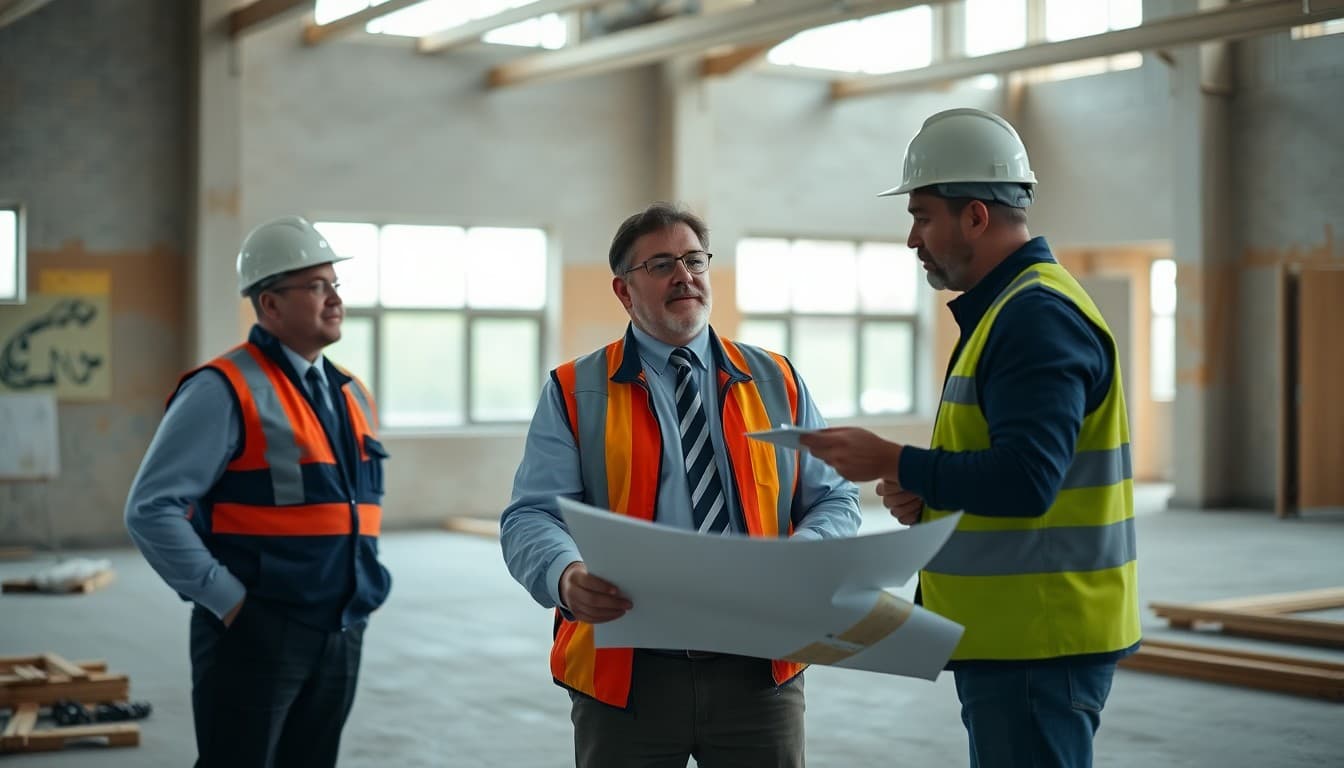
Superintendent Facilities Update Newsletter: Construction and Renovation
A new gymnasium, a renovated cafeteria, a HVAC replacement, a new elementary school: facility projects are among the most visible investments a school district makes. They also create real disruptions for families: changed entrances, parking lot construction, temporary classrooms, and noise during the school day. A superintendent facilities update newsletter manages those disruptions, celebrates the investment, and keeps the community informed through a multi-year process that can otherwise feel invisible until the disruptions appear.
Why facilities communication matters as much as the project itself
A district can execute a technically excellent construction project and still generate significant community frustration through poor communication. Families who cannot find the new school entrance because no one told them it moved, parents who do not understand why their child's classroom is in a portable for a semester, and community members who voted for a bond measure and never received an update on how the money is being spent, all of these families feel the same thing: the district did not think about them.
Facilities newsletters prevent this. They demonstrate that the district is thinking about the community's experience, not just the construction schedule.
Before construction begins: the launch newsletter
Before any significant construction begins, send a launch newsletter that answers the questions families will have:
- What is being built or renovated, and why? Connect the project to educational outcomes: "The new science labs will allow every middle school student to conduct hands-on experiments, not just watch demonstrations."
- How is it funded? Whether it is a bond measure, a state grant, or ESSER funds, families should understand the funding source.
- What is the timeline? Provide a simple project timeline: start date, major milestones, expected completion.
- How will it affect daily school operations? Be specific about drop-off routes, parking, entrances, and temporary classroom arrangements.
- Who can families contact with questions?
Milestone updates throughout the project
For a multi-year project, send periodic updates at meaningful milestones: groundbreaking, completion of each construction phase, the day a new building is ready for occupancy. These newsletters can include photos of the progress, which are genuinely engaging for community members who are curious about where their tax dollars are going.
A brief facilities update does not need to be long. "The new cafeteria foundation was poured this week. We are on schedule for the building to open in January. Here is a photo of the progress." A short newsletter with a photo reaches more community members than a long report that requires effort to read.
Construction disruption communications
When construction will affect daily operations, communicate specifically and early. "Starting November 4, the main parking lot at Lincoln Elementary will be closed for two weeks while utility work is completed. Use the parking lot on Oak Street (accessible from the back of the building) for drop-off and pickup. A map is attached." This is more useful than a general notice that "parking may be limited during construction."
For disruptions that affect the school day (noise during testing periods, HVAC outages during extreme weather, temporary cafeteria arrangements), work with school principals to communicate both at the district level and through their school channels. A superintendent-level communication signals district-wide awareness; a principal-level communication provides school-specific details.
Communicating about project delays
Delays happen. Supply chain disruptions, contractor issues, weather, and permitting complications are all common causes. When a project falls behind schedule, communicate promptly. Families who voted for a bond measure to build a new gym expect to know if the gym will not open by the promised date.
The delay communication should include: the cause of the delay, the revised timeline, any impact on students (a classroom or space that was expected to be available will not be), and what the district is doing to minimize the impact. Acknowledge the frustration directly: "We know this is disappointing for students and families who were looking forward to the new facility, and we are working with our contractor to minimize the delay."
Post-completion celebration and closing the loop
When a major facilities project is complete, send a newsletter that acknowledges the accomplishment, thanks the community (voters who approved the bond, staff who worked around disruptions, families who were patient during construction), and explains what students gain from the new or renovated facility. This closing-the-loop communication is often neglected, but it matters for community trust in the district's ability to deliver on its commitments.
Facilities and equity: communicating about investment decisions
Facility investment decisions have equity dimensions. If the district has been directing more capital investment to newer schools in wealthier neighborhoods and less to older schools in lower-income neighborhoods, this pattern is visible to the community and erodes trust. A superintendent who proactively addresses the equity implications of facilities planning, and who communicates a commitment to equitable investment across the district, builds credibility with the communities that have historically been left behind.
Using a newsletter platform for facilities updates
Facilities newsletters benefit from including photos of construction progress, simple project timeline graphics, and maps showing changed drop-off routes. Superintendents using Daystage can send facilities update newsletters with all of these elements, delivered inline in email, without requiring families to click through to the district website. The visual element, a current photo of the construction site, makes the newsletter engaging and demonstrates that the information is timely.
Get one newsletter idea every week.
Free. For teachers. No spam.
Frequently asked questions
When should a superintendent send a facilities update newsletter?
Send a facilities update newsletter before construction begins (to explain what is being built and why, timelines, and impacts on school operations), at key project milestones (groundbreaking, completion of a phase, building opening), when there are delays or changes to the project, when construction will cause temporary disruptions to families (entrances, parking, drop-off), and after a bond measure passes or fails. Facilities projects that affect families' daily experience with the school deserve proactive communication.
What should a superintendent facilities newsletter include?
Include a plain-language description of what is being built or renovated and why, the project timeline and current status, how the project is being funded (bond measure, state grant, general fund), how it will affect school operations during construction (temporary classroom locations, modified drop-off, noise during certain periods), the expected benefit to students when complete, and a point of contact for questions. For multi-phase projects, provide a visual timeline if possible.
How should superintendents communicate about construction disruptions to families?
Be specific and early. Families need to know if their child's classroom will be in a portable during construction, if the school entrance will change, if the parking lot will be reduced, or if there will be noise during certain times. General assurances that 'some disruption may occur' are less effective than specific information about when and how the project will affect the school experience. Give families at least two weeks of advance notice for any significant disruption.
How should superintendents communicate about construction delays?
Construction delays are common and often beyond the district's control. Communicate about delays promptly and honestly, explaining the cause (supply chain issues, contractor problems, weather, permitting), the new expected completion date, and what the delay means for students and families. Avoiding the topic until families notice the construction crew is gone creates distrust. A brief 'we have an update on the [school] project' message, even when the news is not good, is better than silence.
What newsletter tool do superintendents use for facilities updates?
Daystage is used by district superintendents to send facilities update newsletters with construction progress photos, project timelines, and links to more detailed information on the district website. The professional format of a Daystage newsletter is particularly useful for facilities communications because it allows including images of the construction progress alongside the text update, making the newsletter more engaging and informative than text-only communications.

Adi Ackerman
Author
Adi Ackerman is a former classroom teacher and curriculum writer with 8 years in K-8 schools. She writes about school communication, parent engagement, and what actually works in real classrooms.
More for Superintendent
How to Write a Superintendent Newsletter That Families Actually Read
Superintendent · 8 min read
Superintendent Bond Measure Communication: Explaining Capital Projects to Voters
Superintendent · 8 min read
Superintendent Budget Update Newsletter: Communicating Finances Without Losing Trust
Superintendent · 8 min read
Ready to send your first newsletter?
3 newsletters free. No credit card. First one ready in under 5 minutes.
Get started free