
Teacher Newsletter for Science Experiment Safety: Preparing Families Before Lab Work Begins
Why Lab Safety Communication Belongs in a Newsletter
Lab safety is covered in class before every experiment, but that coverage happens at the moment students are already excited about the activity. A newsletter sent home before lab units begin reaches families at a less charged moment, when information can be absorbed and discussed. Families who know the safety expectations before lab day can reinforce them in conversation, help their student arrive in the right mindset, and take comfort in the specific safety measures the school has in place rather than worrying about the general idea of their student working with chemicals or equipment.
What This Unit's Lab Work Will Involve
Lab safety newsletters are more useful when they describe the specific experiments students will be doing rather than only stating general rules. A newsletter that says "this unit includes two experiments involving heat sources and one involving dilute acid solutions, both of which require goggles and will be conducted with teacher demonstration before students begin" gives families accurate context. Families who know what is coming are more likely to ask their student about it and more likely to take the safety information seriously than those who receive only abstract rules.
Required Protective Equipment
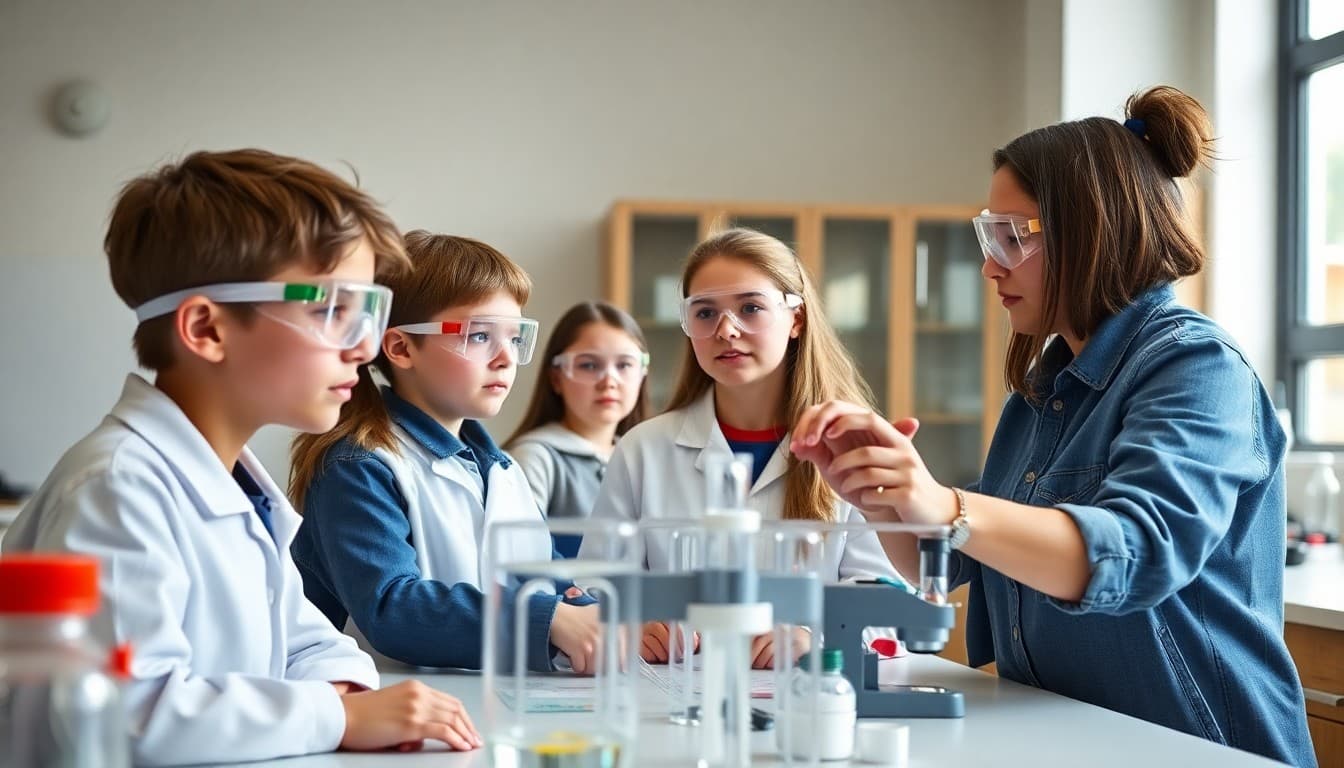
Different lab activities require different protective equipment. Chemistry labs often require goggles and sometimes gloves. Biology dissections often require gloves. Heat experiments require keeping hair tied back and sleeves rolled up. A newsletter that names the required equipment for the upcoming unit and explains when the school provides it versus when students need to bring their own prevents the confusion that results in students showing up unprepared on lab day.
Safety Rules and Why They Are Not Optional
Students who understand why safety rules exist follow them more consistently than those who see them as arbitrary restrictions. A newsletter that briefly explains the reasoning behind the most important rules, "goggles are required because chemical splashes reach the eyes before a person can react" rather than just "goggles must be worn," builds the kind of understanding that transfers to new situations rather than only the familiar lab setting.
What Happens If There Is an Incident
Families feel more comfortable with lab work when they know what the school's emergency procedures are. A newsletter that briefly explains that the classroom has an eyewash station and first aid kit, that any incident is reported to the nurse, and that families are notified of any significant incident reassures those who worry about what happens if something goes wrong without dramatizing the possibility.
Safety Education as Science Education
Lab safety is not separate from science learning. It is the first lesson in scientific practice. Scientists in every field follow safety protocols because they understand the risks of their materials and methods. Students who learn to take safety seriously in school science learn the foundational habit of working carefully with physical materials, which is a skill they will use in any technical field they pursue.
Lab Safety Communication Through Daystage
Science teachers who use Daystage for lab safety newsletters build family confidence in the lab program before the first experiment begins. Proactive safety communication transforms family concern into partnership, and it signals that the teacher takes the physical learning environment as seriously as the intellectual one.
Get one newsletter idea every week.
Free. For teachers. No spam.
Frequently asked questions
What should a science lab safety newsletter include?
A science lab safety newsletter should explain the safety rules students are required to follow, describe what protective equipment is required and when, name the consequences for safety violations, explain what the upcoming lab experiments involve at a level that helps families understand the activity without alarm, and describe what the school's emergency procedures are for lab incidents.
Why should teachers send lab safety newsletters before lab units begin?
Lab safety newsletters give families context before lab work begins, which reduces anxiety and increases student readiness. Families who know what to expect from lab days ask better questions and take safety expectations more seriously at home. A student who discusses the safety rules with a family member before the first lab day arrives with a more grounded understanding of why the rules exist.
What are the most important lab safety rules to communicate to families?
The most important lab safety rules to communicate to families include: never taste or smell chemicals directly, always wear goggles when working with chemicals or heat, report any spills or injuries to the teacher immediately, keep hair and loose clothing away from heat sources and open flames, read all instructions before beginning any procedure, and never perform unauthorized experiments.
How should teachers handle families who are concerned about specific lab activities?
Teachers should name the specific lab activities in the newsletter and explain the safety measures in place for each one. A family with concerns about a specific activity will find a proactive description of the safety measures more reassuring than silence. Including a contact line for questions gives concerned families a path to conversation rather than worry.
What tool helps science teachers send safety newsletters efficiently?
Daystage is built for school communication. Science teachers use it to send formatted lab safety newsletters with rules, equipment requirements, and upcoming experiment descriptions directly to parent email lists.

Adi Ackerman
Author
Adi Ackerman is a former classroom teacher and curriculum writer with 8 years in K-8 schools. She writes about school communication, parent engagement, and what actually works in real classrooms.
More for Subject Teachers
Teacher Newsletter About Science Homework: Helping Families Support Effective Study
Subject Teachers · 6 min read
Teacher Newsletter for Lab Reports: Helping Families Understand What Strong Lab Reports Require
Subject Teachers · 6 min read
Teacher Newsletter for Biology Units: Connecting Families to Life Science Learning
Subject Teachers · 6 min read
Ready to send your first newsletter?
3 newsletters free. No credit card. First one ready in under 5 minutes.
Get started free