

Teacher Newsletter for Lab Reports: Helping Families Understand What Strong Lab Reports Require
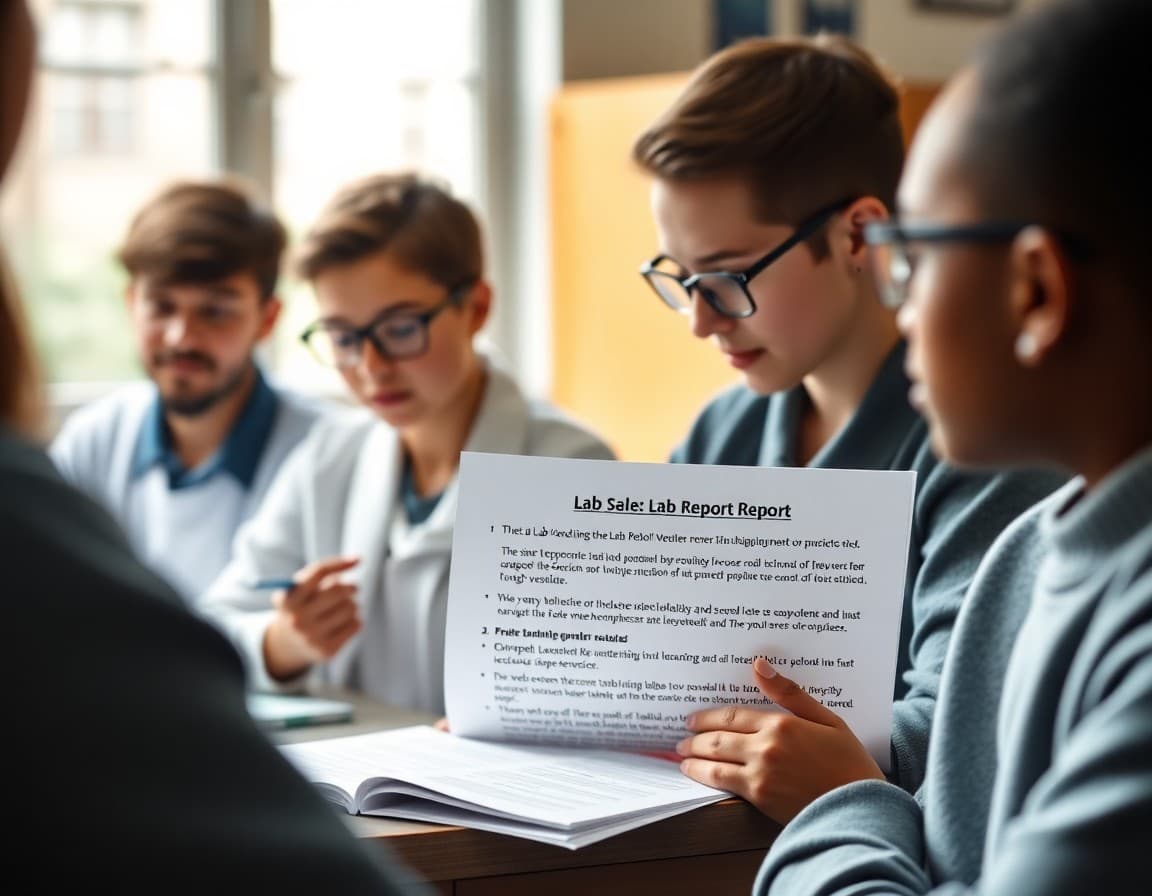
Why Lab Reports Are Worth Communicating About
Lab reports are among the most time-consuming and most often misunderstood assignments in science class. Students who have never written one before often approach it as a narrative of what happened during the experiment rather than a scientific document that communicates methodology, data, and analysis. A newsletter that explains the purpose and structure of a lab report before the first one is due helps students and families understand what the assignment is actually asking rather than discovering the standard only when a graded report comes back.
Title and Purpose: Setting Up the Scientific Question
A lab report title should be specific enough to tell a reader what was tested. "Photosynthesis Lab" is not a good title. "The Effect of Light Intensity on the Rate of Photosynthesis in Spinach Leaves" is. The purpose or introduction section should explain the scientific concept being investigated and why the experiment was conducted. Students who understand that the title and purpose frame everything that follows write more coherent reports than those who treat these sections as formalities.
Hypothesis: A Prediction With Reasoning
A hypothesis is not a guess. It is a testable prediction that states an expected outcome and explains the scientific reasoning behind it. "I predict that plants in more light will photosynthesize faster because light is the energy source for photosynthesis" is a hypothesis. "I think more light is better for plants" is not. Families who understand this distinction can ask their student "why do you think that?" when they review a hypothesis, which prompts the reasoning that turns a guess into a hypothesis.
Data Section: The Record, Not the Interpretation
Data is recorded, not interpreted. The data section should contain all measurements, observations, and numerical results from the experiment in organized tables, exactly as collected. Interpretation belongs in the analysis. Students who mix interpretation into their data tables confuse the sections. A newsletter that makes this distinction clear helps students organize their reports correctly before writing rather than after receiving feedback.
Analysis: Where the Real Science Happens
The analysis section is where students show their scientific thinking. It should include graphs with proper labels and units, calculations with shown work, and an explanation of what the data patterns mean. The analysis section is also where sources of error are identified and their effect on the results is discussed. This is the section students most often underdevelop, and families who know it is expected to be substantial can encourage their student to spend more time here rather than only on the procedure write-up.
Conclusion: Answering the Scientific Question
A strong conclusion connects the results directly to the original hypothesis, states whether the hypothesis was supported or not supported and why, explains what the results mean in the context of the scientific concept being studied, and identifies what further investigation might reveal. A conclusion that restates the data without addressing the hypothesis misses the point. Families who ask "does your conclusion say whether your prediction was right?" before their student submits the report catch one of the most common errors before grading.
Lab Report Communication Through Daystage
Science teachers who use Daystage to send lab report guide newsletters ensure that families can support their student's science writing throughout the year. Clear communication about what each section requires reduces the frustration students experience when they discover the expectations only after the work is graded, and it gives families a concrete way to ask useful questions during the writing process.
Get one newsletter idea every week.
Free. For teachers. No spam.
Frequently asked questions
What should a lab report guide newsletter explain to families?
A lab report guide newsletter should explain the structure of the lab report format the class is using, describe what each section requires and what distinguishes a strong response from a minimal one, explain how lab reports are graded, and name the specific common mistakes students make so families know what to watch for when their student is completing the report.
What are the sections of a standard lab report?
A standard lab report includes: Title (specific and descriptive), Purpose or Introduction (the scientific question and background), Hypothesis (a testable prediction with reasoning), Materials (complete list used in the experiment), Procedure (step-by-step description of what was done), Data (organized tables and observations), Analysis (graphs, calculations, and explanation of what the data shows), Conclusion (whether the hypothesis was supported and why), and Evaluation (sources of error and how they affected results).
What is the most common mistake students make on lab reports?
The most common mistake is writing a conclusion that only describes what happened rather than connecting the results to the original hypothesis and the scientific concept behind the experiment. A conclusion that says "we got 4.5 grams" without explaining whether that supported the hypothesis and why is a description, not a scientific conclusion. Teaching students to write conclusions that answer the question the hypothesis posed is one of the most important things a lab report newsletter can communicate.
How can families help with lab reports without doing them for their student?
Families can help by asking their student to explain what they found and whether it matched what they expected before the student writes the conclusion. This conversation helps the student clarify their thinking before writing. Families can also ask whether the data table is complete, whether the graphs have labels and units, and whether the student has re-read the conclusion to check that it answers the question. None of these require science knowledge.
What tool helps science teachers send newsletters efficiently?
Daystage is built for school communication. Science teachers use it to send formatted lab report guide newsletters with section requirements, grading criteria, and family support suggestions directly to parent email lists.

Adi Ackerman
Author
Adi Ackerman is a former classroom teacher and curriculum writer with 8 years in K-8 schools. She writes about school communication, parent engagement, and what actually works in real classrooms.
More for Subject Teachers
Teacher Newsletter About Science Homework: Helping Families Support Effective Study
Subject Teachers · 6 min read
Teacher Newsletter for Science Experiment Safety: Preparing Families Before Lab Work Begins
Subject Teachers · 6 min read
Teacher Newsletter for Science Writing: Helping Families Support Evidence-Based Scientific Explanation
Subject Teachers · 6 min read
Ready to send your first newsletter?
3 newsletters free. No credit card. First one ready in under 5 minutes.
Get started free